Live Apps
Download Parlourtime and Partner apps

Quick app access for customers and partners.

HomeAboutContactPartner AppCoursesBlogsFAQ

Acrylic Nails Best Practices for Compliance This Week

By Parlourtime Team
No Date
8 min read
acrylic nailsnail compliancesalon hygienenail carenail infectionsnail maintenance
Acrylic Nails Best Practices for Compliance This Week

About This Article

# Acrylic Nails Best Practices for Compliance This Week Walking into a salon with acrylic nail concerns often feels confusing because compliance, hygiene, an...

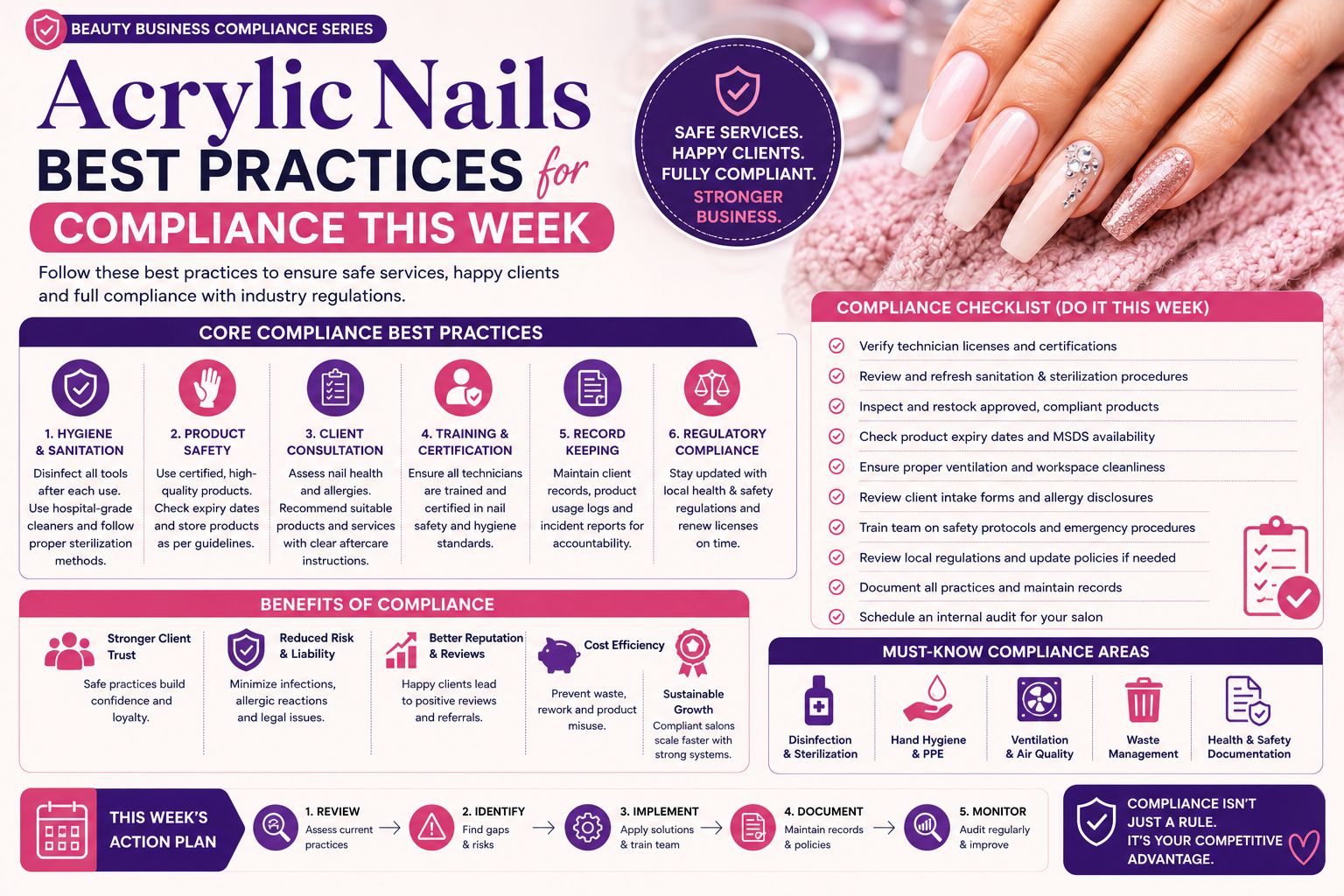
# Acrylic Nails Best Practices for Compliance This Week Walking into a salon with acrylic nail concerns often feels confusing because compliance, hygiene, and maintenance are discussed together without clear boundaries. Many clients notice irritation, lifting, or discomfort within days of a fresh set, yet they are unsure whether this is normal or a sign that something went wrong during the service. This uncertainty creates pressure, especially when social plans or work events are approaching. A common observation during busy salon hours is that customers rarely ask about sterilization procedures before booking, which is a significant oversight that contributes to avoidable complications after the appointment. The service itself becomes risky when preparation of the natural nail, product application, and aftercare routines are not aligned with established safety standards. This article clarifies what compliance means during a typical acrylic service, what warning signs require immediate attention, and how to approach timing, maintenance, and reassessment with confidence. Acrylic nail services require more than skillful application because the condition of the natural nail, the quality of the products used, and the salon's hygiene practices all contribute to the final result. Clients often overlook that compliance starts before the first brush touches the nail, as the preparation phase determines how well the acrylic will adhere and how healthy the natural nail remains underneath. During busy periods, technicians may rush through cuticle work or skip proper dehydration steps, which leads to lifting or trapped moisture that breeds fungal issues. Observing whether a technician wears gloves, uses fresh files, and cleans the workstation between clients offers immediate signals about the salon's compliance level, even if the visible application looks flawless. Many customers prioritize the aesthetic outcome during the appointment, but experienced beauty professionals understand that long-term satisfaction relies heavily on the invisible steps that prevent damage and infection. This week, focusing on compliance means asking the right questions and observing the service environment before committing to a full set of acrylics. ## What Is Causing Your Acrylic Nail Compliance Concerns? Compliance concerns with acrylic nails often surface as visible lifting, yellowing, or discomfort around the cuticle area within the first week of application. Many clients describe a feeling of tightness or pressure that persists after the initial day, which is sometimes dismissed as normal adaptation but can actually indicate that the acrylic was applied too thickly or that the natural nail was over-filed during preparation. Unhygienic practices, such as reusing implements or applying product over dirty nail beds, introduce bacteria that cause redness, swelling, or greenish discoloration known as pseudomonas, which requires immediate professional intervention. A frequent salon observation is that customers report pain only when the issue has already progressed, because they hesitate to complain or assume that some discomfort is part of the process. This mismatch between expectation and reality creates confusion about whether the service was performed poorly or whether the client's nail condition was unsuitable for acrylics. The underlying problem often involves a combination of technician error, product incompatibility, and inadequate aftercare, which makes a single cause difficult to identify without professional assessment. Understanding that compliance breaches are often invisible at the moment of service helps explain why this week's concerns feel unexpected despite following initial instructions. ## Why Acrylic Nail Results Differ Across Services and Salons Acrylic nail outcomes vary significantly because natural nail health, product chemistry, and technician training create different responses even when the same service is requested. Clients with thin, brittle, or damaged nail plates frequently experience faster lifting or breakage because the acrylic bond attaches to a compromised surface that cannot support the added weight. Factors such as hormonal changes, medication use, and recent exposure to harsh chemicals influence how well the acrylic adheres and how quickly the natural nail grows, which is often misunderstood as a salon quality issue. In many Indian salons, humidity and heat accelerate moisture accumulation under the acrylic, leading to lifting within ten days when the prep process was not thorough enough for the local climate. Technicians who use lower-grade monomers or expired powders compromise the structural integrity of the enhancement, resulting in chips or cracks that appear without any obvious impact trauma. This week, service discrepancies are particularly noticeable because seasonal transitions alter skin and nail hydration levels, which changes how products perform on different individuals. Realistic expectations should therefore account for personal nail biology rather than assuming that a single service standard guarantees identical results across all clients. ## Common Misconceptions That Increase Acrylic Nail Risks A widespread misconception is that a more expensive acrylic service automatically includes compliance with safety protocols, but price rarely guarantees hygiene or proper product selection. Many clients believe that lifting or discomfort after one week indicates a bad service, when in fact the natural nail's condition and the client's aftercare habits often contribute more to longevity than the initial application quality. Another overlooked blind spot is that soaking off acrylics at home with acetone or attempting to pry them off causes severe thinning and peeling of the natural nail, which creates an unstable surface for future applications. The illusion of quick fixes, such as applying cuticle oil over an infected nail bed or buffing the surface to hide lifting, delays necessary treatment and worsens the underlying issue. Nail extensions are also mistakenly treated as permanent structures, but they require infills and maintenance, and continuing to wear the same set beyond the recommended period increases moisture entrapment and fungal risks. This overconfidence in the durability of acrylics frequently delays professional reassessment, allowing minor compliance issues to develop into painful infections that require medical attention. ## How to Decide the Right Timing, Maintenance, and Next Step The first decision after noticing acrylic nail concerns is determining whether immediate removal is necessary or whether the service can be corrected through maintenance, which depends on the severity of symptoms such as infection or injury. If redness, throbbing, or discharge is present, the acrylic must be removed professionally to allow the nail bed to recover, and the extension should not be reapplied until the condition resolves completely. For minor lifting without pain, a scheduled infill within two to three weeks prevents moisture and bacteria from migrating under the enhancement, but only if the technician confirms the natural nail remains healthy. Maintenance routines, including applying cuticle oil daily, avoiding prolonged water exposure, and wearing gloves during cleaning, meaningfully extend the life of the acrylic and reduce recurrence of lifting. When repeated issues occur despite careful aftercare, consider spacing nail enhancements further apart or allowing several weeks without acrylic to restore natural nail integrity. Certain severe conditions, such as visible green staining or reoccurring fungal infections, suggest that acrylics are not a suitable service, and discontinuing this enhancement should be seriously weighed. A one-month observation period after removal helps clarify whether natural nail recovery is progressing or whether additional treatment is necessary before any future application. Consultation with a qualified technician or even a dermatologist is the safest boundary when the cause and severity of the concern remain unclear, as delaying assessment risks permanent nail damage. ## Frequently Asked Questions q Can acrylic nails cause permanent damage to my natural nails? a Yes, repeated acrylic application, aggressive filing, and improper removal can permanently thin the nail plate and lead to chronic brittleness or ridges. q What is the most common acrylic nail compliance failure in salons? a The most common compliance failure is improper sterilization of metal tools and reuse of porous files or buffers, which transmit bacterial and fungal infections. q How soon should acrylic nails be removed or replaced to remain compliant? a Acrylic nails should typically be infilled every two to three weeks and completely removed within three to four months to allow natural nail recovery when needed. q Why does my acrylic nail hurt after five days of application? a Pain after five days often indicates over-filing of the natural nail, an allergic reaction to the monomer, or a developing infection that requires immediate professional evaluation. q Is lifting of my acrylic nails at the cuticle a normal occurrence? a Lifting at the cuticle line is not normal and usually signals improper prep, excessive moisture, or natural nail separation, and increases infection risk if ignored. q Can I apply acrylic nails if I have a history of fungal infections? a No, acrylic nails should not be applied over an active fungal infection, as the sealed environment worsens the condition, and prior infection requires full clearance first. q What should I do if my nail turns green after acrylic application? a A green nail indicates pseudomonas bacteria, which requires acrylic removal and professional disinfection, and medical attention is necessary in severe cases. q How long should I wait before getting new acrylics after removing an old set? a Waiting at least four to six weeks after removal allows the natural nail to rehydrate and strengthen, reducing the risk of breakage and future compliance problems. Some clients use parlourtime to research salon hygiene practices before booking their next acrylic appointment.

Join Us!

Earn Upto ₹70,000/Month! Become a Parlourtime Partner.

Get it on Google PlayDownload on the App Store
Page 1 of 279
WhatsAppInstant beauty support