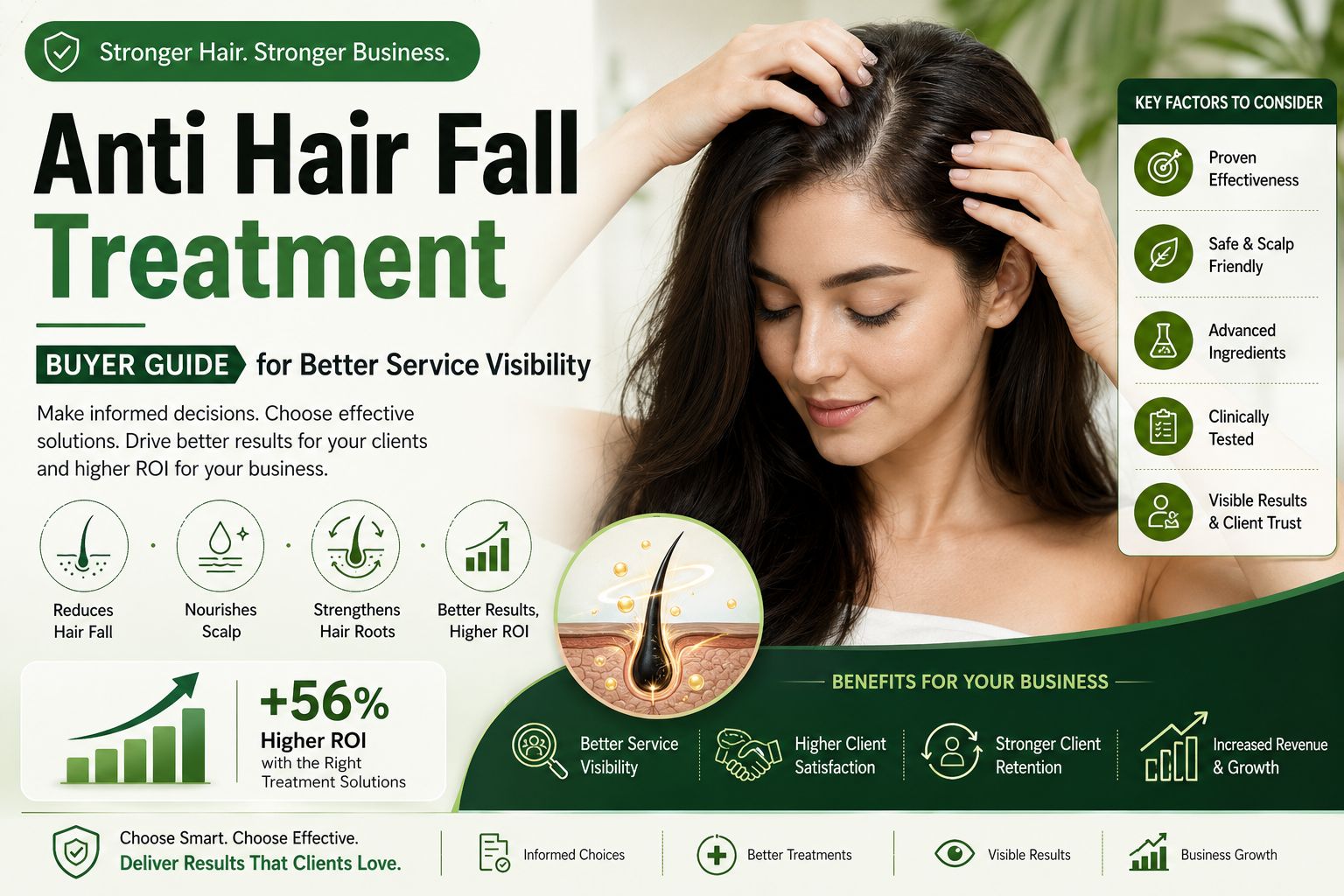


Walking into a salon for an anti hair fall treatment can feel like entering a maze of options. You want something that actually works but the service names sound similar and promises feel generic. This confusion isn't unusual honestly. Many customers in India book a treatment without knowing what to expect, only to feel disappointed when results don't match expectations. An anti hair fall treatment buyer guide helps you ask the right questions before committing. Instead of guessing, you can evaluate what each service actually offers and whether it aligns with your hair condition. Service visibility means understanding not just the name but also the process, recovery, and maintenance involved. When you know what you are choosing, dissatisfaction drops significantly.
What Most Customers Miss About Anti Hair Fall Treatments
The first thing customers notice is the sheer variety of anti hair fall treatments available. From protein therapies to scalp detox sessions and laser comb rentals, each service claims to reduce hair fall. But here is what causes real confusion — and I've been there myself. Most people assume a single session will stop hair fall permanently. That is rarely true. Hair fall is influenced by internal health, external damage, product buildup, and even seasonal changes. A treatment that works during winter may feel less effective during humid monsoon months. Customers often report initial disappointment because they expected visible reduction after one visit. The overlooked truth is that consistency matters more than the treatment name. Without understanding maintenance frequency, results feel unpredictable. This section exists to clarify that anti hair fall treatment is not a one-time fix. It is a process that requires realistic timeframes and repeated sessions. When customers treat it like a medical consultation, they feel more in control — or at least less lost.
Why Anti Hair Fall Results Vary Across Different Scalp Conditions
Reality check is necessary here because Indian hair types vary dramatically. Oily scalps respond differently compared to dry or sensitive scalps. A treatment designed for excess oil may leave dry scalps feeling tight and irritated. Similarly, chemically treated hair already weakened by coloring or smoothening may not absorb anti hair fall products the same way healthy virgin hair does. Many customers assume a premium service guarantees better outcomes. That is not always true, trust me on this. The determining factor is how well the service matches your current scalp health. A salon professional may recommend a series of treatments spread across weeks. Skipping sessions or switching products midway disrupts continuity. Customers who follow the full course often report better results than those who hop between different treatments. Another overlooked factor is aftercare. Shampoos, conditioners, and styling habits at home directly impact longevity. Without proper home care, even the best anti hair fall treatment loses effectiveness within days — and then you wonder what went wrong.
Common Risks and Misunderstandings in Hair Fall Service Choices
The biggest risk in choosing an anti hair fall treatment is assuming that more expensive means more effective. This is a common misunderstanding. A high-end laser session may not address nutritional deficiencies causing hair fall. Similarly, a protein treatment cannot fix hormonal imbalances. Customers sometimes experience scalp irritation or mild burning during intense therapies. This can be alarming if not expected. Another risk is booking a treatment too close to an important event. Some anti hair fall services cause temporary shedding before regrowth begins. If you have a wedding or celebration within two weeks, the visible fallout can create panic — and I know someone who went through that exact nightmare. The dissatisfaction escalates when customers blame the salon instead of understanding the natural shedding cycle. Blind spots also include ignoring product ingredients. Sulphates, silicones, or alcohol-based formulas can worsen sensitive scalps during treatment. Asking your stylist about product compatibility before starting reduces surprises. The underlying issue is not the treatment itself but the mismatch between customer expectation and biological reality.
Decision Help for Choosing the Right Anti Hair Fall Service
When making a decision, timing is everything. If your hair fall is sudden and severe, consult a dermatologist before booking a salon service. Salon treatments work best for maintenance and mild to moderate shedding. For chronic conditions, medical guidance should come first. If you are someone who experiences seasonal hair fall during monsoon or winter, salon treatments can help stabilise the cycle. The key is to wait until you can commit to at least three sessions spaced appropriately. Skipping appointments because of inconvenience destroys the treatment's potential. Maintenance also matters. If aftercare products feel too heavy or expensive, discuss alternatives with your stylist. Another boundary worth understanding is when to stop. If after several sessions you see no improvement — like nothing at all — the treatment may not suit your scalp type. At that point, professional reassessment becomes necessary. Many customers explore parlourtime to compare service timing and understand what various anti hair fall treatments include before committing. This kind of preparation reduces anxiety and improves satisfaction. Knowing when to wait, when to proceed, and when to switch directions gives you control over your hair health journey.
Frequently Asked Questions
q How often should I get an anti hair fall treatment at a salon?
a Most salons recommend a series of three to six sessions spaced two to four weeks apart depending on your scalp condition.
q Can anti hair fall treatments cause more hair shedding initially?
a Yes, some treatments stimulate the scalp and may cause temporary shedding before new growth begins in most cases.
q Are expensive anti hair fall treatments more effective than affordable ones?
a Effectiveness depends more on scalp condition and aftercare than price, so expensive services do not guarantee better results.
q How long does it take to see visible results from an anti hair fall treatment?
a Visible reduction in hair fall typically appears after three sessions although some customers notice changes earlier.
q Can I combine anti hair fall treatments with other salon services like coloring?
a Combining chemical services can stress the scalp so it is safer to space treatments at least two weeks apart.
q What aftercare products should I use after an anti hair fall service?
a Use gentle sulphate-free shampoos and lightweight conditioners recommended by your stylist to maintain treatment benefits.
q Is it safe to book an anti hair fall treatment right before a wedding?
a Booking too close to an event carries risk because some treatments cause temporary shedding or scalp sensitivity.
q When should I stop anti hair fall treatments and see a doctor instead?
a If you see no improvement after six sessions or experience excessive irritation consult a dermatologist before continuing.