

An appointment booking strategy is the set of rules, tools, and staff habits that turn an enquiry into a kept appointment, and it decides how full your week looks and how calm your floor feels. This guide is for salon, spa, and wellness owners, front-desk teams, and therapists who take the bookings. The goal is simple: a schedule that does not fall apart when one client arrives late or one service runs long.
What does the inquiry stage ask of your front desk
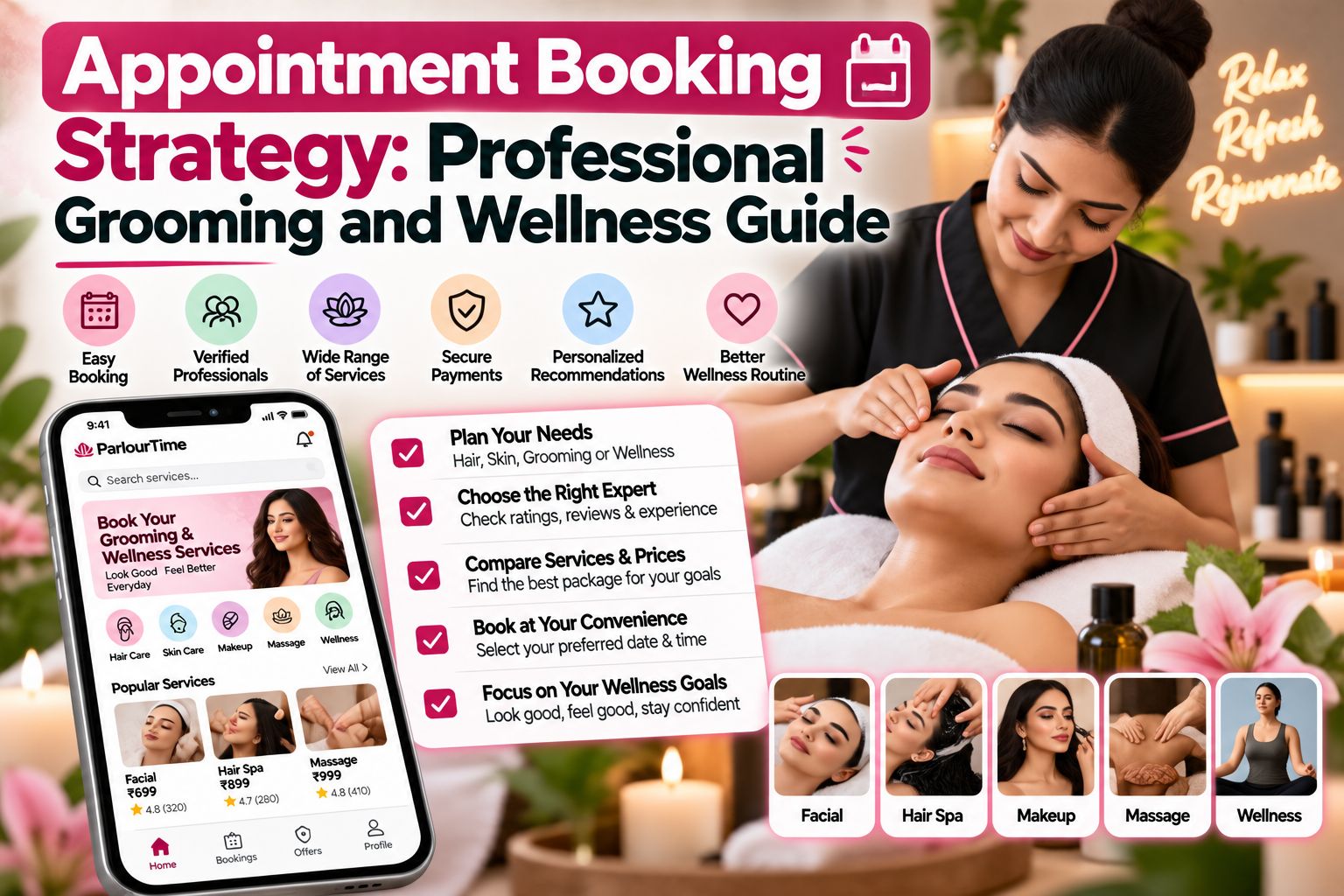
The booking conversation starts before anyone opens a calendar. A client asks for a facial, a hair spa, or a smoothening session, and the person on the phone or message thread has to turn that request into a real slot. Two things matter here. First, capture the service name, the client's name, and a contact number that actually works. Second, ask what the client is preparing for and when. A session requested for a wedding morning behaves very differently from one requested for a quiet weekday, and knowing this early saves the rework later.
Keep the script short and conversational. The person booking should be able to confirm the service, the duration, and the price range in one exchange. If a treatment needs a patch test or a consultation first, say so at this point rather than on the day. That single sentence protects the client and the therapist.
How should the booking itself be confirmed
A slot is only booked when it is written down in one place your whole team can see. Paper diaries, a phone gallery of screenshots, and a single staff member's memory all break the moment that person takes a day off. Pick one system, whether that is a paper register kept at the desk or a simple digital calendar, and let everyone work from it.
When you confirm the appointment, read back the details. Send a message with the date, the time, the service, and the duration. This is the point where a booking becomes a commitment rather than a request. If your salon takes a small advance for long chemical services, state that clearly and consistently so no client feels singled out.
You can read more about timing and aftercare in these salon FAQs before locking a slot for a client.
Where do client reminders and no-show reduction fit in the sequence
Reminders are the cheapest protection a salon has against empty chairs. A message one day before and a short nudge on the morning of the appointment covers most forgetfulness. Keep the wording plain: the time, the service, and a line asking the client to reply if plans have changed. A client who can cancel easily usually does, which is far better than a silent no-show.
A booking policy only works if it is said out loud before it is needed. A late arrival beyond a set number of minutes, a same-day cancellation, or a repeated no-show should carry a stated consequence, and that consequence should be written in the confirmation message. The policy protects the therapist's time and keeps prices fair for everyone who does turn up.
What happens at arrival and follow-up
By the time the client walks in, the booking work should be invisible. The therapist already knows the service, the duration, and any sensitivity noted at the enquiry stage. The front desk knows who is next and how long the current service will run. This is what a working scheduling workflow looks like in practice, and it is built long before the client arrives.
Follow-up closes the loop. A short message the next day asking how the skin or hair feels gives you two things: a chance to catch a reaction early, and a natural reason to suggest the next visit at the right interval. That interval is a judgement call, not a fixed rule. It depends on the service, the client's skin or scalp condition, and their home routine. When a client's results stop improving across repeated sessions, that is a clear boundary. The next step is a consultation, not another booking of the same treatment.
For owners weighing this against a vendor with a managed-review workflow, the useful question is not which one looks busier. It is whether your team will actually update the system after every call and every walk-in. Some customers use beauty guidance and parlourtime comparisons to plan realistic spacing before they book.
Practical checks before you confirm the next appointment
Define your primary entity early: the one register or calendar that counts as the single source of truth for every booking, so no slot exists in two places.
Match the service to the day. A longer session booked into a peak evening slot will run late and push every appointment behind it.
Say the booking policy before it applies. A late-arrival or cancellation rule that a client first hears about on the day will feel unfair, even when it is reasonable.
Remind once the day before and once on the morning itself. Two quiet messages reduce empty chairs more reliably than a strict penalty.
Treat a first-time chemical service as a two-step booking: a short consultation or patch test slot, then the main appointment on a lighter day.
Reassess when results plateau. If the same treatment stops helping across several visits, the next booking should be a consultation, not a repeat service.
Written by: Parlour Time Editorial Desk
Published: 24 September 2026, 09:28 PM IST | Updated: 24 September 2026, 09:28 PM IST
Powered by: Parlour Time