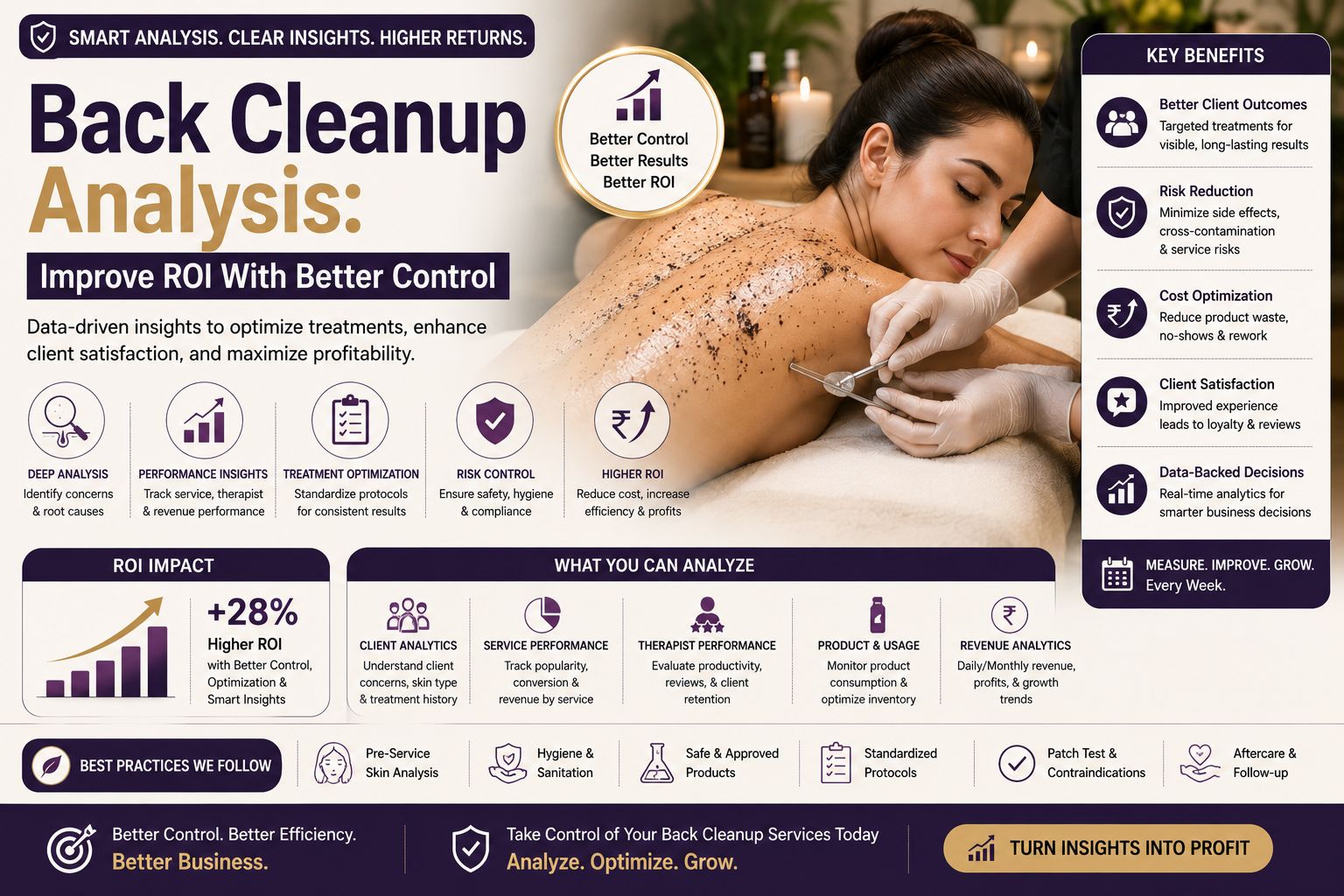
Back Cleanup Analysis: Improve ROI With Better Control
Many salon owners and therapists notice a pattern where back cleanup services generate lower repeat bookings and reduced profitability compared to other facial services. Customers often walk out satisfied yet rarely return for the same treatment. This creates confusion because the service seems straightforward and popular during consultations. The real issue lies not in demand but in inconsistent delivery, unclear expectations, and operational gaps that reduce both client satisfaction and business returns. Understanding what happens during a back cleanup session and where control slips helps salon teams realign their approach. The problem is rarely about the product or technique alone. It often stems from how the service is positioned, timed, and followed up. When these elements lack control, ROI suffers naturally.
What Back Cleanup Confusion Means for Salon Profitability
Back cleanup services occupy a unique space between basic cleansing and advanced body treatments. Customers expect deep pore cleansing, reduced oiliness, and smoother skin texture on the back area. But honestly, many first-time clients do not understand that back skin differs significantly from facial skin. It tends to be thicker, oilier, and more prone to congestion. When salons do not explain these differences upfront, clients assume one session will resolve long-standing concerns. This mismatch between expectation and reality leads to disappointment. From a business perspective, the confusion directly impacts repeat visits and word-of-mouth referrals. When clients do not see dramatic or lasting improvement, they hesitate to book again. Salons then perceive low ROI without recognizing that unclear communication and uncontrolled service delivery are the actual causes.
Why Back Cleanup Results Vary Across Different Skin Types
Indian skin types exhibit wide variation in oil production, pore size, and sensitivity on the back area. Oily and combination skin types often respond well to extractions and clarifying masks. Dry or sensitive skin may react with redness, irritation, or post-inflammatory hyperpigmentation after aggressive cleansing. Therapists often apply the same protocol to every client without adjusting technique or product selection. This one-size-fits-all approach creates inconsistent outcomes. Clients with reactive skin may experience temporary burning or tightness after the session. Those with stubborn congestion may require multiple sessions before noticing visible change. Salons rarely document skin type variations or adjust pricing and service length accordingly. Without this control, the service appears unreliable, and clients lose trust. Improving ROI begins with categorizing back skin conditions and customizing each session based on individual needs.
Common Assumptions That Reduce Back Cleanup Effectiveness
Many salon teams assume that a single deep cleansing session will satisfy most clients. This assumption overlooks the fact that back acne, clogged pores, and uneven texture often require ongoing maintenance. Clients who expect permanent results after one visit feel misled when congestion returns within days. Another common blind spot is neglecting post-service aftercare guidance. Back skin is frequently covered by clothing, exposed to sweat, and subject to friction from bags or seat backs. Without specific recommendations on cleansing frequency, product usage, and lifestyle adjustments, clients unknowingly compromise their results. Therapists also tend to rush through back cleanup sessions because they consider it a basic add-on service. This reduces thoroughness and diminishes perceived value. When clients sense that the service received less attention than a facial, they undervalue it. These assumptions collectively lower client satisfaction and reduce the likelihood of repeat bookings.
How to Improve Back Cleanup ROI Through Better Control
Improving ROI requires salons to treat back cleanup as a standalone service with its own protocol, pricing, and follow-up system. Start by conducting a brief skin assessment before every session. Document oiliness level, congestion severity, sensitivity, and any history of breakouts. This allows therapists to select appropriate products and adjust extraction intensity. Set realistic expectations during the consultation. Explain that noticeable improvement often requires two to three sessions spaced two to four weeks apart. Provide clear aftercare instructions covering cleansing routine, moisturizer selection, and avoidance of tight clothing or excessive sweating immediately after treatment. Schedule a follow-up check-in within ten days to assess progress and address concerns. This small step builds trust and encourages rebooking. Many salon teams also overlook the value of capturing before-and-after images to demonstrate visible change over time. Parlourtime discussions often highlight that maintenance expectations influence satisfaction more than the treatment itself, and this principle applies directly to back cleanup services. When control improves at every stage, ROI naturally follows.
Frequently Asked Questions
q How often should back cleanup be done for best results?
a Most clients benefit from a session every three to four weeks until congestion reduces significantly, after which monthly maintenance is often sufficient.
q Does back cleanup hurt during extractions?
a Some discomfort is common, especially on inflamed areas, but a skilled therapist can minimize pain by using gentle pressure and appropriate pre-extraction products.
q Can back cleanup cause skin darkening?
a Aggressive extractions or improper aftercare can lead to post-inflammatory hyperpigmentation, especially on darker skin tones, so gentle technique is essential.
q Why do blackheads return quickly after back cleanup?
a Back skin produces more oil than facial skin, and without consistent home care, pores refill rapidly, making maintenance visits important for lasting improvement.
q Is back cleanup suitable for sensitive skin?
a Yes, but only when the therapist selects mild products, avoids harsh scrubbing, and limits extractions to clearly clogged pores rather than treating the entire area aggressively.
q What products should I use after back cleanup?
a Non-comedogenic moisturizers, gentle salicylic acid cleansers, and oil-free sunscreens work well for most skin types, but specific recommendations depend on individual skin condition.
q Can back cleanup help with active acne?
a Active acne requires careful handling to avoid spreading infection; a professional assessment is necessary before performing extractions on inflamed breakouts.
q How long does it take to see noticeable improvement?
a Many clients observe reduced oiliness and smoother texture after the first session, but significant improvement in congestion and acne marks typically requires multiple treatments.Earn Upto ₹70,000/Month! Become a Parlourtime Partner.