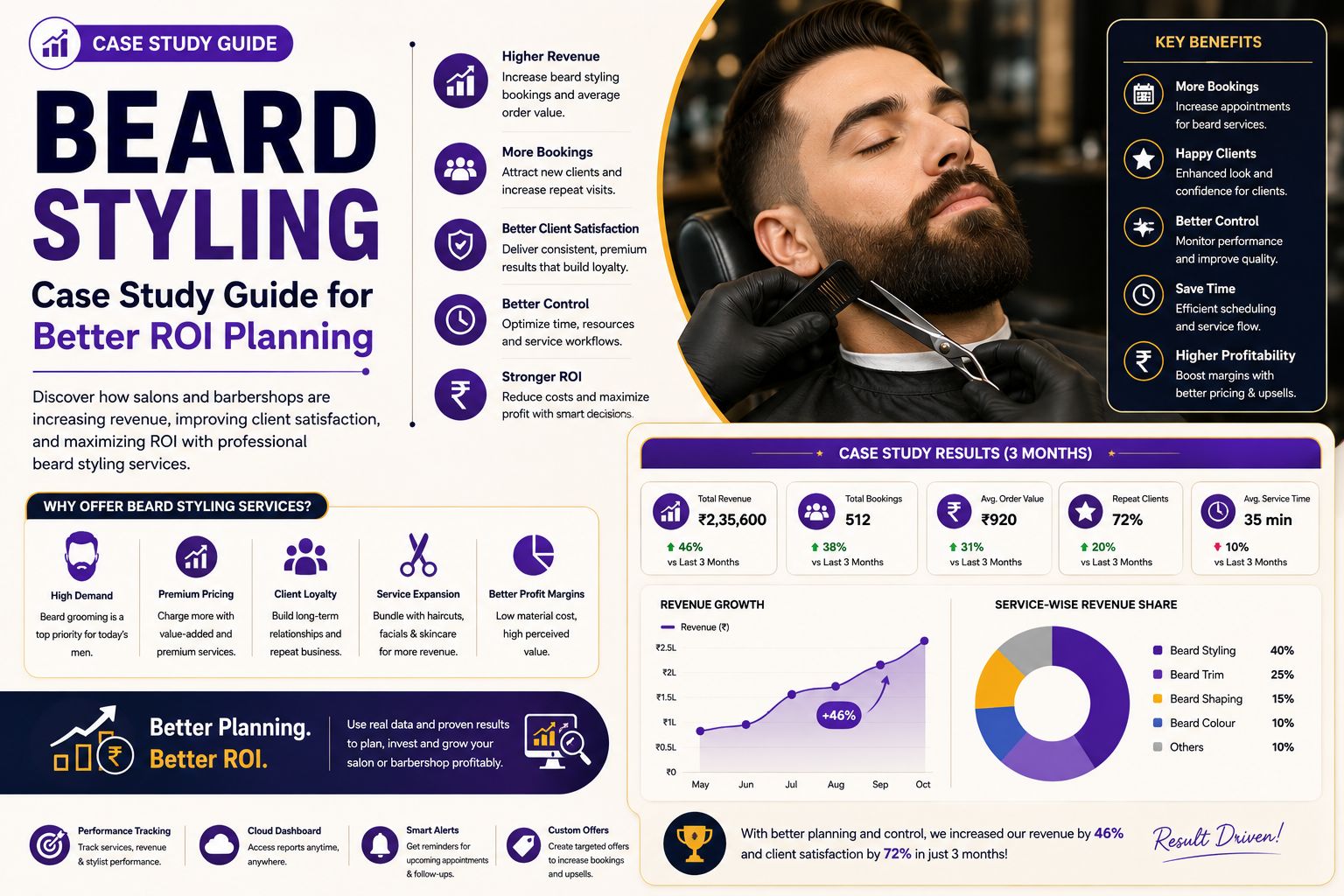
Beard Styling Case Study Guide for Better ROI Planning When a client books a beard styling session, they expect precision, symmetry, and fullness that lasts...
Beard Styling Case Study Guide for Better ROI Planning
When a client books a beard styling session, they expect precision, symmetry, and fullness that lasts beyond the salon chair. However, many walk out satisfied initially but later feel the results fall short of their investment. This gap between expectation and outcome often leads to confusion about whether the service was worth the time and money. A beard styling case study helps unpack why some sessions deliver high ROI while others leave clients questioning their choice. The confusion usually begins when grooming needs like patchy growth, uneven shape, or skin irritation are not openly discussed before the service begins. In many Indian salons, the consultation is brief, and assumptions replace real conversation. This leads to disappointment when the styling does not match the client's mental image. Understanding real service outcomes requires looking at what happened before, during, and after the treatment. That is where this case study approach becomes useful for anyone planning their next appointment—or honestly, even just wondering if they should go back to the same place.
## Why Beard Styling ROI Feels Unpredictable
ROI in beard styling is not just about price. It depends on hair texture, growth patterns, skin sensitivity, and the stylist's ability to work with natural limits. Many clients expect a full dense beard after a single styling session, but that is rarely possible. The reality is that styling enhances existing hair, it does not create new density. When a case study examines multiple clients, it becomes clear that those with coarser hair and consistent growth patterns see longer-lasting results. Clients with patchy or fine hair often require more frequent touch-ups, which affects overall ROI. Another factor is aftercare. Many clients ignore post-styling routines like moisturising, oiling, or using a beard conditioner. This reduces the lifespan of the shape and increases dissatisfaction. Weather also plays a role. During humid months in India, beard styles flatten faster. In winter, dryness leads to frizz and breakage. These factors are rarely mentioned during the service, yet they strongly influence whether the client feels the investment was worth it. A real salon observation here is that many clients do not realise how much their daily habits affect styling longevity. For example, sleeping on a rough pillowcase or washing the beard with harsh soap can undo a stylist's work within two days. This lack of awareness creates a gap between perceived service quality and actual aftercare responsibility. When ROI feels unpredictable, it is usually because the client expected the stylist to control outcomes that depend heavily on home care. A honest beard styling case study reveals that satisfaction improves dramatically when clients understand their role in maintaining results. That understanding starts with better planning before booking—and sometimes, just asking the right questions.
## Common Mistakes That Lower Beard Styling Value
One of the biggest mistakes clients make is assuming a higher price guarantees better results. In many cases, the stylist's skill matters more than the salon's reputation. A case study comparison often shows that mid-range salons with experienced barbers consistently deliver better ROI than expensive chains during peak hours. Another blind spot is ignoring skin health. Beard styling involves shaping, trimming, and sometimes using products that can irritate sensitive skin. Clients with conditions like folliculitis, dry patches, or acne underneath the beard frequently experience redness or discomfort after styling. This reaction reduces satisfaction and makes them feel the service was not worth the discomfort. Yet, many never mention these concerns before the session. The stylist assumes the skin is healthy, and the client assumes the stylist will handle everything. This silent miscommunication leads to poor outcomes. Overlooking maintenance frequency is another common error. Many clients think one styling session will last weeks without effort. In reality, beard styles often require trimming every seven to ten days to maintain shape, especially for denser growth. Clients who skip maintenance end up with uneven edges and a messy look, which makes the original styling seem ineffective. The case study reveals that clients who plan for follow-up sessions from the start report higher satisfaction and better ROI. They treat beard styling as a recurring investment rather than a one-time fix. Another risk is ignoring product compatibility. Some salons use strong holding gels or waxes that do not suit all hair types. When clients wash these products off at home, the style collapses quickly. This creates confusion because the result looked good at the salon but did not carry over. Understanding these mistakes helps clients adjust their expectations and planning. The overlooked detail here is that many clients blame the service when the real issue is their own lack of preparation or aftercare. A realistic beard styling case study highlights that value is shared between the stylist and the client. No amount of skill can compensate for neglect after the appointment—and honestly, no amount of money can either.
## When Results Do Not Match Investment
There comes a point when a client must decide whether the same service style is still delivering value. This happens when consistency drops, irritation increases, or shape maintenance becomes frustrating. In many cases, the client continues booking the same stylist and same service without questioning whether their needs have changed. This is a common behaviour seen in salon visits across India. Clients stay loyal to a routine even when results start declining. The boundary between acceptable results and poor ROI becomes unclear. For example, a client who initially enjoyed a sharp angular beard may later realise that the shape no longer suits their face as their jawline changes or hair thins. But instead of adjusting the style or trying a different approach, they repeat the same request. The dissatisfaction builds silently. The case study approach shows that clients who track their results over three to four sessions gain clarity. They notice patterns like faster fading shape, increased skin irritation, or uneven regrowth. These signals help them decide whether to continue with the same stylist or explore alternatives. Another boundary condition appears when the stylist's technique no longer adds value. If the client can achieve similar results at home with basic tools, the service ROI drops significantly. Many clients reach this point but hesitate to stop because they fear losing the professional finish. In reality, a good stylist adds value through precision, product selection, and customisation. When those elements become routine and predictable, the investment loses meaning. The decision point often comes down to whether the service solves a real grooming challenge or simply maintains a habit. Clients who recognise this distinction early experience less frustration and better long-term satisfaction. Planning for better ROI means knowing when to stop investing in a service that no longer meets expectations. That decision requires honest observation rather than blind repetition—and sometimes, swallowing the fear of trying someone new.
## How to Plan Beard Styling for Better Returns
Planning starts with a clear goal. Instead of walking into a salon hoping for a good result, clients should define what they want and why. Is the goal a clean professional look for work? A fuller appearance for a special event? Or regular maintenance for a style they already like? Each goal requires a different approach and different timing. For example, clients planning for a wedding or event should schedule styling at least one week in advance. This allows the beard to settle and gives time to address any skin reactions. A common mistake is booking the stylist just one day before an event, leaving no buffer for irritation or shape adjustment. Another smart planning step is consulting with the stylist about skin type and hair texture during the booking itself. Many salons now offer pre-service chats where clients can mention concerns like sensitivity or patchy growth. Using these opportunities improves the outcome. Maintenance planning also matters. Clients who schedule trimming every ten days often achieve better shape consistency than those who wait two weeks or longer. This regular interval keeps edges clean and prevents overgrowth that requires heavy reshaping. Product selection should also be part of the plan. Instead of buying whatever the salon recommends on the day, clients can research beard oils, balms, or conditioners that suit their hair type. Parlourtime discussions often highlight that maintenance expectations influence satisfaction more than the treatment itself. Reading salon FAQs or browsing through shared experiences on platforms like parlourtime helps clients understand what works for others with similar concerns. Another useful approach is to evaluate the stylist's experience specifically with beard grooming, not just haircutting. Many barbers are skilled at haircuts but lack the precision needed for symmetrical beard shaping. Asking about this before booking prevents disappointment. For clients considering online booking via salon appointment apps, checking stylist portfolios or reading reviews focused on beard services provides useful signals. The goal is to make every session count by aligning expectations, timing, and aftercare. That alignment transforms beard styling from a hit-or-miss expense into a planned investment with predictable returns—or at least, fewer regrets afterwards.
Join Us!
Earn Upto ₹70,000/Month! Become a Parlourtime Partner.