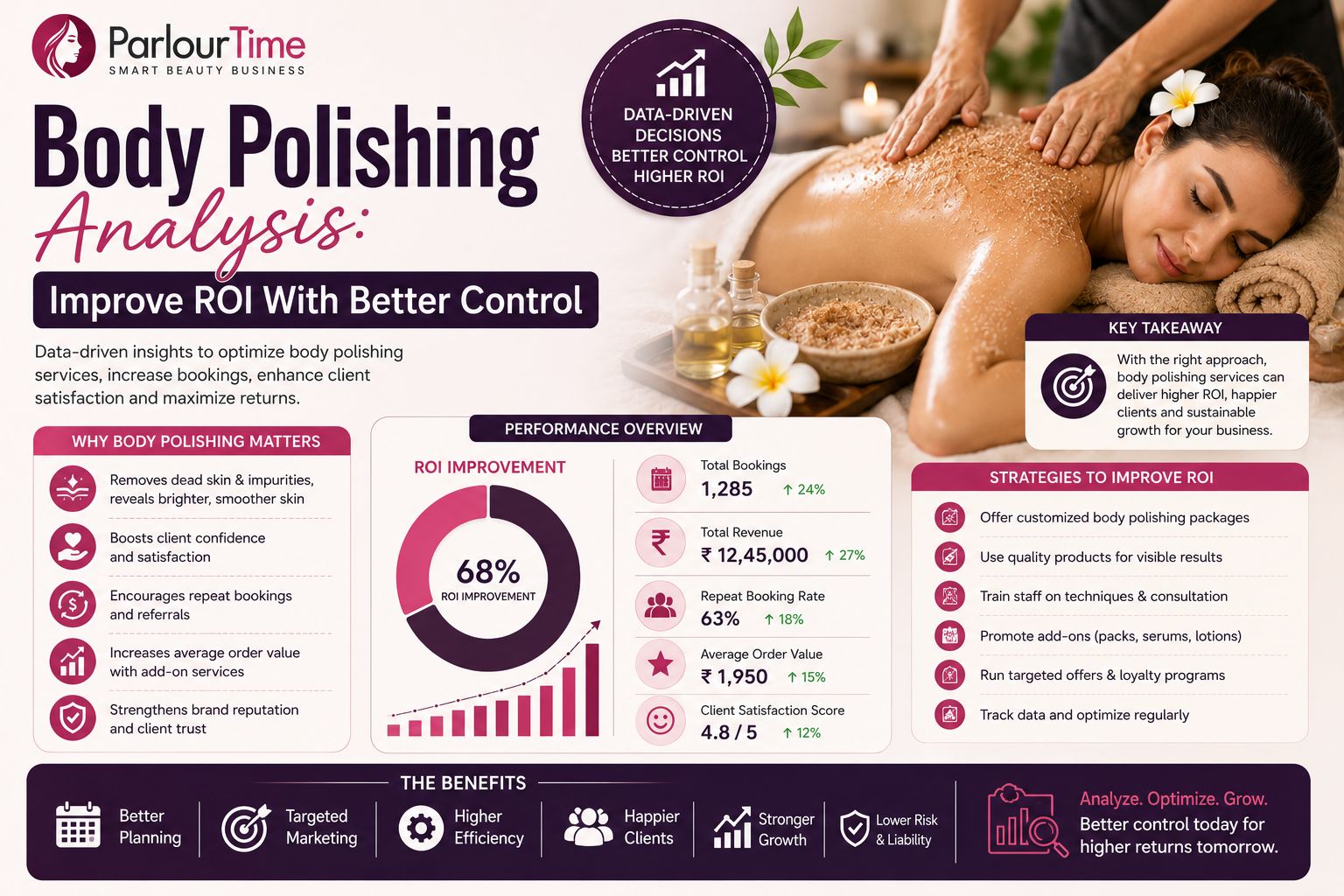
Body Polishing Analysis: Improve ROI With Better Control
Body polishing services can be a profitable addition to any salon menu, but many salon owners and technicians find that the return on investment does not always match the effort. Clients walk in expecting smooth, radiant skin, yet inconsistent results often lead to dissatisfaction and reduced repeat visits. This analysis examines the operational gaps that affect body polishing ROI and offers a practical approach to improving control over the process, from product selection to aftercare advice.
Understanding the Gap Between Service Effort and Client Satisfaction
When a client books a body polishing session, they typically expect immediate softness, visible glow, and a comfortable experience. But honestly, the gap between what the technician delivers and what the client perceives often begins with small differences in pressure, product quantity, or duration of the scrub. Many salons apply a standard protocol without accounting for skin type, sensitivity, or body area variation. As a result, some clients experience redness, over-exfoliation, or patchy results, which reduces the perceived value. And then the confusion grows when the client compares their outcome with a friend’s treatment at a different salon. Without standardised control, the service becomes unpredictable, and the technician loses the ability to replicate good results consistently. This unpredictability directly impacts client retention and the salon’s ability to justify premium pricing. Understanding this gap is the first step toward improving ROI through better process management.
Why Results Vary and What Salon Owners Overlook
Body polishing results depend on several intersecting factors that many salon operations underestimate. Skin thickness, recent sun exposure, current product inventory, and even seasonal humidity can change how the scrub interacts with the skin. In many Indian salons, the same scrub is used for both dry and oily skin without customisation, leading to either insufficient exfoliation or excessive irritation. Another overlooked factor is the technician’s hand pressure. Experienced hands may adapt naturally, but inconsistent training means different technicians produce different results for the same package. Also, the interval between sessions matters. Some clients come in too frequently, causing skin fatigue, while others wait too long and lose cumulative benefits. Salon owners often assume the product alone drives the outcome, but the real differentiator is the combination of skin assessment, technique, and aftercare instruction. When these elements are not controlled, the service outcome becomes a gamble rather than a reliable offering.
Common Mistakes That Reduce Service Value and Repeat Business
A frequent assumption is that using a premium product guarantees premium results. In reality, product quality only supports the service; the application method determines success. Many salons skip patch testing before full-body application, especially with new clients, which can lead to allergic reactions or intense stinging. Another blind spot is inadequate time management. Some technicians rush through the scrub to fit more appointments, leaving certain areas under-exfoliated and others over-scrubbed. The client may leave with uneven texture or lingering roughness. Additionally, the lack of a structured aftercare routine creates a gap between the treatment outcome and the client’s home maintenance. If the salon does not provide clear instructions about moisturising, sun protection, and product usage, the glow fades faster than expected. This disappointment reduces the likelihood of rebooking and damages the salon’s reputation through word-of-mouth. Recognizing these mistakes helps salon owners shift from reactive problem-solving to proactive process improvement.
Practical Steps to Regain Control and Justify Premium Pricing
Regaining control over body polishing ROI requires a systematic approach that starts before the client arrives. First, standardise the consultation process. Every body polishing client should have a quick skin assessment that records sensitivity, medication use, and past reactions. This data allows the technician to adjust pressure, product choice, and session duration accordingly. Second, invest in consistent technician training that covers not only the application sequence but also client communication and aftercare guidance. When every technician follows the same workflow, the service becomes repeatable and predictable. Third, create a session interval recommendation based on skin type rather than a fixed calendar. Dry or sensitive skin may need longer breaks, while oily or sun-damaged skin may benefit from more frequent sessions. Finally, provide a printed aftercare sheet with specific product recommendations. This small step reinforces the salon’s professionalism and helps the client maintain results longer, increasing perceived value and the likelihood of return visits. Many beauty service professionals discuss these strategies on platforms like parlourtime, where salon operations and client satisfaction are regularly examined. The goal is not to add complexity but to introduce precision into every step of the service journey.
Frequently Asked Questions
q How can I measure ROI for body polishing services?
a Track repeat booking rates, average ticket value per session, and client feedback on result consistency to evaluate whether your process control translates into financial return.
q What causes inconsistent body polishing results across different clients?
a Variations in skin type, product compatibility, technician technique, and aftercare compliance create differences that standardised protocols often fail to address.
q Does using a branded scrub guarantee better results?
a Branded products provide quality ingredients, but application method, pressure, and timing determine whether the client experiences the full benefit of those ingredients.
q How often should clients get body polishing for optimal results?
a For normal skin, monthly sessions are common, but oily or dry skin types may require shorter or longer intervals depending on how the skin responds to exfoliation.
q What should I include in a body polishing aftercare sheet?
a Include moisturiser recommendations, sun protection instructions, avoidance of harsh soaps, and a schedule for gentle exfoliation between salon visits to prolong smoothness.
q How can I train my technicians to deliver consistent body polishing results?
a Implement a standard operating procedure that covers skin assessment, product mixing, application technique, pressure control, timing, and post-service client communication.
q Is it worth investing in separate body polishing products for different skin types?
a Yes, because single-product protocols often under-serve sensitive clients and over-exfoliate oily skin, leading to reduced satisfaction and lower repeat rates.
q What is the most overlooked factor in body polishing profitability?
a The gap between the salon’s service description and the client’s actual experience often causes dissatisfaction even when the treatment is technically correct.Earn Upto ₹70,000/Month! Become a Parlourtime Partner.