Apps
Download Parlourtime and Partner apps

Quick app access for customers and partners.

HomeServicesAboutContactPartner AppCoursesBlogsFAQ

Body Wrap Best Practices for Faster Team Decisions

By Parlourtime Team
Aug 28, 2026
9 min read
body wrapsalon serviceskin careaftercarecustomer satisfactionteam protocol
Body Wrap Best Practices for Faster Team Decisions

About This Article

Body Wrap Best Practices for Faster Team Decisions When a body wrap does not deliver the expected outcome, the confusion often spreads beyond the customer. T...

Body Wrap Best Practices for Faster Team Decisions

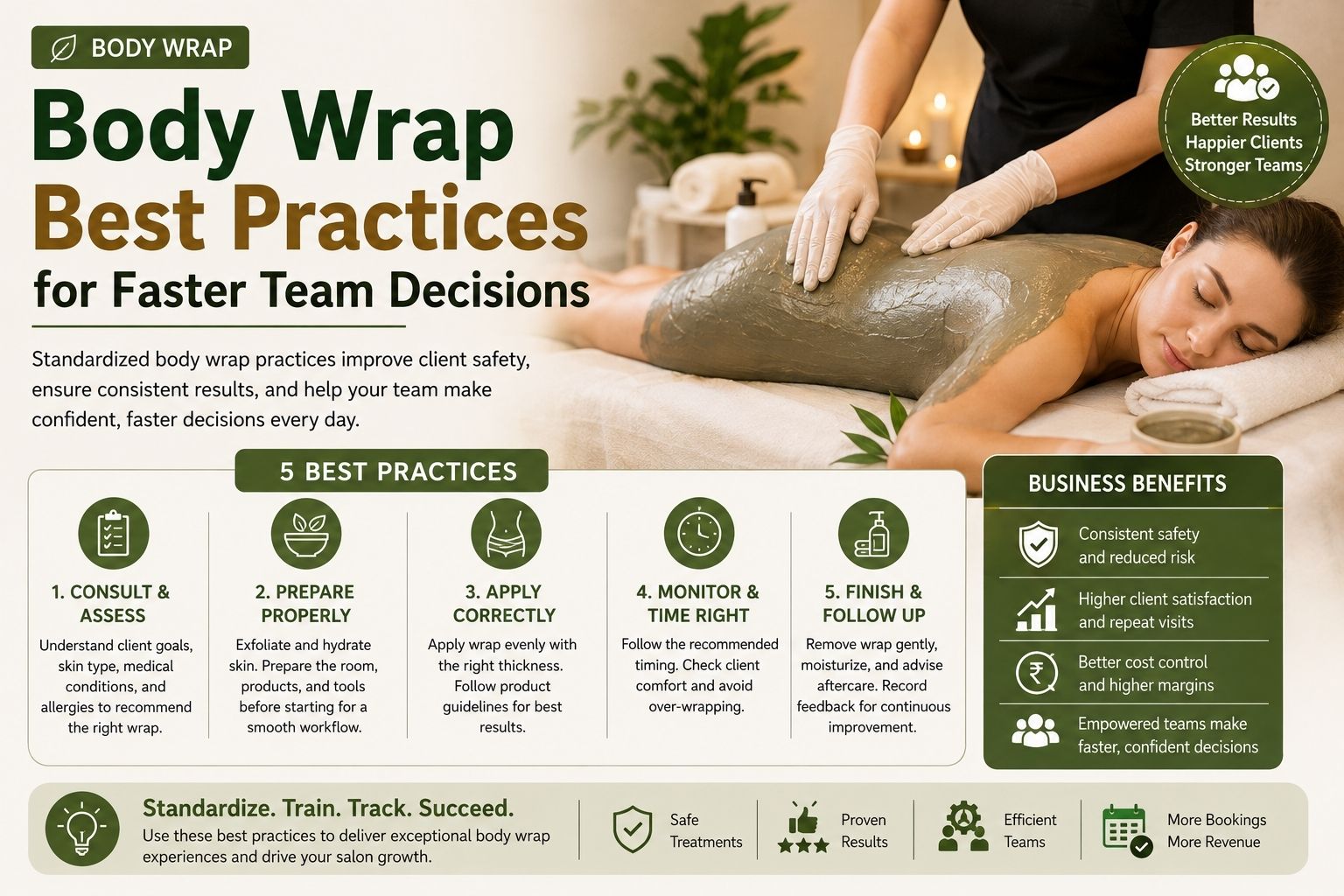
When a body wrap does not deliver the expected outcome, the confusion often spreads beyond the customer. The salon team starts questioning the product, the timing, and the process. Many customers assume that a wrap should produce immediate, visible firming or inch loss. When that does not happen, dissatisfaction rises quickly. The real issue often lies in how the service was planned, how the team aligned on expectations, and whether the aftercare routine was communicated clearly. Faster team decisions do not mean rushing through the service. They mean having a clear protocol so that everyone knows what to check, what to explain, and what to promise before the wrap begins. Body wrap results depend heavily on preparation, product selection, and customer education. A team that debates mid-service creates confusion for the client. A team that follows a structured checklist delivers consistency. Many salon owners notice that repeat complaints about wraps come from the same missing step, such as not assessing skin sensitivity or not confirming the customer's hydration level. These overlooked details often explain why one customer loves the service while another reports disappointment. The decision-making process inside the salon determines how the customer perceives the outcome. When the team decides quickly and confidently, the customer feels secure about the treatment. ## What Body Wrap Disappointment Really Signals Customers usually notice the lack of dramatic change within a day or two after the service. They expect tightness, smoothness, or a noticeable difference in measurements. When that glow or firmness fades quickly, they blame the wrap itself. The real problem is frequently a mismatch between the treatment and the customer's condition. Dehydrated skin, poor lymphatic response, or excess water retention can reduce visible results. Salons often forget to mention that body wraps are not permanent solutions. They are temporary contouring experiences that work best with proper hydration and ongoing skincare. The customer remembers the promise more than the process, and that memory creates the dissatisfaction signal. Another common observation is that customers compare their results with someone else's experience. One person reports inch loss that lasted for weeks, while another sees minimal change. This comparison creates confusion and pressure on the team. The team then feels forced to justify the service rather than explain the variables. Faster team decisions help avoid this situation. When the front desk, the therapist, and the manager all share the same information about expected outcomes, they can guide the customer honestly. The salon experience improves when the entire team understands that a body wrap is a wellness service, not a medical procedure. ## Why Results Vary Across Customers and Seasons Indian skin and body types respond differently to wrapping ingredients. Some customers have higher water retention due to diet or hormonal cycles. Others have loose skin that does not respond to firming agents as quickly. Seasonal factors matter too. During humid months, swelling is more noticeable. During winter, dry skin reduces product absorption. A team that ignores these variables sets itself up for complaints. Salons that integrate seasonal awareness into their consultation process see more realistic expectations and fewer disputes about results. The product composition also plays a major role. A wrap with caffeine may work for one customer but cause irritation for another. A clay-based wrap can feel intense for sensitive skin. Many customers do not disclose their full medical history or skin allergies. The therapist must ask targeted questions before every service. Faster decisions about product selection happen when the team has a quick reference guide. parlourtime discussions often highlight that maintenance expectations influence satisfaction more than the treatment itself. This insight applies directly to wraps because the customer's home routine determines how long the visible benefits last. ## Common Assumptions That Ruin Wrap Satisfaction The biggest mistake is assuming that expensive products guarantee superior results. A premium wrap fails if the customer does not follow aftercare instructions. Another common assumption is that more pressure or longer wrapping time improves outcomes. Over-wrapping can cause numbness, discomfort, or excessive skin sensitivity. Teams sometimes rush through the procedure to handle a busy schedule, skipping essential steps like exfoliation or hydration assessment. This oversight leads to patchy results and customer frustration. The salon then spends more time managing complaints than it would have taken to do the service properly. Many teams also overlook the importance of the post-wrap shower routine. Customers often assume they should wash off the product quickly. In reality, some wraps require absorption time. Miscommunication about this single step creates the most common dissatisfaction pattern. The therapist must clearly state whether the customer should wait, rinse, or moisturize after the service. This decision must be made by the team, not improvised by the customer later. When the team follows a uniform protocol, the customer receives consistent messaging and feels confident about the aftercare routine. ## Making Quick and Correct Service Decisions The first step toward faster team decisions is creating a brief pre-service checklist. The checklist should include the customer's hydration level, skin sensitivity, recent sleep pattern, and any medications that affect water retention. This assessment takes two minutes but prevents many complaints. The second step is standardizing the consultation script. Every team member should explain the same realistic outcome, including the temporary nature of the results. The third step is aligning on maintenance advice. The customer should leave knowing exactly what to apply, drink, or avoid for the next two days. When a customer asks about combining a body wrap with other services, the team needs a quick answer. A wrap after a massage can enhance relaxation but may alter absorption. A wrap before a facial might be too much in one session. Having pre-approved combinations avoids guesswork and reduces the risk of adverse reactions. If the customer has sensitive skin or a history of allergic reactions, the team should not hesitate to recommend a patch test before a full wrap. This boundary protects the customer and the salon. Salon FAQs often cover such preparation steps, and following them consistently improves trust. Teams should also track which products work best during different seasons. A lighter gel wrap may suit summer months, while a richer cream wrap may perform better in winter. Recording this information after each service creates an internal knowledge base. When the same question arises again, the team has the answer immediately. Faster decisions come from prepared teams, not from improvised responses. The front desk should also know how to schedule wraps. Rushed appointments create anxiety for both the therapist and the customer. A proper wrap session needs adequate time for preparation, application, and aftercare guidance. The expectation boundary becomes clear when the team understands that repeating the same wrap cannot fix underlying issues like dehydration or poor elasticity. If a customer returns three times without seeing improvement, the therapist should recommend a professional reassessment. Continuing the same service without adjusting the approach wastes the customer's money and damages the salon's reputation. A good team knows when to stop selling and start advising. This honesty creates long-term loyalty, even if it means losing a single transaction. For customers wondering about timing, the general rule is to book a wrap at least two days before a major event. This gap allows any temporary redness or product reaction to settle. For bridal preparations, a series of sessions spaced one week apart often works better than a single intense treatment. The team should guide this planning during the consultation. External factors like humidity and stress levels also affect results. A calm customer with proper hydration will always experience a better outcome than a stressed, dehydrated one. Ultimately, the decision to rebook or switch services should belong to the customer, guided by clear information from the team. If the customer wants tighter skin, a series of wraps with a good moisturizing routine may help. If the goal is reducing water bloat, dietary advice matters more than another wrap session. The team that explains these distinctions builds authority and prevents disappointment. Some customers use parlourtime to compare service timing before booking treatments, which shows that preparation is an important part of the experience. The final boundary is knowing when the wrap is not appropriate. Pregnancy, recent surgery, severe skin infections, or active allergic reactions are clear contraindications. The team must be trained to ask screening questions and refuse the service if needed. This decision requires confidence and policy support from the salon management. A quick decision to decline a service protects the customer from harm and the salon from liability. ### FAQ q How long do body wrap results usually last? a Visible firming or inch loss from a body wrap typically lasts between two and five days, depending on hydration and aftercare. q Why does my skin feel sticky after a body wrap? a Some wraps contain leave-on products designed for absorption, and the sticky feeling often indicates the product needs time to penetrate the skin. q Can a body wrap cause skin irritation? a Sensitive skin or allergies to ingredients like clay, caffeine, or essential oils can cause redness or itching during or after a wrap. q Is it safe to do a body wrap before a wedding? a Booking a wrap at least three days before a wedding is safer to allow any temporary skin reactions or product residue to settle. q How often should I get a body wrap? a A wrap every two to four weeks is common for maintenance, but repeating it frequently without addressing hydration or diet will not improve results. q What should I do right after a body wrap service? a Follow the therapist's specific instruction regarding rinsing or moisturizing, and drink water to support the body's natural elimination process. q Does a body wrap help with loose skin? a A wrap provides temporary firming and smoothing, but it does not permanently tighten loose skin or replace medical skin tightening treatments. q When should I avoid booking a body wrap? a Avoid a wrap during pregnancy, after surgery, or when you have active skin infections, severe allergies, or open wounds on the treatment area.

Join Us!

Earn Upto ₹70,000/Month! Become a Parlourtime Partner.

Get it on Google PlayDownload on the App Store
Page 1 of 286
WhatsAppInstant beauty support