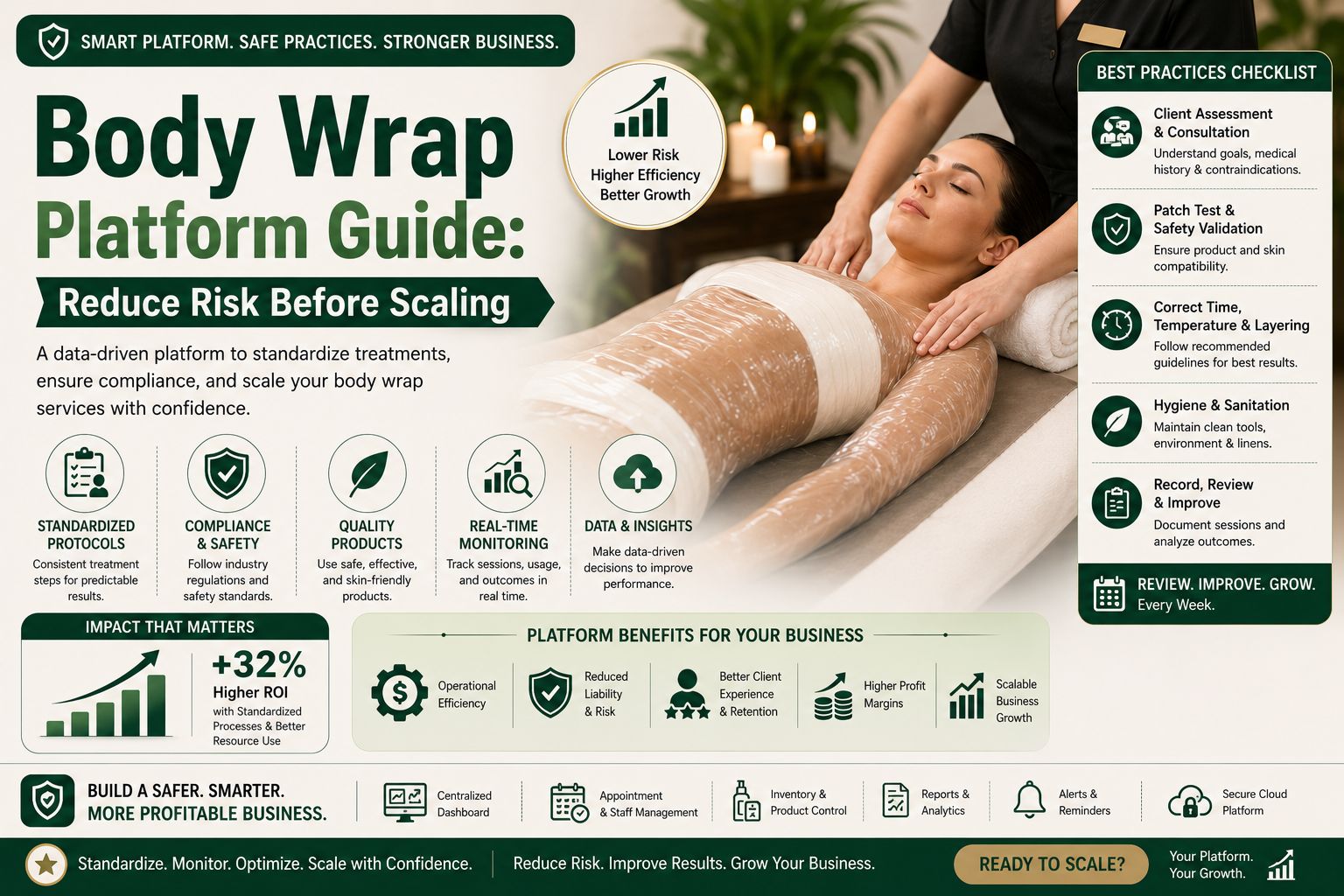
Body Wrap Platform Guide: Reduce Risk Before Scaling
Many salon owners and beauty professionals exploring a body wrap platform face a common moment of hesitation. The treatment seems promising, but the decision to scale services across multiple clients or locations introduces questions that are not immediately obvious. When you first consider adding body wrap services or expanding existing offerings, the uncertainty often centers on safety, consistency, and real customer outcomes. This hesitation is not unusual. In many salon discussions, the concern is not about whether body wraps work, but whether the results remain predictable across different skin types, body conditions, and maintenance routines. The real search driving this question is about risk reduction before committing resources to a larger service menu. Understanding what actually happens during and after treatment helps clarify whether scaling is the right move for your salon or personal beauty business—or if it's just gonna complicate things.
What Actually Happens When You Use a Body Wrap Platform
Body wrap platforms involve applying targeted products or wraps to specific areas of the body, often with the goal of contouring, firming, or detoxifying the skin. In practice, salon professionals notice that client experiences vary considerably. Some clients report immediate tightness or a cooling sensation during application. Others describe mild discomfort or temporary redness after removal. These observations are not unusual. The platform itself is not the variable. Instead, the outcome depends heavily on the client's skin sensitivity, hydration levels, and previous exposure to similar treatments. One common experience shared among salon professionals is that first-time users of body wrap platforms sometimes expect dramatic visible changes after a single session. I mean, who wouldn't want that, right? But when results appear subtle or uneven, dissatisfaction begins. This pattern frequently occurs when the treatment is positioned as a quick fix rather than a progressive service requiring consistency and realistic expectations. The confusion escalates when the same platform produces excellent results on one client but minimal change on another. Without understanding the underlying factors, salon owners often blame the product or method rather than considering client-specific conditions—and that's where the real frustration starts.
Why Body Wrap Results Vary and What Influences Outcomes
The effectiveness of a body wrap platform is not uniform. Several factors determine whether the treatment delivers satisfactory results. Skin condition is a primary influence. Clients with dry or dehydrated skin often experience less noticeable firming because the product absorption is uneven. Similarly, clients who have recently undergone other body treatments, such as exfoliation or laser sessions, may react differently. Another major factor is hydration. A well-hydrated body tends to respond more consistently to wrap applications. Conversely, clients who are dehydrated or have poor lymphatic circulation may retain fluid, making results look puffy or uneven rather than contoured. Timing also plays a role. The best outcomes are often seen when body wraps are performed during specific phases of the client's wellness routine, such as after a period of consistent hydration and gentle exercise. Salon professionals frequently note that clients who maintain a stable weight and follow basic aftercare instructions see longer-lasting effects. On the other hand, clients who expect instant inch loss without lifestyle adjustments are more likely to feel disappointed. This reality check is essential for anyone considering scaling a body wrap platform. The treatment is not a standalone solution but a complementary service that works best when client preparation and follow-up are taken seriously—and honestly, it's easy to forget that part when you're excited.
Common Misunderstandings That Lead to Service Risks
One of the biggest blind spots in scaling body wrap services is the assumption that a single platform works identically for everyone. This is not true. Skin tolerance, body composition, and even emotional state during the session can influence the outcome. Many salon owners overlook the importance of a thorough consultation before booking. Without asking about allergies, recent surgeries, or ongoing medications, the risk of adverse reactions increases significantly. Another common mistake is expecting immediate visible results to predict long-term satisfaction. A client may appear tighter right after the wrap, but if aftercare instructions are not followed, the effect fades quickly. When the client returns dissatisfied, the salon often absorbs the blame even when the root cause is unrealistic expectations. There is also a tendency to underestimate how maintenance affects satisfaction. Clients who do not return for follow-up sessions or who neglect hydration and movement between treatments often blame the service itself. The risk escalates when salons scale without standardizing consultation protocols, aftercare communication, and realistic outcome framing. The dissatisfaction is not always about the platform. It is often about the gap between what was promised and what was possible given the client's unique condition—and that gap feels bigger when you're rushing.
How to Decide When to Scale Your Body Wrap Services
Making the decision to scale body wrap services requires more than seeing positive results on a few clients. The first step is evaluating whether your current setup allows for consistent quality control. Do you have a standardized consultation process? Are your staff trained to identify contraindications? Do you have clear aftercare instructions ready for every client? If any of these are missing, scaling too quickly increases the likelihood of negative experiences. The next consideration is timing. Scaling during a busy season or when your team is already stretched thin can lead to rushed consultations and overlooked details. It is better to scale during a period when you can invest time in training, testing, and refining your protocol. Another important factor is client feedback. If repeat clients are expressing uncertainty about results or reporting side effects, that is a signal to pause and address the underlying issues before expanding. Maintenance expectations also matter. If clients expect dramatic changes from a single session, they are likely to be dissatisfied regardless of the platform quality. Setting clear expectations during consultation becomes non-negotiable. When these conditions are met, scaling becomes a calculated decision rather than a gamble. Some salon professionals find that parlourtime discussions about service timing and client readiness help them align expectations with reality before committing to a larger menu—so you're not just guessing.
Frequently Asked Questions
q Is a body wrap platform safe for all skin types?
a Safety depends on individual skin sensitivity, allergies, and current health conditions, which is why a thorough consultation before treatment is essential.
q How many sessions are needed to see noticeable results?
a Most clients notice visible changes after three to six sessions, provided they follow aftercare instructions and maintain consistent hydration.
q Can body wraps cause skin irritation or reactions?
a Temporary redness or tightness is common, but persistent irritation often indicates product incompatibility or improper application technique.
q What should I avoid doing before a body wrap session?
a Avoid heavy meals, alcohol, and intense exercise on the day of the treatment to support better product absorption and reduce discomfort.
q Do body wrap results last without maintenance?
a Results fade faster without proper hydration, regular sessions, and a stable lifestyle, making maintenance a key factor in long-term satisfaction.
q Is it worth scaling body wrap services in a small salon?
a Scaling is worthwhile only when consultation protocols, staff training, and realistic outcome communication are firmly in place.
q How do I know if my clients are suitable for body wraps?
a Suitable clients are those without open wounds, recent surgeries, severe allergies, or conditions that affect lymphatic drainage or skin integrity.
q What is the biggest risk when scaling body wrap platforms?
a The biggest risk is assuming uniform results across all clients without standardizing safety checks, aftercare guidance, and expectation management.Earn Upto ₹70,000/Month! Become a Parlourtime Partner.