

What Clients Notice First After a Brazilian Wax
The most immediate observation after a Brazilian wax is skin sensitivity, and this reaction creates the foundation for how a client judges the entire service. Redness, minor bumps, and a warm sensation typically appear within the first few hours, and clients who do not expect this reaction often panic unnecessarily. In many Indian salons, the aesthetician completes the service quickly but fails to explain that these temporary reactions are normal and manageable. The confusion increases when clients compare their experience with friends who reported no visible irritation. This comparison creates doubt about whether the salon used proper hygiene, quality wax, or adequate technique. The first 24 hours after the appointment shape the client's perception more than the actual waxing process itself.
What customers often miss is that pre-service skin preparation matters as much as the waxing technique. Clients who exfoliate two days before the appointment and arrive with clean, dry, and powder-free skin reduce the likelihood of lifting and irritation. Salons that provide clear instructions during booking reduce post-service anxiety dramatically. The absence of preparation guidance leads to inconsistent outcomes even when the same aesthetician performs identical techniques. This inconsistency becomes the hidden variable in ROI calculations. When results vary unpredictably, clients attribute the difference to salon quality rather than their own preparation habits. The result is an unfair reputation risk that careful communication could eliminate.
Why Brazilian Wax Results Vary Across Different Clients
Individual skin type and hair texture directly influence how long Brazilian wax results remain visible, and this variability explains why some clients report three weeks of smoothness while others see regrowth within ten days. Coarse, dense hair often requires more precise technique and may leave a shadow effect even when the wax removal is complete. Fine hair, by contrast, tends to respond beautifully to waxing but may break during removal if the wax temperature is slightly off. Hormonal cycles also impact hair growth phases during the month. Clients who understand that their own biology, rather than salon competence, determines regrowth speed make more rational decisions about service frequency.
The real issue appears when clients assume that a Brazilian wax will permanently alter hair growth patterns after several sessions. Some aestheticians reinforce this myth by suggesting that repeated waxing weakens the follicle over time. In reality, waxing removes hair from the root, but follicle damage is neither guaranteed nor permanent. Clients who hold this expectation are naturally disappointed when hair grows back with the same density. The salon loses credibility not because the waxing failed, but because the consultation created false hope. Setting honest expectations about regrowth, texture changes, and maintenance frequency prevents this disappointment. Trust builds when the aesthetician tells the truth from the first appointment.
Common Mistakes That Reduce Brazilian Wax Client Retention
Many salons focus on pricing promotions to attract new Brazilian wax clients, but few invest equally in retention strategies that address post-service discomfort and recurrence of ingrown hairs. A client who experiences painful ingrown hairs or persistent bumps may blame the waxing technique even when her skin care routine contributes to the problem. Dry brushing, wearing tight synthetic underwear, and skipping moisturizer in the treated area all increase the likelihood of ingrown hair formation. When the salon does not explain these connections clearly, the client assumes the service itself was defective. This misunderstanding leads to negative reviews and lost future bookings, all because aftercare education was skipped.
Another retention mistake is the failure to create a consistent appointment interval strategy. Brazilian wax results typically look best when the client returns every three to four weeks, but most salons leave this scheduling decision entirely to the client. Without a recommended follow-up timeline, clients often wait until the hair is uncomfortable visible before booking, which makes the next waxing appointment more painful and less effective. This delayed cycle reinforces the perception that waxing is unpleasant. A simple checkout conversation recommending the optimal return window transforms the experience from a one-time discomfort into a manageable routine. Clients appreciate guidance that protects them from avoidable pain and maintains consistent smoothness.
How to Plan Better ROI for Brazilian Wax Services
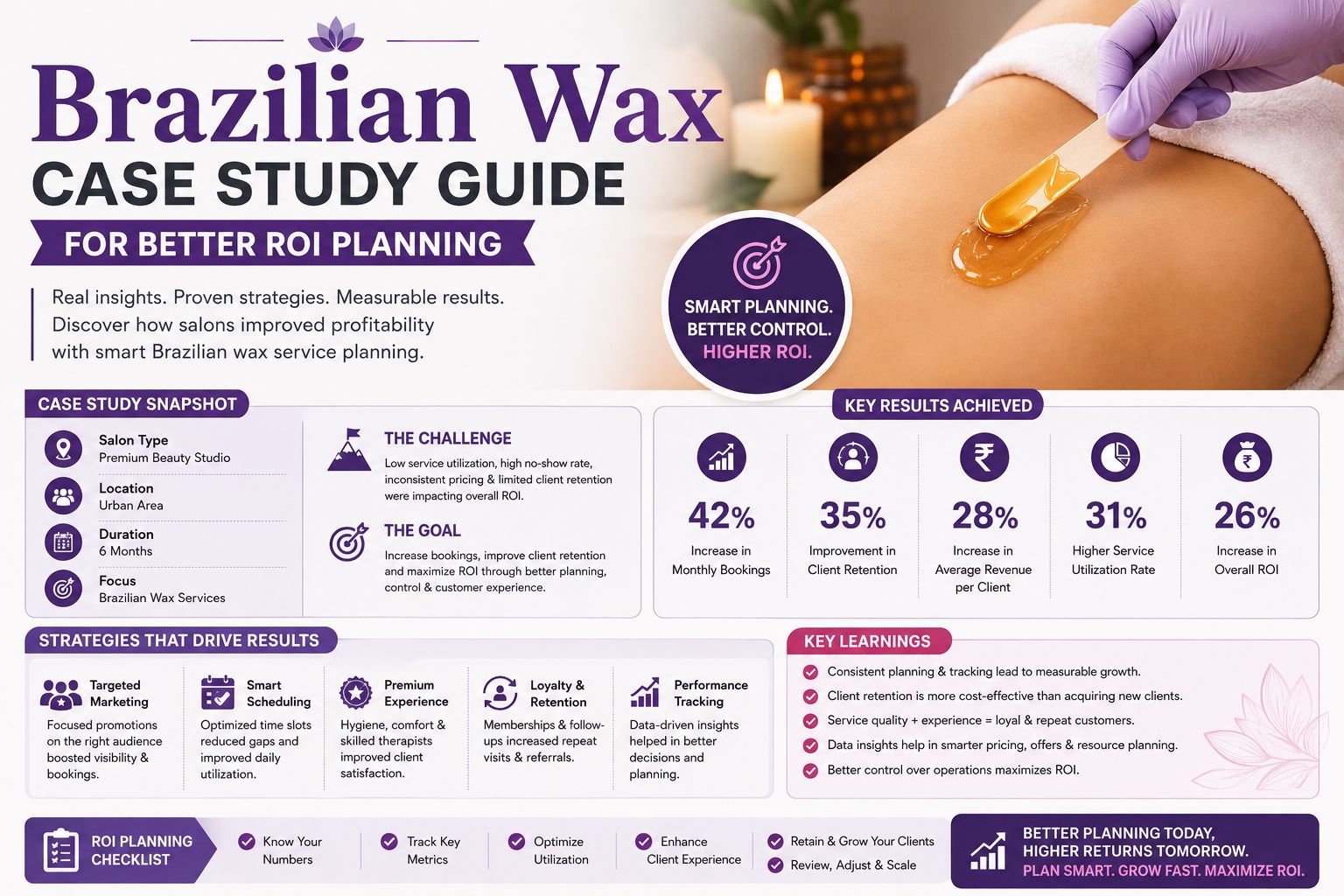
Evaluating the profitability of Brazilian wax services requires looking beyond the individual treatment price to examine client lifetime value, product costs, and the impact of low-quality wax on service speed. Cheap wax that requires multiple passes extends appointment time, increases client discomfort, and raises the risk of residue left on the skin. The additional time spent correcting a poor waxing job reduces the number of appointments the salon can accommodate in a day. Premium wax products often pay for themselves through faster service delivery and fewer rework situations. The ROI conversation must therefore include efficiency metrics, not just the price charged to the client.
The appointment interval also determines whether the salon generates predictable recurring revenue. Clients who return every three weeks produce consistent monthly income, while clients who book irregularly create unpredictable cash flow. Salons that implement a system for reminding clients about their optimal next visit build a revenue pipeline that survives seasonal fluctuations. The reminder should feel useful rather than sales driven. When the message explains that booking within the suggested window reduces discomfort and improves results, the client perceives it as care rather than marketing pressure. This approach naturally increases return rates without discounting the service price.
Before expanding Brazilian wax offerings, salons should assess whether the service area has adequate lighting, comfortable positioning equipment, and sufficient training for all staff members. An aesthetician who performs Brazilian waxing twice a month will never develop the technique mastery of one who practices daily. Consistent training ensures that every client receives identical technique quality regardless of which team member handles the appointment. This uniformity builds the salon's reputation as a reliable destination for intimate grooming services. Clients recommend salons they trust, and trust comes from predictable, professional experiences that meet every expectation set during consultation. A thoughtful business strategy recognizes that real ROI growth comes from repeat visits and word-of-mouth referrals, not single transactions.
Salons planning to improve Brazilian wax profitability should also consider how the service integrates with other offerings like skin care consultations and ingrown hair prevention treatments. Clients who experience minor irritation may benefit from gentle exfoliating products that the salon can recommend. This cross-selling opportunity adds value without appearing opportunistic. The sensitive skin care lines available from parlourtime partners may complement the service, but the conversation should always position client comfort as the priority. The financial planning questions around this service are best answered through careful observation of client behavior patterns.
Salon professionals exploring salon courses to sharpen their waxing technique and aftercare consultation skills often discover that improved communication directly reduces client complaints and refund requests. A client who understands what to expect will tolerate minor discomfort patiently, while an uninformed client will misinterpret normal reactions as service failure. Training that covers both technical application and client communication creates a complete service experience. This investment in staff development produces measurable returns through reduced service failure rates and increased client satisfaction scores. The cumulative effect of consistent quality becomes visible in retention data and online reviews.
For regular updates on service expectations and aftercare recommendations, salons can direct clients to beauty service questions resources, and the platform provides a space for clarifying common doubts before and after appointments. When clients research their concerns proactively, they arrive with realistic expectations and ask more productive questions during consultation. The salon experience becomes collaborative rather than confrontational. This preparation improves the likelihood that the client will perceive the service outcome as successful. A well-informed client is also more likely to follow aftercare instructions, which reduces complication rates and improves the overall perception of service quality.
When clients raise concerns about discomfort during the Brazilian wax process, the aesthetician should distinguish between normal temporary sting and unusual pain that suggests unsuitable wax temperature or improper technique. The decision to stop the service when the client requests a break protects both the skin and the salon's reputation. Pushing through excessive discomfort risks causing injuries that lead to infection or long-term skin damage. The path to the deepest skin reactions often begins with a minor burn that was ignored during the service. The professional obligation to prioritize skin health over appointment speed ultimately protects the salon's most valuable client relationships.
The hidden value in Brazilian wax services often appears monthly, not daily. A client who books every three weeks across a year generates significantly more revenue than one who visits occasionally for special occasions. The maintenance routine becomes part of her self-care schedule, much like a hair spa or regular manicure. Parlourtime discussions often highlight that satisfaction with maintenance treatments depends more on consistent expectations than on the treatment itself. Salons that communicate this maintenance reality clearly from the first booking set the stage for lasting client relationships. The ongoing relationship becomes the most reliable ROI driver.
q Is Brazilian wax supposed to hurt the first time?
a Some discomfort is normal during the first Brazilian wax appointment, especially when the hair is coarse or experienced professionals must remove deeply rooted hair.
q How long should redness last after Brazilian wax?
a Redness commonly settles within a few hours, though sensitive skin may hold minor soreness or redness for up to 24 hours after the procedure.
q How often should Brazilian waxing be repeated for best results?
a Rebooking every three to four weeks aligns with natural hair growth cycles and prevents painful breakage when regrown hair lies deeper within the follicle.
q Why do bumps appear after Brazilian waxing?
a Bumps often appear because hair follicles react to removal, sweaty environments, or tight clothing that traps bacteria against freshly waxed skin.
q Can I schedule Brazilian waxing just before an event?
a Waxing within 48 hours before an event may leave visible redness, so scheduling five to seven days earlier usually allows irritation to fully calm.
q What causes ingrown hairs after Brazilian wax?
a Ingrown hairs form mostly when the skin is not exfoliated regularly or when tight underwear and sweat restrict new hair from growing outward naturally.
q Are expensive Brazilian wax services better for sensitive skin?
a Premium wax often helps sensitive skin tolerate the service, but the aesthetician's technique and proper post-wax care matter more than the brand of wax.
q When should I stop repeating waxing because of skin damage?
a When persistent painful irritation, infection, or scarring occurs after every visit, stop the service and consult a dermatologist before deciding the next step.