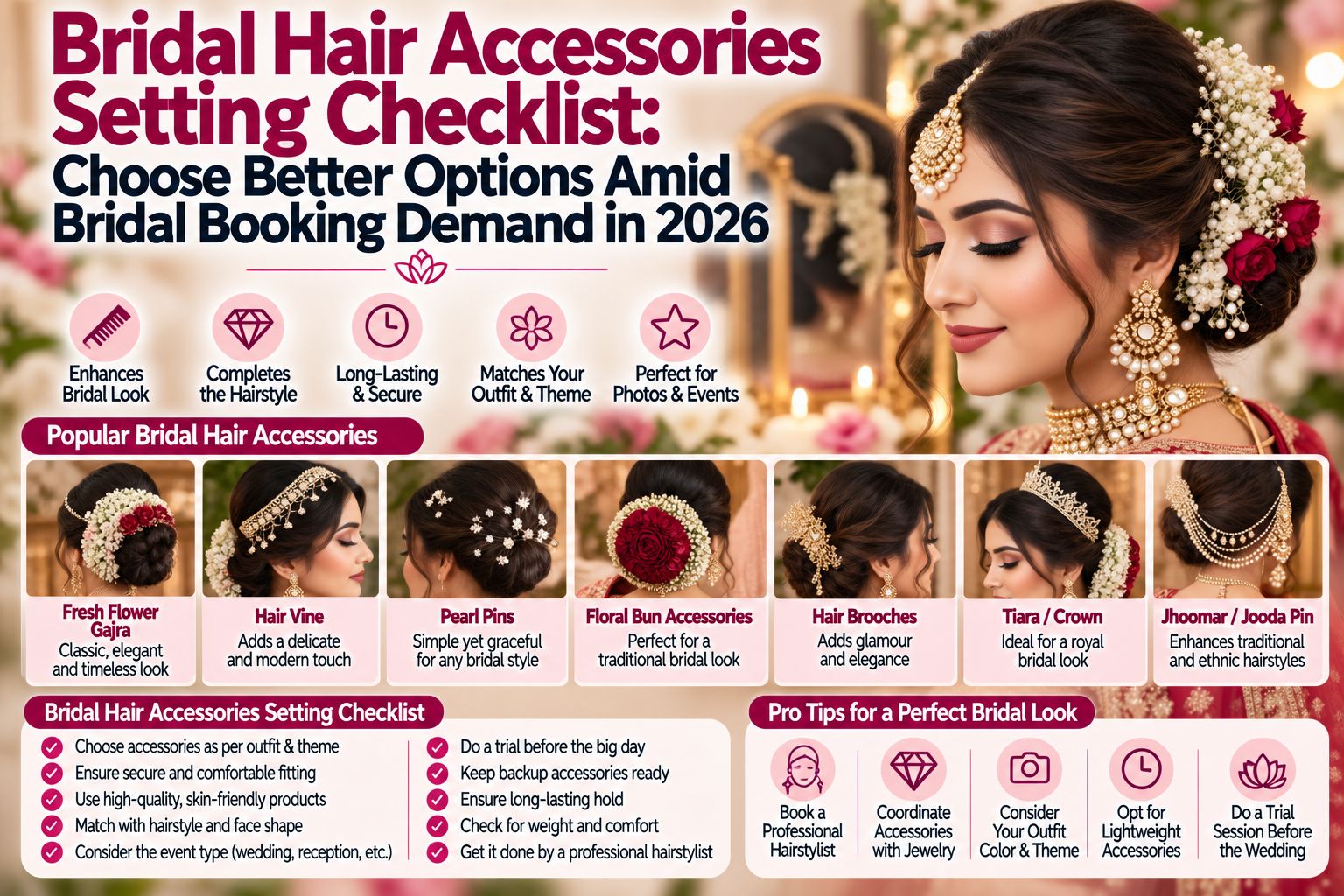


The bridal hair accessories setting checklist exists to settle one practical problem: how to lock accessory choices when your wedding date is fixed but your hairstyle is still being tested. Booked dates fill salon calendars, so trial sessions need a plan. This checklist helps you decide which combs, pins, veils, headbands and clips to confirm, based on hairstyle type, booking timeline, trial session and wedding day needs. Treat booking demand as a planning factor for your own schedule, not as a number anyone has measured for you.
Step 1: Prepare Before the Bridal Hair Trial Session
Bring three or four accessory options to the trial, not one. A single piece leaves you with nothing to compare. Carry the veil or dupatta you actually plan to wear, because weight and fabric change how a bun or braid behaves. Tell your stylist your hair history at the start. Chemically smoothened, coloured or heat-treated hair grips pins differently, and that detail shapes the whole setting plan. Book the trial early enough that a second session stays possible if the first setting fails. If you are unsure how trials usually run, the salon FAQs explain the general process.
Step 2: Test Each Accessory Against Your Hairstyle, Not Photos
Place every accessory on the finished hairstyle during the trial, one at a time. Check comb teeth against the bun base. A wide comb on a small bun tends to lift at the edges, while a narrow comb disappears into thick hair. Test clip grip on fine hair by turning your head slowly. If a clip slides within minutes, that is a real finding, not nerves. Weigh the veil against the hairstyle. A heavy veil on soft curls pulls the shape down faster than on a tight braid. Photographs from someone else's wedding say nothing about your hair density or length.
Step 3: Note Comfort and Movement Signals During the Trial
Comfort tells you more than the mirror does. Pinching behind the ears or at the crown often starts small and becomes a headache by the ceremony. Sit, stand, and turn your head the way you will during rituals. If pins shift during those simple movements, the setting needs work before the wedding day. Humidity and season heat affect hold as well, so a morning trial may not predict an evening event. One useful operational habit: ask your stylist to note exactly where each pin sits. During photos or outfit changes, you or a helper can then reposition a single pin instead of rebuilding the style.
Step 4: Lock In a Final Set and a Backup Plan
Finalize accessories only after the hairstyle base holds steady on its own. If the trial ends with a stable shape and comfortable wear, lock that combination and stop browsing new pieces. Keep a small backup in your wedding kit: two matching pins, one spare clip, and a fine comb. Adding more pins at the venue rarely fixes slipping and often adds pressure. There is a real boundary here. If adjustments stop improving stability or comfort after two or three attempts, change the accessory type rather than repeating the same setup. Very damaged or freshly treated hair may not support certain settings at all, and a lighter plan is the safer route. Some brides use parlourtime to compare service timing before committing to a final trial slot.
Decision Signals That Tell You to Change the Plan
A hairstyle that shifts within the first hour of the trial is a warning, not a small flaw. Persistent pinching means the accessory plan is too heavy for your scalp. Visible gaps between the comb and the bun usually mean the piece and the hairstyle do not match. If your wedding date is close and only one trial slot is available, choose the simpler accessory plan you can test properly instead of an elaborate set you cannot verify. Reassess the hairstyle plan itself when settings fail twice in a row, because repeating the same attempt rarely produces a different result.
Pre-trial preparation signal: bring your real veil and three accessory options so the trial reflects the actual wedding day setup.
Setting decision: match comb width to bun size and check clip grip on fine hair before you buy anything.
Comfort boundary: pinching that lasts more than a few minutes during the trial should simplify the plan, not extend it.
Timing decision: confirm accessories only after the hairstyle base holds steady without extra pins.
Backup plan: pack two matching pins, one spare clip and a fine comb for touch-ups during photos and outfit changes.
Reassessment point: if settings fail two or three times after adjustment, change the accessory type or revisit the hairstyle plan rather than adding more pins.
Written by: Parlour Time Editorial Desk
Published: 30 September 2026, 10:44 PM IST | Updated: 30 September 2026, 10:44 PM IST
Powered by: Parlour Time