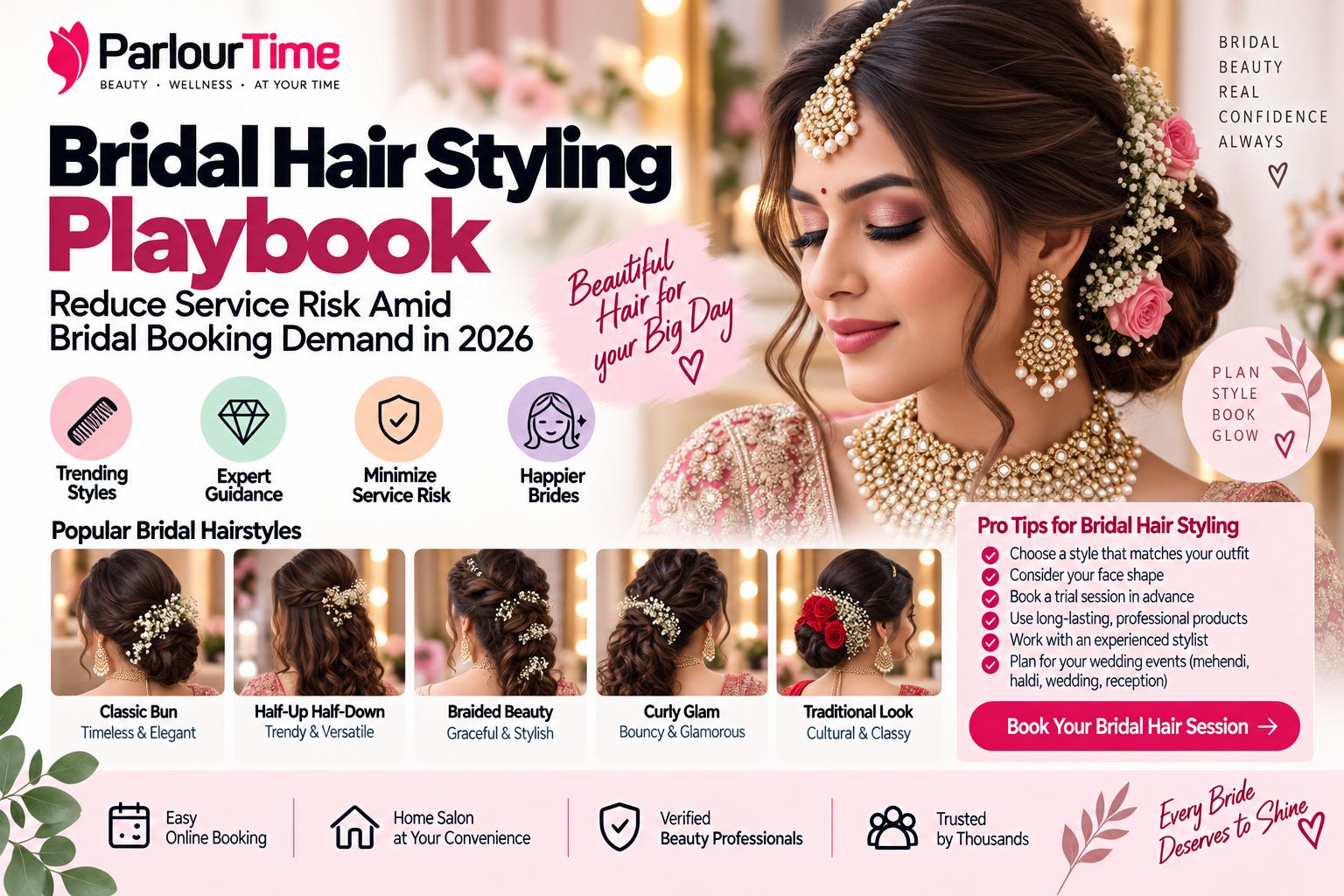


Bridal hair styling service risk is the gap between what a bride expects and what your salon can safely deliver on the day. You reduce it by locking the sequence early: consultation, trial, written terms, wedding day timing, and a backup plan. This playbook walks a stylist through that timeline, stage by stage, so pressure never overrides judgment. Nothing here depends on trend data or market forecasts. Treat 2026 only as a planning reference, and let the hair in front of you set the limits.
Before booking: consultation and contract terms
Service risk starts at the first inquiry. Before you quote a price or hold a date, run a short consultation that covers hair history, recent chemical work, scalp sensitivity, and how many people are in the bridal party. Bridal party size changes everything downstream. Six people in one morning is a different job from two, and it decides how many stylists you need and how early the first person sits down. Once you know the scope, put contract terms in writing. State the deposit amount, what it covers, and the cancellation policy in plain words the client can read without asking twice. A deposit protects your calendar. A cancellation policy protects both sides when a date moves. If a client hesitates over the terms, that is your signal to slow down, not to soften the paperwork.
What is service risk in bridal hair styling?
Service risk covers anything that can damage the result, the client experience, or your business. It includes a style that does not hold, a trial booked so late that changes cannot be tested, unclear pricing, an unconfirmed number of people, and a wedding day schedule with no room for delays. It also includes hair trials run without a proper consultation, because a trial tests a look, not whether the client's hair can support it under real conditions. Most dissatisfaction I see traces back to one of two things: a missing consultation or a missing written term. Neither is about skill. Both are about sequence.
Hair trials and wedding day timing
Book the trial with enough gap to act on what you learn. If the style needs adjusting, you want that discovery weeks out, not days out. Run hair trials exactly as you would on the wedding day: same wash timing, same products, same pinning approach. Then ask the client to live with it for a few hours. You learn more from that than from any reference photo. On the day itself, wedding day timing is the quiet risk factor. Build a schedule with buffer, decide the order of the bridal party in advance, and confirm who handles touch-ups during the ceremony. If the venue is outdoors or the event runs long, agree on a backup plan before you start: who carries spare pins, who can step in, and how a dropped style gets fixed without panic. Keep communication channels clear. One named contact on the client side is better than five people sending messages.
After the service: follow-up and feedback
Send a short follow-up within a few days. Ask how the style held, whether anything loosened, and whether the timing felt workable. This is where your next improvement comes from, and it is also where you catch small problems before they become reviews you cannot answer. Note what worked in the client file for future bookings. If something went wrong, record the cause honestly: late trial, understaffed morning, unclear backup plan. Over time, these notes turn into your own risk checklist. A vendor with a managed-review workflow does something similar, though you can run the same discipline with a notebook. When a client shares feedback, respond once, clearly, and without defensiveness. That single reply often matters more than the service itself.
Practical checks for each bridal booking
Consultation before quote: confirm hair history, scalp sensitivity, and bridal party size before you name a price or hold a date.
Terms in writing: deposit amount and cancellation policy stated plainly, signed or confirmed before the date is locked.
Trial with a usable gap: leave enough time to change the style if it does not suit the hair.
Day schedule with buffer: set the styling order, confirm touch-up responsibility, and name one client-side contact.
Backup plan agreed: spare pins, a second pair of hands, and a simple fix for a style that loosens.
Follow-up sent: ask how it held, note what to repeat, and close the loop with the client.
When you are unsure, ask for a reassessment instead of adding another service on top. Brides often use beauty service questions to compare how others planned their pre-wedding timing, and your own answers at the trial should carry more weight than any photo.
Written by: Parlour Time Editorial Desk
Published: 23 September 2026, 10:18 PM IST | Updated: 23 September 2026, 10:18 PM IST
Powered by: Parlour Time