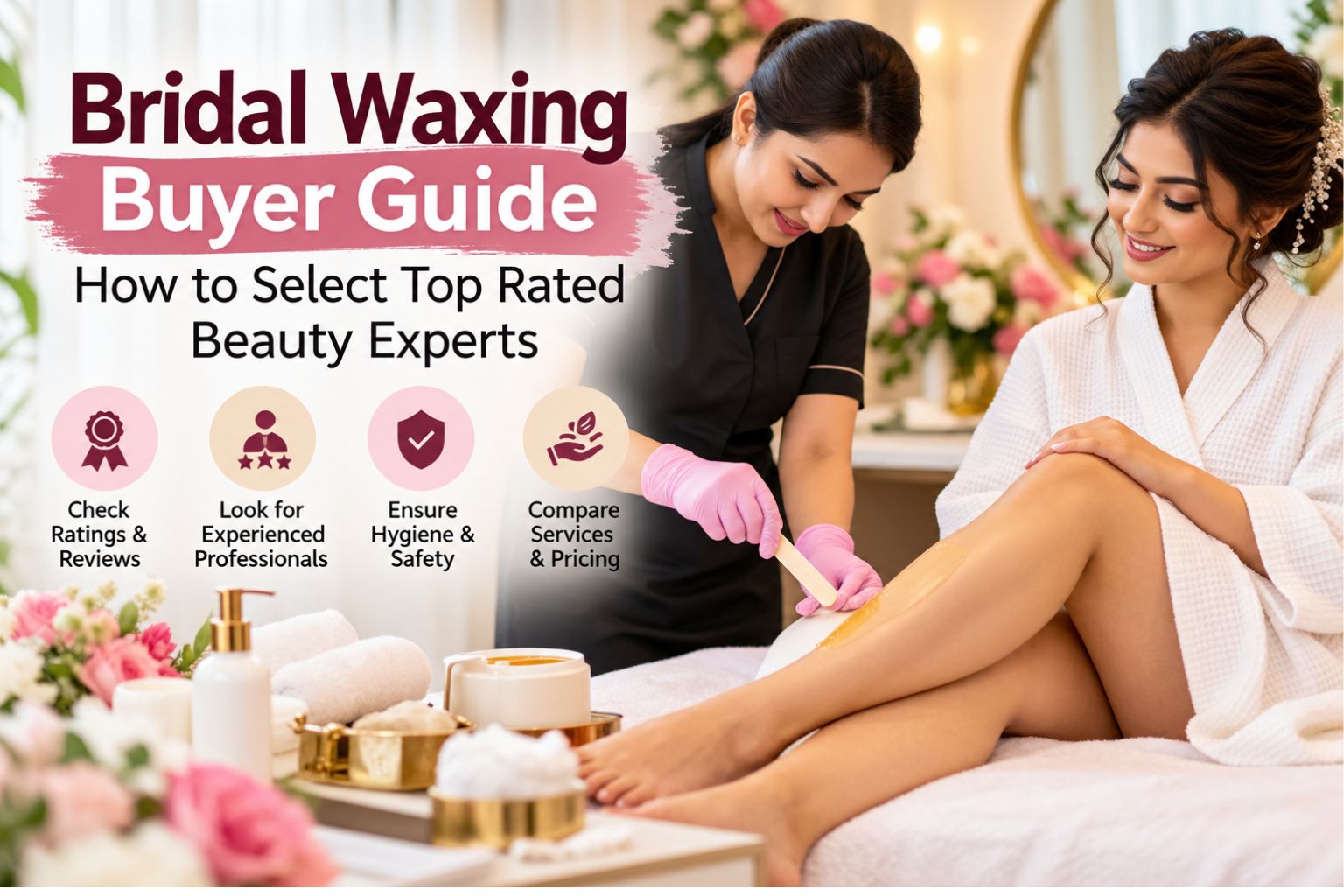


A bridal waxing buyer guide rarely starts with a comparison chart. It usually starts the week before a wedding, when a friend mentions burning, or redness, or those tiny ingrown bumps after a rushed session and you suddenly sit up and think wait, is the person I booked actually the right one? Brides search for top rated beauty experts because they want smooth skin, sure. No surprises on the wedding day. A clear idea of what to expect. But the choice rarely comes down to who charges the most. It comes down to who actually understands your skin, your schedule, and how nervous you are through all of this.
Why Bridal Waxing Decisions Feel So Confusing
What you notice first after a wax is rarely the smoothness you expected. It's the slight tightness. The warm sensation on the upper lip. Or pink patches near the brow that fade in a few hours but still make you nervous for no reason. Confusion begins when these reactions show up right before a function, because now every small mark feels like a problem. Many brides choose a specialist only after a bad session, not before it. You may hear that a salon is top rated and assume the result will be good, without checking whether the technician has handled your skin type or sensitivity before. That single gap, between the rating you read and the questions you never asked, is where most of the worry starts.
What to Check in a Bridal Waxing Consultation
The consultation is the clearest signal you will get before booking, and it costs you nothing to test. A bridal waxing consultation should feel like a short conversation, not a rushed nod. Good signs are easy to spot. The technician asks about your last session and how your skin responded. They ask whether you are on any medication or using any active skincare. They ask the wedding date before suggesting a plan. They tell you what they would do differently if your skin reacted. Weak signs are just as visible. A technician who answers every question with the same routine. Someone who treats your face and your legs as the same job. Someone who cannot say what they would change if something went wrong. If the answers stay generic, that is your answer about the expert. Some brides also use platforms such as parlourtime to look at session timing and aftercare notes before finalising an expert, though the consultation remains the strongest signal you have.
The Mistake Most Brides Make While Comparing Experts
The biggest blind spot is treating price or popularity as proof of safety. A higher price does not guarantee a better outcome if the technician ignores your skin history, your medication, or how close the wedding is. Another common error is booking a full body session days before the event, leaving no room for anything to settle. Many brides also repeat the same routine that caused irritation last time, hoping a different expert will change the result. The routine, not just the salon, is part of the problem. A simple decision boundary helps here. Ask each expert what they would do differently if your skin reacted, and pick the one who gives you a specific answer rather than a reassuring one. That is also where a vendor with a managed-review workflow tends to differ from a solo technician, because written protocols make those answers easier to give and easier for you to check.
How to Decide Between Two Seemingly Good Experts
Two experts can look identical online and behave very differently in the room. Separate them with a few direct asks rather than a star count. Ask how many bridal clients they have handled and what usually goes wrong for brides in your timeline. Ask what they would change if your skin reacted mid-session. Ask whether they would adjust anything for your event date, and listen for a specific answer instead of a general one. Then apply your own boundary. If redness, bumps, or ingrown hair persist well beyond what the technician told you to expect, that is the point where professional reassessment matters more than switching salons again. If a technician dismisses your concerns or rushes the consultation, treat that as a decision signal no matter how many reviews the salon shows. Booking your first full session with enough gap before the wedding is the practical half of this; the other half is choosing someone whose answers you can actually act on.
Practical decision points before your bridal waxing appointment
The final call usually comes down to a short set of signals you can check yourself, without a chart or a rating page.
Consultation quality A bridal waxing specialist who asks about your skin history, medication, and event date before suggesting a plan is giving you the strongest signal you will get before booking.
Answer specificity When you ask what they would change if your skin reacted, a specific reply shows they have handled it before; a vague one shows they have not thought about it.
Timing with a margin A pre-wedding waxing appointment placed with enough gap before the event gives you room to handle anything that shows up, instead of managing it on the day itself.
Routine review If the same irritation returns after every session, the routine needs a change, and a new salon alone will not fix it.
Reassessment boundary When a reaction lasts far longer than the technician described, stop guessing and get a professional opinion before your next booking.
Warning sign A skipped consultation or a one-size-fits-all routine for face and body is a reason to pause, whatever the reviews say.
Written by: Parlour Time Editorial Desk
Published: 25 September 2026, 11:29 PM IST | Updated: 25 September 2026, 11:29 PM IST
Powered by: Parlour Time