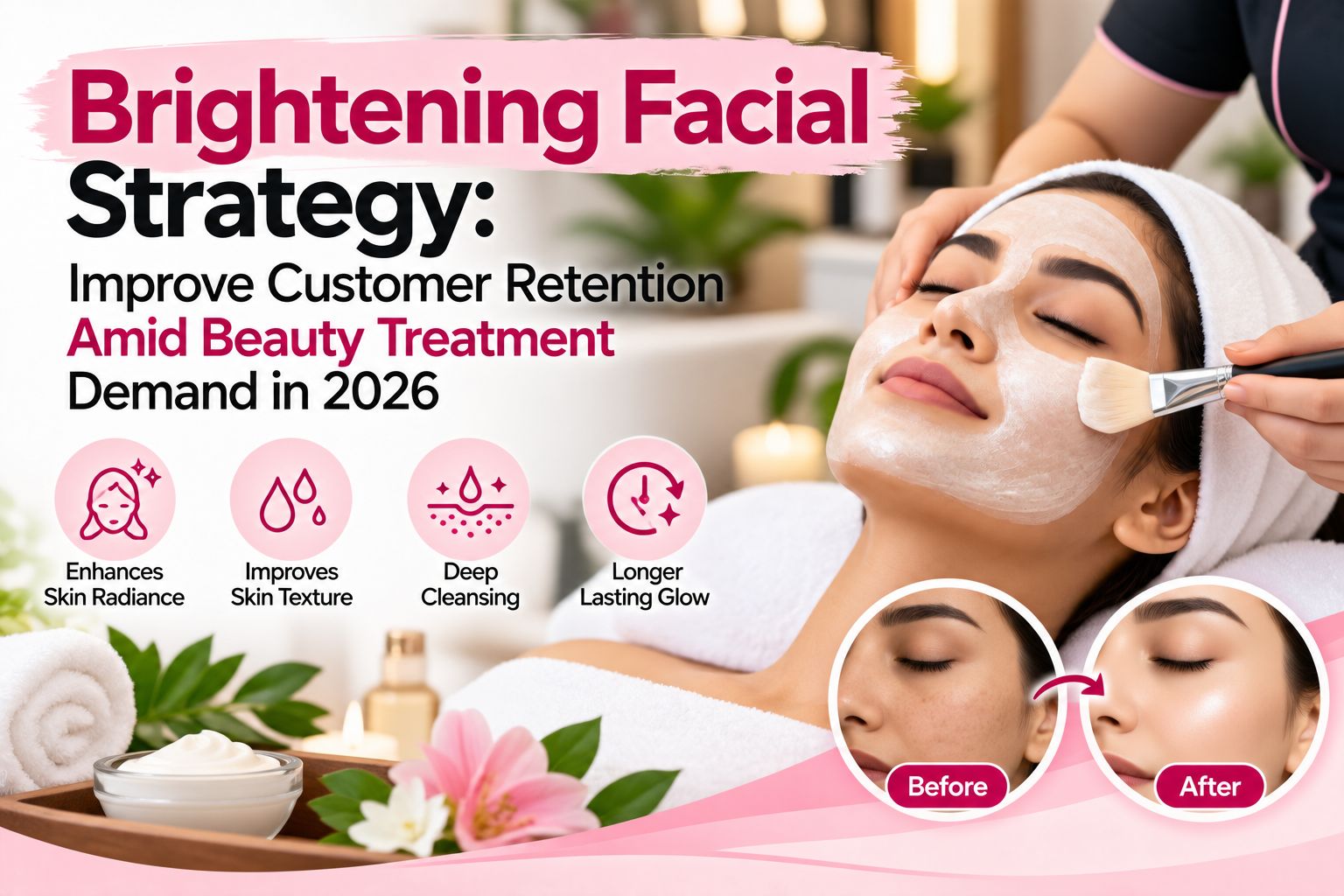


A brightening facial strategy is a retention tool as much as a service decision. The problem is that most clients experience a brightening facial as a single appointment, not as a sequence they understand. Brightening facial customer retention then becomes guesswork for the salon, because the client has no clear picture of what progress should look like or when to return. Two things fix this. First, set expectations before the client sits down. Second, make the next booking a decision the client already understands rather than a fresh sales conversation. The practical outcome is a client who returns because the plan makes sense, not because a discount forced a second visit.
Why Brightening Facial Customer Retention Slips Between Visits
The gap usually opens before the treatment even begins. A client books a brightening facial expecting one visible change, and the salon delivers a service without framing it as part of a longer plan. Nothing is wrong with the facial. The client simply has no way to judge whether it worked, so the next appointment feels like a repeated purchase instead of a step forward. That uncertainty sits quietly between visits and rarely shows up as a complaint. It shows up as a delayed booking, a shift to a cheaper service, or no return at all.
One operational observation worth checking against your own records: clients who receive a written aftercare note and a suggested return window tend to rebook at a steadier rate than clients who leave with verbal advice only. The pattern is easy to test in your own booking data before you change anything. The decision boundary is equally simple. Retention work belongs in the consultation. Once a client has already decided to delay, the useful window has largely closed.
Pre-Visit Stage: What the Booking and Intake Should Establish
Retention starts at the moment of booking, not on the treatment bed. The intake form does quiet work here, but only if it captures things the esthetician can actually use. Keep the brightening facial consultation to a short, repeatable set of points: which products the client currently uses, recent sun exposure, any active irritation or recent waxing, previous facials and how the skin responded, and what result the client is hoping for in their own words. That last item matters most, because clients often describe the outcome they want as fairness or glow rather than an even tone.
The booking flow should also set one expectation clearly before the appointment: brightening facials work cumulatively, and one session is a starting point. Front-desk staff can say this in one sentence without promising any result. When the client arrives already knowing that, the esthetician does not have to spend the treatment undoing an assumption. The salon keeps control of the conversation rather than reacting to a disappointment later.
In-Treatment Stage: How the Esthetician Frames Progress and the Next Interval
During the service, the esthetician should describe what they are seeing in plain language and connect it to a realistic skincare treatment cadence. If surface dullness lifts but tone near the upper lip stays uneven, say so during the session. That single honest sentence prevents the client from concluding the facial failed. It also gives the client something concrete to watch for at home.
Aftercare instructions should be short, written, and checkable: what to avoid for the next day, what to apply, and how much sun exposure to manage. Then close the visit by naming the next interval in plain terms. Something along the lines of a maintenance session at a set number of weeks, or a review if the client is unsure, is enough. The esthetician should not pressure a booking at this point. The goal is that the client leaves knowing what the next step looks like and why it exists, which is what beauty salon rebooking depends on.
This is also where a comparison helps some clients. A vendor with a managed-review workflow may include scheduled skin check-ins as part of the package, while a walk-in service model relies on the client to initiate contact. Neither approach is automatically better. The deciding factor is whether the client actually understands when and why to return.
Post-Visit Stage: The Follow-Up Window and the Rebooking Decision
The follow-up window is short. A message within a few days of the appointment, simply asking how the skin has settled, keeps the relationship active without sounding like a promotion. Ask two things: whether anything felt irritated, and whether the client noticed any change in tone. Record the answers against the client's file, because that note becomes the basis for the next facial treatment follow-up and for adjusting the next service.
When the client replies, the rebooking conversation is already halfway done. If the skin settled well and the client noticed a change, suggest the next interval you named during the treatment. If the skin felt reactive or the client saw nothing, do not push the same service again. Offer a review, a lighter cleanup, or a different approach instead. Turning that reply into a booking should feel like confirming a decision the client already made, not making a new pitch.
Some clients use parlourtime to compare service options and timing before they commit. Salons should treat that as a normal part of how clients plan now, because the same client may be comparing two providers at the same moment. Clear pricing, clear intervals, and a written aftercare note remain the strongest reasons a client chooses one salon over another.
Practical Checks the Salon Can Run This Week on Its Own Records
Pull last month's brightening facial bookings and count how many clients returned within the interval your estheticians normally recommend. That single number tells you whether the retention problem is real or assumed.
Read your own intake forms for missing answers. If product use, sun exposure, or previous facial response is frequently blank, the consultation is not doing its job.
Check whether your aftercare advice leaves the salon in writing. Verbal-only instructions are easy for clients to forget by the next morning.
Review whether every esthetician names a next interval during the treatment. If clients cannot recall being told when to return, that is a process gap, not a client problem.
Track follow-up messages sent within a few days of each visit. If nobody owns that step, the post-visit stage is effectively missing.
Compare rebooking rates for clients who received a follow-up against those who did not. Use your own numbers before changing the process.
Written by: Parlour Time Editorial Desk
Published: 30 September 2026, 12:21 AM IST | Updated: 30 September 2026, 12:21 AM IST
Powered by: Parlour Time