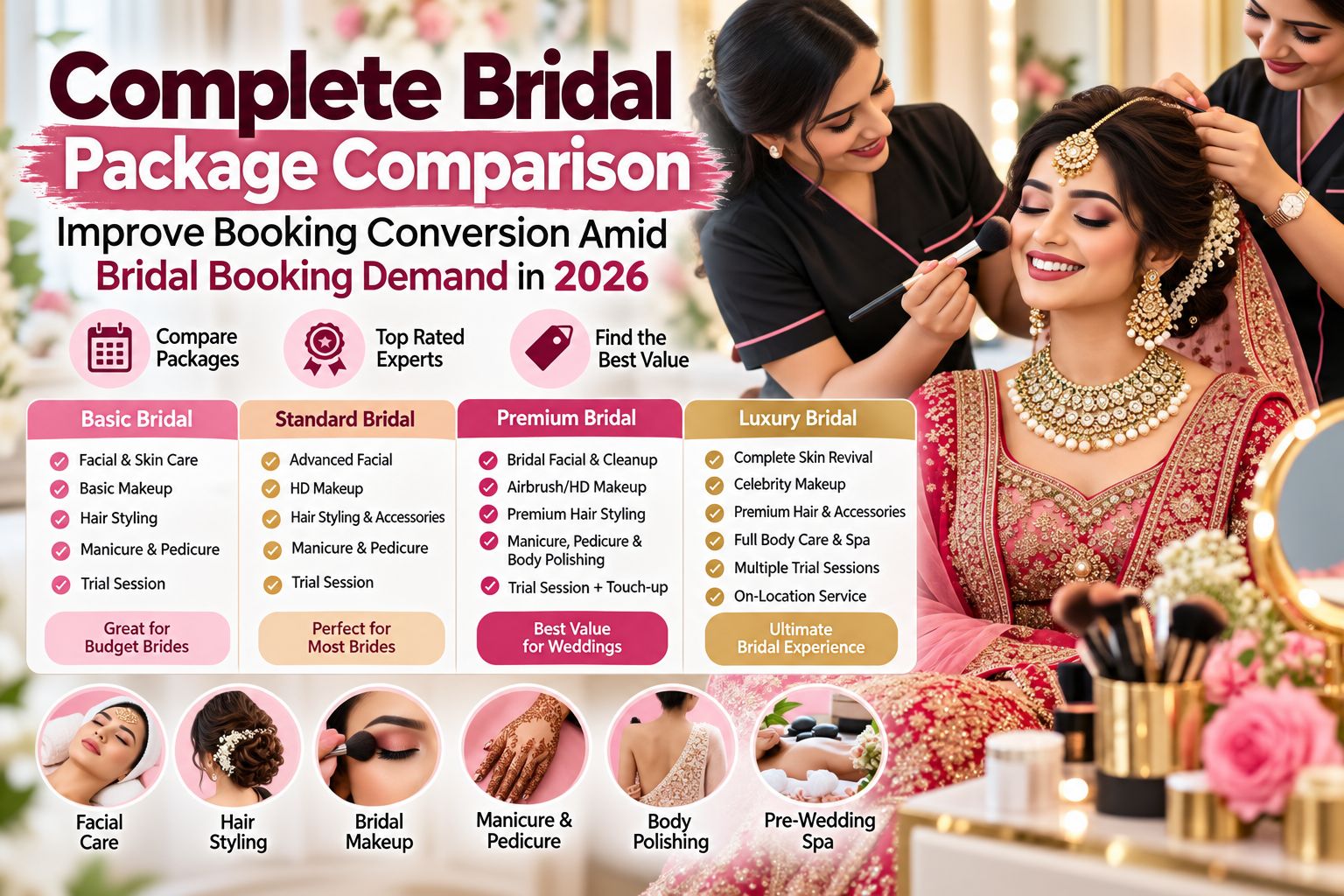


A complete bridal package comparison is hard to run when every package on your sheet lists services but not timing, spacing, or what happens if the bride's skin reacts. That gap is where enquiries slow down. The practical outcome of fixing it is simple: a bride can see, in one pass, which tier fits her dates, what each tier includes and excludes, and what the deposit commits her to. This guide frames the comparison as an operational tool a studio builds from its own package sheet, not a market forecast. Nothing here should be read as a claim about demand levels or booking volumes in any year.
Build the comparison from tiers, not from price
Start by renaming your packages so the tiers describe depth, not cost. A workable three-tier frame is essential, standard, and extended, where each step adds sessions or adds recovery time rather than adding everything at once. A bride comparing an essential and an extended tier should be able to see the difference in three places: how many sessions she attends, how far apart those sessions sit, and how much aftercare she takes home. When the sheet states those three things per tier, the price sits on top of a comparison she already understands. When it does not, price becomes the only visible difference and the conversation turns defensive. An operational detail worth carrying into every tier: the number of days between the last chemical service and the wedding day, because that single figure decides whether a tier is even bookable against her calendar.
The dimensions a studio can verify on its own sheet
Every comparison dimension should come from documentation you already hold. If a line cannot be checked against your own records, it does not belong on the comparison sheet. The dimensions below are the ones a studio can confirm without outside data.
Inclusions: the named services in each tier, written as service plus area plus duration.
Exclusions: what the tier does not cover, such as a separate trial look or a second styling session.
Number of sessions: a count the bride can put in her calendar before she pays.
Spacing between services: the minimum recovery gap your team applies between chemical services and between a facial and the final styling.
Patch-test step: whether a patch test is built into the first visit, and what it changes if a reaction appears.
Trial session: whether a trial is included, optional at extra cost, or booked separately.
Deposit and cancellation terms: the amount, what it holds, and the window in which dates can move.
Aftercare items: the products and routines included or recommended after the package ends.
When these eight lines sit under each tier, the enquiry stops being a pricing question. A bride can point at the gap that worries her and ask about that gap directly, which is a much shorter road to a confirmed date.
Lighter versus heavier, and package versus service-wise booking
The two contrasts below carry most of the decision weight. Read each line as a trade, not a ranking. Neither side is better on its own; each suits a different calendar.
Timing: a lighter tier with well-spaced sessions needs more lead time overall, while a heavier tier compresses visits but leaves a thinner recovery window before the event.
Safety spacing: heavier tiers stack more services, so the gap between chemical work and the wedding day becomes tighter and the patch-test step matters more, not less.
Aftercare load: a heavier tier usually asks more of the bride afterwards, in product use and wash routines, than a lighter tier does.
Flexibility: package booking suits a bride whose dates are fixed, while service-wise booking suits one whose dates may still move.
Commitment: a package holds a sequence and a deposit together, while individual services let each visit be decided on its own.
Reassessment: in both routes, if repeated sessions stop showing visible change, the useful next step is a professional reassessment rather than another repeat.
One common assumption is that a heavier package automatically delivers a stronger bridal result. Stacking services close together can instead overload skin or hair that is already stressed, so a repair-focused sequence can be the more realistic route when hair or skin is compromised. That judgement belongs with the professional assessing the bride, not with the size of the package she selects.
Trial sessions, deposits, and safe pre-booking steps
A bridal trial and a booking deposit are the two items most often left off a comparison sheet, and they are usually the two a bride asks about first. Treat the trial as a comparison dimension in its own right, listed per tier as included, optional at extra cost, or booked separately. Then state one clear sentence per tier on what the deposit holds, how far ahead a date can move, and what happens if a reaction or illness forces a change. Some brides read salon FAQs before they call, so the answers your sheet gives should match what those pages already say, without adding claims about outcomes.
Before confirming anything, three conservative steps reduce avoidable risk. First, record the bride's recent service history, including any redness, itching, or breakouts after previous facials or colour work. Second, run a patch test where a chemical service is planned, and treat that step as standard practice rather than an exception. Third, write the spacing rules into the package confirmation so both sides have the same dates. General material on service and booking questions sits alongside the beauty service questions page, which is where a bride can read what the studio has already published before her visit. Individual suitability, timing, and reaction risk vary from person to person, so confirm every specific decision with your stylist or a qualified professional rather than relying on a general guide.
Signals that tell a studio the comparison is working
Fewer repeated timing questions from one enquiry: when the sheet already answers spacing and lead time, the same questions stop coming back.
Brides arrive with a tier already chosen: a shortlisted tier in the first message shows the comparison did its job before the call.
Patch test discussed at booking rather than at the appointment: early mention means the safety step is visible in the tier details.
Deposit terms queried once, then accepted: a single round of questions usually means the cancellation window and the holding amount were written clearly.
Post-booking date changes stay within the stated window: this shows the lead-time guidance matched real calendars.
Package and service-wise enquiries separated cleanly: when booking flexibility is stated per tier, the two routes stop being confused with each other.
If several signals are missing at once, the usual cause is the sheet rather than the bride. Rewrite the tier lines so inclusions, exclusions, spacing, trial, deposit, and aftercare each appear once and in the same order across every tier.
Written by: Parlour Time Editorial Desk
Published: 26 September 2026, 11:26 AM IST | Updated: 26 September 2026, 11:26 AM IST
Powered by: Parlour Time