Apps
Download Parlourtime and Partner apps

Quick app access for customers and partners.

HomeServicesAboutContactPartner AppCoursesBlogsFAQ

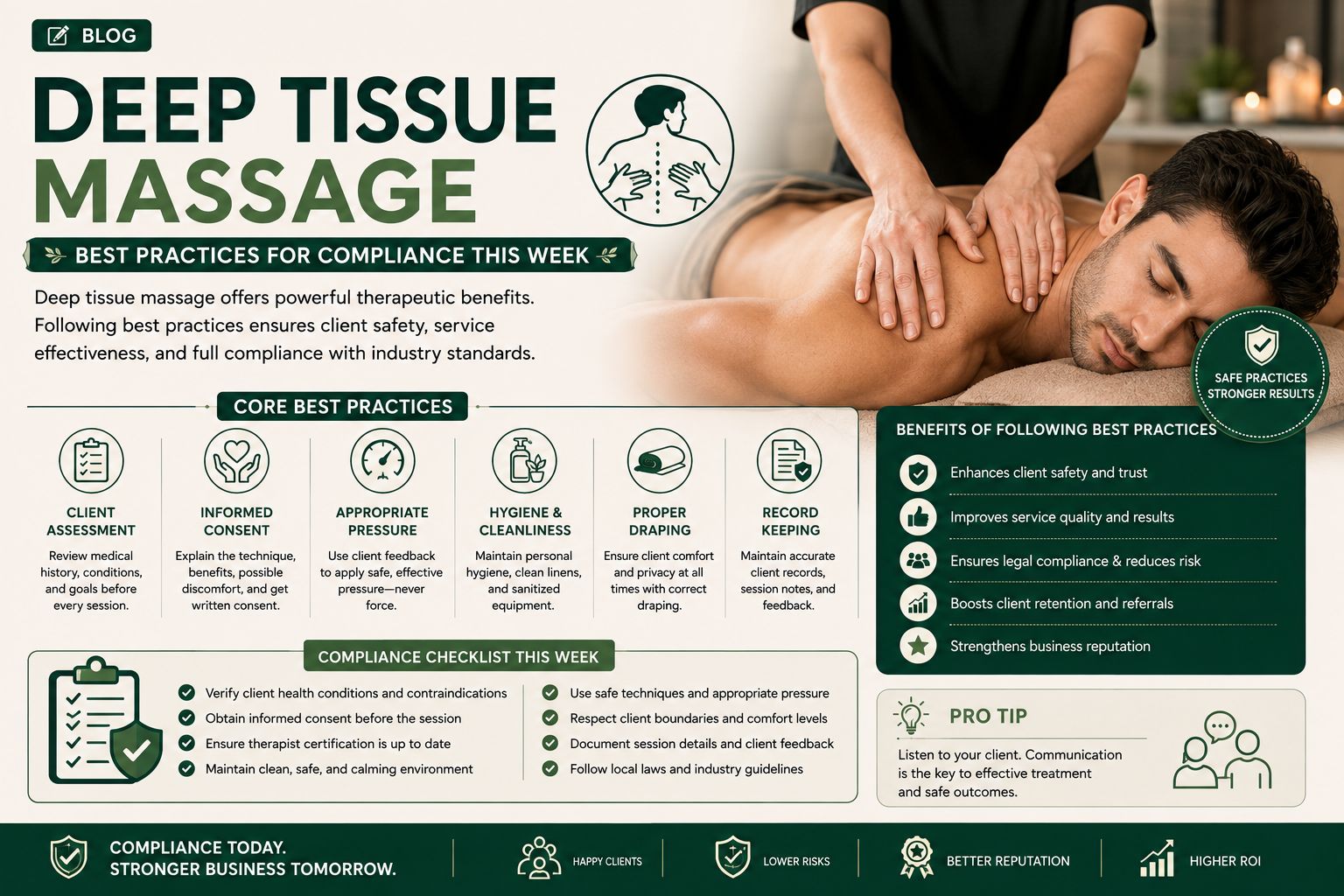
Deep Tissue Massage Best Practices for Compliance This Week

By Parlourtime Team
Aug 25, 2026
11 min read
deep tissue massagemassage therapymuscle pain relieftherapist compliancespa booking
Deep Tissue Massage Best Practices for Compliance This Week

About This Article

Deep Tissue Massage Best Practices for Compliance This Week Deep tissue massage best practices for compliance this week often feel confusing for both therapi...

Deep Tissue Massage Best Practices for Compliance This Week

Deep tissue massage best practices for compliance this week often feel confusing for both therapists and clients. You may be wondering if the pressure should be intense or if the session length is appropriate. Many people leave a session questioning whether the therapist followed the correct protocol. This uncertainty is common, especially for those booking treatments for the first time or trying a new clinic. The real issue is that compliance in this context is not just about rules. It involves understanding the body's response, the therapist's technique, and the practical limits of a session. When a client walks into a clinic, they rarely ask about the specific guidelines being followed. They assume the therapist knows what is safe and effective. However, for clinic owners and therapists, the pressure to perform the massage correctly while maintaining client comfort is very real. The confusion often begins when the therapist uses deep pressure without explaining the expected sensations. Without clear communication, clients may feel pain or anxiety during the treatment. This leads to a common concern: was the service performed correctly, or was something overlooked? The challenge becomes even greater when the client has a history of muscle pain or a previous injury. The expectation is that a deep tissue massage will provide immediate relief. Yet, the reality is that the body often reacts differently than expected. The therapist must evaluate the tissue condition, the client's pain tolerance, and the desired outcome before choosing a technique. This is where compliance with best practices starts to show its true value. It is not about a single set of instructions but about a flexible approach that respects both safety and results. This article explains what deep tissue massage compliance actually means during a real session, why results can vary, and how you can decide if the service you received was appropriate. We will cover the details that often get missed, such as consultation requirements, aftercare advice, and the importance of client feedback. We aim to give you clarity, so you can walk into your next appointment with confidence and a clear understanding of what should happen. ## What Compliance Means During a Real Massage Session Compliance in deep tissue massage is not a single checklist but a process that guides the entire treatment. It starts with a consultation where the therapist asks about your medical history, areas of pain, and any sensitivity concerns. Without this step, the risk of applying the wrong pressure or targeting the wrong area increases significantly. The session should also include a discussion about the level of pressure you are comfortable with. This is essential because deep tissue massage already involves firm pressure, and if you are not informed, the experience can be alarming. During the session, the therapist should use slow strokes and deep finger pressure to release tension in the deeper layers of muscle. The focus is on breaking down adhesions and relieving chronic pain patterns. A compliant therapist will check in with you regularly, asking if the pressure is acceptable or if you need a break. Many clients note a feeling of "good pain" during the treatment. However, if the sensation becomes sharp or unbearable, that is a signal that the technique needs adjustment. The therapist must respect your feedback and modify the approach accordingly. Another critical part of compliance is hygiene and setup. The table should be clean, the linens fresh, and the therapist's hands properly washed. These details may seem routine, but they are often overlooked in busy clinics. The use of oils or lotions should also be discussed, especially if you have allergies or skin sensitivities. In many cases, a patch test is recommended if you are using a new product. This precaution prevents unexpected reactions like redness, itching, or burning sensations during the session. The treatment length also matters for compliance. A standard deep tissue massage typically lasts between 60 and 90 minutes. Spending too little time may mean the therapist cannot address all the problem areas effectively. Spending too long without a break can cause unnecessary soreness. The therapist should explain the plan before starting, including which areas will be focused on and why. This transparency builds trust and helps you feel more in control of the experience. Ultimately, compliance is about communication, preparation, and following a logical sequence of steps that protect you from harm. ## Why Results Vary and What Really Influences the Outcome The outcome of a deep tissue massage often depends on factors beyond the technique itself. Your muscle condition before the session plays a major role. If you have had chronic pain for months, a single session may not resolve everything. The body may need multiple sessions to retrain the muscle tissue and reduce persistent tension. Many clients expect immediate relief, but in many cases, the muscles feel sore for a day or two before improvement becomes noticeable. This delayed response is natural, yet it often creates disappointment when the results are not instant. The client's hydration level also affects the outcome. Muscle tissue requires water to remain elastic and recover properly after deep pressure. If you are dehydrated, the tissue can become more resistant to treatment. This can lead to a shorter duration of relief or increased stiffness after the session. The therapist should advise you to drink water after the treatment. This simple advice is often overlooked, but it makes a significant difference in how quickly you recover and how long the benefits last. Your activity level and daily posture also influence the results. Someone who sits at a desk for eight hours may experience tension in the shoulders and neck that returns quickly after a massage. In such cases, the treatment is not ineffective; it is simply addressing a symptom that is constantly being recreated by your work environment. Compliance includes providing advice on stretching and posture correction. Without this follow-up guidance, the client may feel that the treatment did not work. This is a common misunderstanding that leads to frustration and distrust of the service. Another important factor is the experience and training of the therapist. A well-trained therapist knows how to use body weight to apply pressure effectively while protecting their own hands and wrists. This technique ensures consistent pressure throughout the session. In some clinics, therapists may be rushing between appointments, which can affect the quality of attention given to each client. The pressure may be inconsistent, or the therapist may skip certain areas to save time. A compliant practice ensures that the therapist is fresh and focused, so the quality of the session remains high. ## Risks of Overlooked Details and Wrong Assumptions One of the biggest risks in deep tissue massage is the assumption that more pressure equals better results. This is a misconception that can lead to bruising, nerve irritation, or severe post-session pain. A skilled therapist understands that the pressure must be adjusted based on the tissue's response. If the muscle is very tight, applying extreme force too quickly can cause the muscle to guard itself, making the tension worse. The therapist should use gradual pressure to allow the muscle to release naturally. When clients push for more pain because they believe it is helping, they often regret it afterward. An overlooked detail is the importance of a health screening before the session. Conditions like high blood pressure, varicose veins, or recent injuries may require adjustments to the technique. Some areas of the body, such as the neck and lower back, are more sensitive and need careful handling. If the therapist is not informed about these conditions, the risk of complications increases. Clients sometimes assume that the therapist can figure these things out on their own, but that is not realistic. Honest communication about your health is a critical part of ensuring a safe session. Clients also overlook the need to rest after a deep tissue massage. The body has been worked on deeply, and the muscles need time to recover. Engaging in heavy exercise or strenuous activity immediately after the session can undo the benefits of the treatment. The therapist should recommend avoiding intense physical activity for at least 24 hours. This aftercare instruction is often missed, and clients return to work feeling sore and exhausted. This does not mean the massage failed; it means the recovery protocol was not followed. Another common risk is the expectation of pain relief without any lifestyle changes. If the root cause of the pain is poor posture, weak muscles, or repetitive strain, the massage will only provide temporary relief. The client must be willing to participate in their own recovery by following the therapist's advice. When this boundary is not explained clearly, the client may believe the service is ineffective. This is where dissatisfaction often begins, not because of a poor service, but because of a mismatch between expectations and realistic outcomes. ## How to Decide If the Massage Was Right and What to Do Next Deciding whether a deep tissue massage was compliant and appropriate involves evaluating a few key factors. First, consider whether the therapist performed a consultation and explained the plan. If you felt rushed or the therapist did not ask about your health background, that is a red flag. Second, reflect on the level of communication during the session. A good therapist will check in with you about the pressure and respond to your feedback. If you felt unable to speak up, the experience was not ideal. The decision also depends on the outcome after a few days. Some soreness is expected, but sharp pain or numbness is not normal. If you experience unusual symptoms, it is wise to contact the clinic and discuss your concerns. A reputable clinic will be open to your feedback and may offer a follow-up consultation. If you feel that the service did not meet professional standards, you should trust that instinct. It may be more effective to explore other options rather than repeating a session that felt unsafe or ineffective. For those considering a massage for a specific event or after a long period of discomfort, timing is important. Booking a session too close to a major event may not give your body enough time to recover from any initial soreness. It may be better to schedule your treatment at least two to three days before the event. This allows any muscle soreness to settle and for the benefits of the massage to show. Many clients find that they feel their best a day or two after the session, not immediately after. Ultimately, the decision to return to a therapist should be based on trust and clear communication. If you felt heard and the therapist explained the process and aftercare, that is a good sign. The focus should be on your long-term well-being, not just the immediate feeling of relaxation. If you have further questions about the process or what to expect, you can look through salon FAQs or consult with the clinic directly. Many well-run clinics, including those listed on parlourtime, encourage this type of dialogue. It is a sign of professionalism when a therapist is willing to discuss their methods and answer your questions. ## Frequently Asked Questions q What is the most important rule for deep tissue massage compliance? a The most important rule is performing a proper consultation to understand the client's medical history and comfort level with pressure. q Can a deep tissue massage cause pain the next day? a Some muscle soreness is normal for a day or two after a deep tissue massage. q Is it safe to have a deep tissue massage during pregnancy? a Pregnant women should always get medical clearance and inform the therapist before booking the session. q How long should I wait after eating before a massage? a It is generally advisable to wait at least one to two hours after a meal before receiving a deep tissue massage. q Should I be concerned if I feel numbness after a deep tissue massage? a Numbness or sharp pain after a massage is not normal and the therapist should be contacted immediately for advice. q How often should I get a deep tissue massage for chronic pain? a The frequency depends on the condition, but many therapists suggest a series of sessions initially before moving to a maintenance schedule. q What should I do if I feel the pressure is too strong during the session? a You should always tell the therapist immediately if the pressure feels too strong or uncomfortable. q Why do I feel more relaxed after a lighter massage than a deep one? a A lighter massage focuses on circulation and relaxation, while a deep tissue massage often leaves you feeling sore rather than relaxed initially.

Join Us!

Earn Upto ₹70,000/Month! Become a Parlourtime Partner.

Get it on Google PlayDownload on the App Store
Page 1 of 286
WhatsAppInstant beauty support