Live Apps
Download Parlourtime and Partner apps

Quick app access for customers and partners.

HomeAboutContactPartner AppCoursesBlogsFAQ

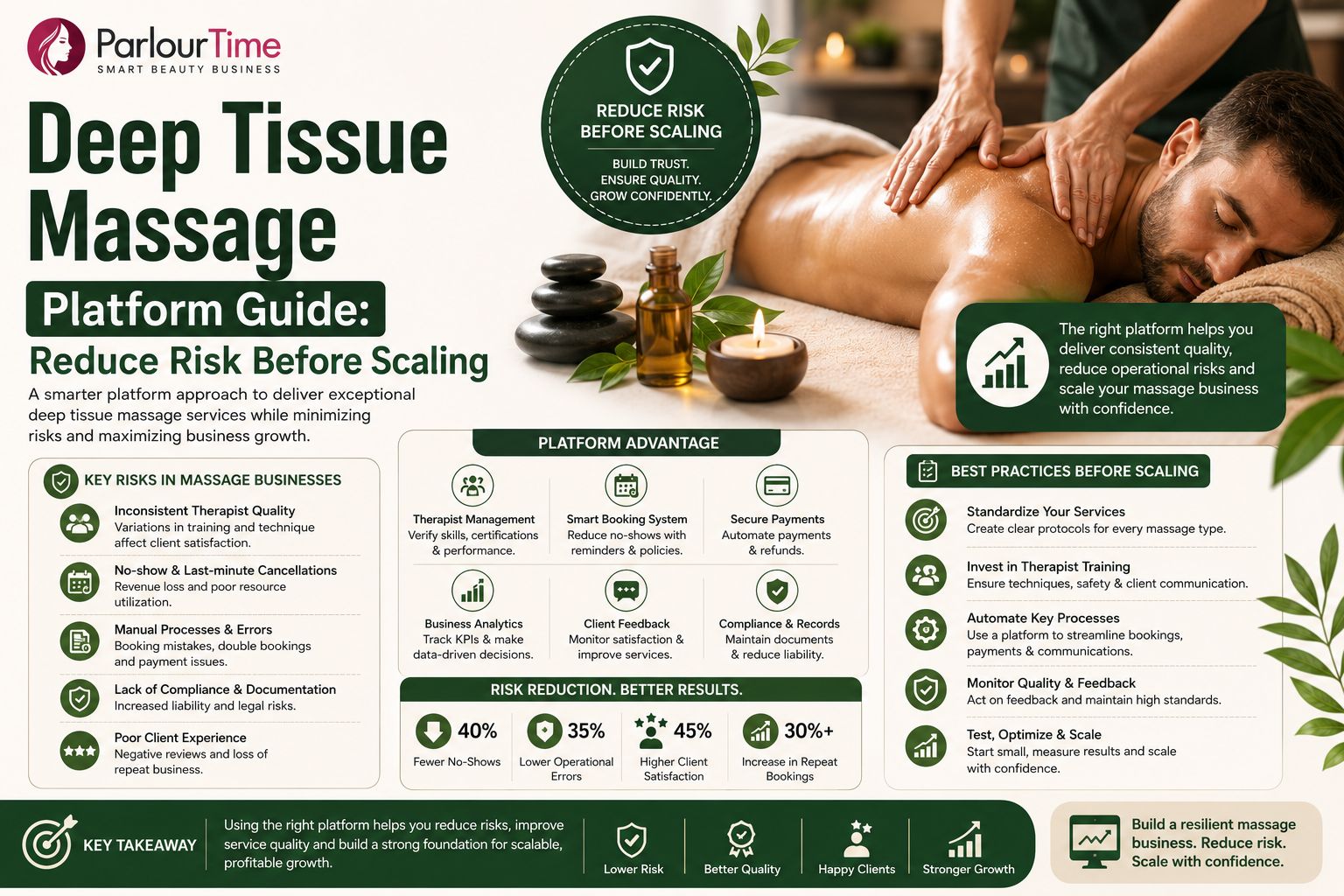
Deep Tissue Massage Platform Guide: Reduce Risk Before Scaling

By Parlourtime Team
No Date
6 min read
deep tissue massagemassage platformsalon equipmenttherapist safetyspa servicesmassage table
Deep Tissue Massage Platform Guide: Reduce Risk Before Scaling

About This Article

Deep Tissue Massage Platform Guide: Reduce Risk Before Scaling When a salon or spa decides to scale deep tissue massage services... the choice of platform be...

Deep Tissue Massage Platform Guide: Reduce Risk Before Scaling

When a salon or spa decides to scale deep tissue massage services... the choice of platform becomes a big concern. Honestly, many owners and therapists realise that not all massage tables or beds actually support the pressure needed for real deep tissue work. The confusion, it usually starts when a platform that works fine for relaxation massage just doesn't hold up during deep pressure techniques. This mismatch — it creates discomfort for the client and strain for the therapist. In many cases, I've seen that the problem isn't the therapist's skill but the equipment limiting them. A platform that lacks proper support can cause uneven pressure application, the client moving around during the session, and the treatment just not working as well. This uncertainty about whether the platform is suitable or not often delays scaling decisions and creates unnecessary inconsistency in service. Understanding what actually makes a platform appropriate for deep tissue work is the first step toward reducing risk and building that client trust.

What Makes a Platform Safe for Deep Tissue Massage

A safe platform for deep tissue massage has to handle sustained pressure without wobbling, shifting, or making the client uncomfortable. In real salon and spa settings, therapists often realise that standard lightweight tables start creaking or feel unstable when firm pressure is applied to the glutes, back, or shoulders. This instability forces the therapist to compensate by reducing pressure, which compromises the whole treatment outcome. The platform must have a weight capacity that exceeds the combined weight of the client plus the pressure applied during a session. A common observation in many Indian spas... is that tables designed for facials or light body massages just lack the structural reinforcement needed for deep tissue work. The platform width also matters because wider tables provide better support for clients with larger body frames, reducing the risk of pressure points and discomfort. And then the padding density — it affects how pressure transmits through the client's body. Soft padding absorbs pressure and reduces the effectiveness of deep techniques, while firmer padding allows targeted pressure to reach deeper muscle layers. Checking these features before purchasing a platform can prevent a lot of dissatisfaction and service delays down the line.

How Platform Choice Affects Therapist Safety and Performance

Therapists working on inadequate platforms — they often report wrist fatigue, lower back strain, and reduced session efficiency. These physical complaints aren't just personal issues but direct consequences of equipment limitations. When a platform is too high or too low for the therapist's height, the therapist has to bend awkwardly or extend their arms too much, leading to poor body mechanics. This mismatch increases the risk of repetitive strain injuries over time. In many parlours, I've seen therapists adjust by using standing stools or leaning on the table, which compromises stability even more. A platform with adjustable height settings allows the therapist to maintain a neutral spine and apply pressure using body weight rather than just muscle strength. This adjustment reduces fatigue and improves pressure consistency across sessions. Another thing people overlook is the face cradle design. Deep tissue work often requires the client to remain in a prone position for extended periods. A poorly designed face cradle causes neck stiffness and breathing discomfort, prompting the client to shift during the session. That movement disrupts the therapist's rhythm and forces pressure adjustments. Selecting a platform that supports both therapist ergonomics and client comfort directly reduces the risk of service failure and therapist turnover, honestly.

Common Mistakes When Selecting a Deep Tissue Massage Platform

Many salon owners assume that any massage table can support deep tissue work if the price is high enough. This assumption frequently leads to disappointment because expensive tables designed for relaxation massages often lack the structural integrity required for deep pressure techniques. Another common mistake is focusing only on aesthetics. A platform with a modern finish and soft upholstery may look appealing but fail to provide the stability needed for effective deep tissue sessions. Some buyers overlook the importance of leg construction — tables with thin or hollow legs tend to wobble when pressure is applied near the edges. In contrast, platforms with reinforced metal legs or wider bases provide better weight distribution and stability. Another frequent error is ignoring the maximum weight capacity. Even if the platform claims to support heavy clients, the actual performance depends on the material quality and joint construction. Several therapists I know report that platforms sag in the middle after a few months of regular deep tissue use, creating an uneven surface that compromises technique. Additionally, many owners forget to test the platform with actual deep tissue pressure before purchasing. Relying on product descriptions alone often results in regret after the first few sessions. Taking the time to physically evaluate how the platform responds to pressure can prevent costly mistakes and client complaints, trust me.

How to Decide When to Upgrade or Replace Your Current Platform

Deciding when to upgrade or replace a deep tissue massage platform requires honest assessment of current performance and client feedback. If clients frequently complain about discomfort during deep pressure work, the platform may be the root cause. Similarly, if therapists report persistent pain after sessions, the platform height or padding could be contributing factors. A clear boundary occurs when the platform shows visible wear like sagging, creaking, or unstable leg joints. Continuing to use a compromised platform increases the risk of client injury and therapist burnout. Another indicator is inconsistent treatment outcomes — when the same technique produces different results across sessions, the platform stability may be affecting pressure transmission. The timing of the upgrade also matters. Scaling deep tissue services during peak seasons without adequate equipment often leads to rushed decisions and poor purchases. Waiting until the off-season to research and test platforms allows for better evaluation and negotiation. In some cases, investing in a dedicated deep tissue platform rather than a multipurpose table improves service quality and reduces long-term costs. The decision should also consider the therapist's personal preferences. Some therapists prefer wider platforms for better client access, while others prioritize adjustable height for pressure control. Matching the platform to the therapist's technique reduces the risk of dissatisfaction and increases session consistency. Parlourtime discussions often highlight that platform suitability directly influences client retention and therapist confidence.

Join Us!

Earn Upto ₹70,000/Month! Become a Parlourtime Partner.

Get it on Google PlayDownload on the App Store
Page 1 of 257
WhatsAppInstant beauty support