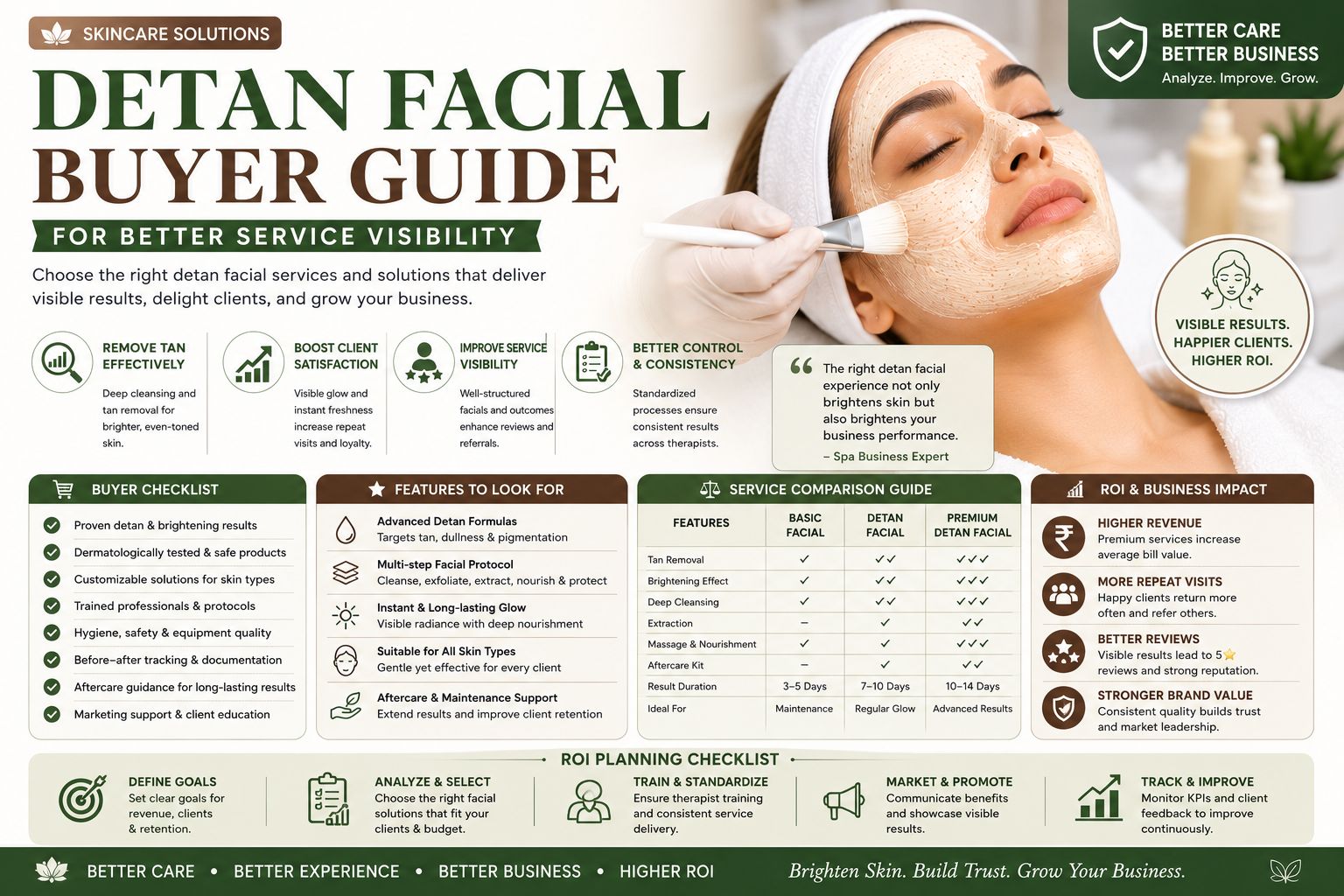


Choosing a detan facial often feels straightforward until you are sitting in the salon chair with expectations that do not match reality. Many customers book this service hoping for immediate brightness, only to notice that the glow appears uneven or fades within a few days. This confusion usually begins when the initial radiance settles, and the skin looks similar to how it did before the appointment. The core problem is not always the service quality. It often comes down to how the treatment interacts with your skin type, the products used during the session, and the aftercare routine you follow at home. A detan facial is designed to remove the dull layer of dead skin cells and reveal fresh skin underneath, but the outcome depends heavily on your skin’s current condition and sensitivity levels. Real salon experience shows that clients who understand this distinction before booking tend to feel more satisfied with the final result.
What a Detan Facial Actually Does to Your Skin
A detan facial primarily works by combining exfoliation, cleansing, and a mild bleaching or brightening agent to lift superficial tan and pigmentation caused by sun exposure. When you receive this service, the aesthetician usually starts with a deep cleanse, followed by gentle scrubbing or enzymatic exfoliation, and then applies a mask that contains active ingredients like licorice extract, vitamin C, or kojic acid. The visible effect after the session is often a brighter complexion and a smoother texture because the dead skin cells have been removed. However, this brightness is temporary for many people. The new skin cells are fresh and vulnerable, which means they can react quickly to sun exposure, pollution, or even your regular moisturizer if it contains strong active ingredients. In many cases, the detan facial results last longer when clients avoid direct sun for at least two days and switch to a mild sunscreen routine.
Why Detan Facial Results Vary Between Appointments
Skin reacts differently to a detan facial depending on several factors that are not always visible during the consultation. Your skin barrier thickness, natural oil production, and history with chemical products all play a major role in how the treatment performs. For example, someone with an oily and thick skin type may notice a longer-lasting brightening effect because their skin regenerates faster and can tolerate stronger exfoliation. On the other hand, a person with dry or sensitive skin might experience temporary redness, tightness, or patchy brightening that fades unevenly within 48 hours. Salon observations frequently highlight that clients who had a facial within the previous two weeks usually see less dramatic detan results because their skin is already in a renewing phase. Additionally, the current season influences the outcome. During high summer, constant sun exposure can re-tan the skin faster, while winter months allow the results to hold slightly longer because UV intensity is lower. The detan facial buyer guide should therefore consider your recent skin history and the season before assuming the service will produce uniform results.
Overlooked Mistakes That Reduce Detan Facial Effectiveness
Many customers make the mistake of assuming that a more expensive detan facial will automatically solve deeper pigmentation or stubborn tan. That assumption often leads to disappointment. A detan facial is primarily a surface-level treatment. It does not penetrate deeply enough to break down long-standing pigment deposits that sit below the skin’s upper layers. Clients frequently overlook the importance of daily sunscreen use after the session. Skipping SPF can cause the newly exposed skin cells to darken rapidly, making the treatment seem ineffective. Another common blind spot is using strong face washes, scrubs, or anti-aging creams immediately after the facial. This over-exfoliation can strip the skin’s protective barrier, leading to irritation and uneven color. Real salon experience signals that patch testing is equally critical. Some clients develop a mild allergic reaction to the brightening mask, which causes redness or bumps that are mistaken for acne breakouts. This reaction can easily be avoided if the aesthetician performs a small patch test behind the ear 24 hours before the full treatment.
When to Choose a Different Treatment or Reassess Your Skin
Not every skin concern is a detan problem. If you notice that your tan persists despite multiple detan facials, then the issue might be hormonal pigmentation, melasma, or post-inflammatory hyperpigmentation from old acne marks. In such situations, repeating the same facial will not provide better visibility or satisfaction. Instead, a consultation with a dermatologist becomes necessary to explore options like prescription lightening agents, chemical peels, or laser therapy. Similarly, if your skin becomes excessively sensitive, itchy, or flaky after every detan session, then your skin barrier is likely compromised. Continuing with exfoliating facials may worsen the condition. It is wise to pause these services for at least six weeks and focus on barrier repair with gentle cleansers and ceramide-rich moisturizers. Timing also matters for special events. Since the detan facial can cause temporary redness or flaking in the first 24 hours, you should ideally schedule it at least five to seven days before a wedding or party. This buffer period allows the skin to settle into a natural glow rather than appearing irritated on the important day. Many customers using parlourtime to compare service timing and read salon FAQs before booking have found that understanding these recovery windows helps avoid last-minute stress. The decision to continue, switch, or stop a detan facial should always be based on how your skin behaves after the session, not just how it looks immediately afterward.
Does Detan Facial Damage Skin With Regular Use
Detan facials can be repeated safely for most skin types when spaced at intervals of at least two to three weeks. However, using them too frequently, such as every week, can lead to over-exfoliation and compromise the skin’s natural moisture barrier. This condition often shows up as persistent redness, flaky patches, or a stinging sensation when applying your regular moisturizer. The active ingredients in these facials are designed to remove surface cells, but they do not distinguish between dead and newly forming cells. Overuse may eventually cause sensitivity to sunlight and increase the risk of tanning even more. A general observation in many salons is that clients see better long-term improvements when they limit detan facials to once a month and maintain a consistent sunscreen routine in between. If your skin feels tight or looks shiny in an unusual way after the treatment, these are early signals that the frequency should be reduced.
Is a Detan Facial Considered a Bridal Package Necessity
Bridal preparation often includes detan facials because the treatment creates a fresh and radiant base for makeup application. However, brides frequently overestimate the immediate effect and underestimate the recovery time. Considering a detan facial as a necessity can cause stress if the skin does not respond well close to the wedding date. Some brides experience a break out of tiny bumps or redness after the first session, which adds pressure rather than relief. The safest approach is to perform a trial detan facial one month before the wedding to see how the skin responds. If the reaction is good, then a second session about one week before the event can enhance the glow. If the reaction is unfavorable, a simple hydrating facial or at-home cleanse may be a safer choice. The necessity depends on your skin's tolerance and the weather conditions during that season, not solely on bridal expectations.
How to Decide Between Detan and Fruit Facial Options
Comparing a detan facial to a fruit facial often confuses buyers because both appear to target dullness. The main difference lies in the intent and intensity. A detan facial focuses on removing tan and brightening through exfoliating and lightening agents, while a fruit facial generally uses enzyme-rich masks from fruits to hydrate and mildly exfoliate without strong bleaching action. If your main concern is uneven tan lines from sun exposure, a detan facial is more appropriate. If you are seeking hydration and a soft glow without strong active ingredients, a fruit facial might be a better fit. Clients with sensitive skin frequently report fewer side effects from fruit facials. Those with deep tan often feel the detan facial provides faster visible results. Making the right choice depends on identifying whether your skin concern is primarily pigment-based or hydration-based.
What Should You Ask Before Booking a Detan Facial
Asking the right questions can prevent dissatisfaction. Start by asking whether the salon recommends a patch test for your skin type. Then ask about the specific brightening ingredients used in the mask, because some clients are allergic to kojic acid or certain citrus enzymes. You should also confirm if the salon provides a post-treatment sunscreen and aftercare advice, since this guidance significantly impacts the longevity of the results. Enquire about the expected recovery time, especially regarding any redness or flaking. Finally, ask about the recommended spacing between sessions for your specific skin type. These questions help set realistic expectations and ensure that the service aligns with your skin’s tolerance levels. The detan facial buyer guide should always emphasize that the conversation with your aesthetician is as important as the treatment itself.
How Often Should You Get a Detan Facial for Best Results
The ideal frequency for a detan facial depends on your skin type and activity level. People who spend several hours outdoors daily may need a session every three to four weeks to manage constant tan buildup. Those with desk jobs and limited sun exposure might find that a single session every six to eight weeks is sufficient to maintain brightness. Applying a detan facial too often does not accelerate the removal of deep pigmentation. It only increases the risk of skin irritation and sensitivity. Salon experts generally suggest evaluating the skin’s response after two consecutive monthly sessions. If the skin remains healthy without signs of dryness or redness, that frequency can be maintained. If any irritation appears, it is better to extend the gap to six weeks. Visible improvements in tan reduction typically manifest after two to three sessions rather than a single appointment.
Can a Detan Facial Cause Breakouts Immediately
Yes, a detan facial can sometimes cause small breakouts within a few days of the treatment. This occurs because the exfoliation process brings underlying congestion and bacteria to the surface, which then manifests as tiny bumps or whiteheads. This reaction is often mistaken for an allergy or a reaction to the facial products. In many cases, the skin was already congested underneath the dead layer, and the facial simply accelerated the visibility of that congestion. The best way to handle this is to avoid picking at the bumps and let them resolve naturally within a few days. Continuing with a light moisturizer and a gentle cleanser helps the skin settle. If the breakouts are painful, swollen, or persist beyond a week, a professional consultation may be necessary to rule out a product-related reaction.
Is a Detan Facial Better Than A Cleanup For Tan Removal
A cleanup is a basic facial routine that includes cleansing, exfoliation, and a massage, but it does not use specific detanning agents in the same concentration as a detan facial. For the primary goal of removing tan, a detan facial is more effective because it targets pigment with active brightening ingredients. A cleanup is more suited for maintaining general skin hygiene and feeling refreshed. You can think of a cleanup as maintenance and a detan facial as a targeted repair. Many customers who receive monthly cleanups still observe tan buildup, which then needs a detan facial for correction. Choosing between them depends on whether your goal is preventative maintenance or corrective treatment for visible sun damage. A detan facial buyer guide for service visibility should help you match the service intensity to the actual skin concern rather than just the service name.
How Soon Can You See Glow After A Detan Facial
Most clients notice an immediate glow right after the treatment because of the exfoliation and hydration involved. However, the true long-term result becomes apparent after 48 to 72 hours. During this period, the skin may go through a slight settlement phase where any temporary redness fades. The immediate glow can be deceptive because it is often a combination of hydration and mild stimulation. By the third day, the skin cells have adjusted, and you can see the actual brightening effect. If you apply sunscreen for the following week, the glow tends to last longer. If you skip sun protection, the glow can fade within two days. Therefore, when evaluating the success of a detan facial, it is better to judge the result on the third day rather than the first hour.