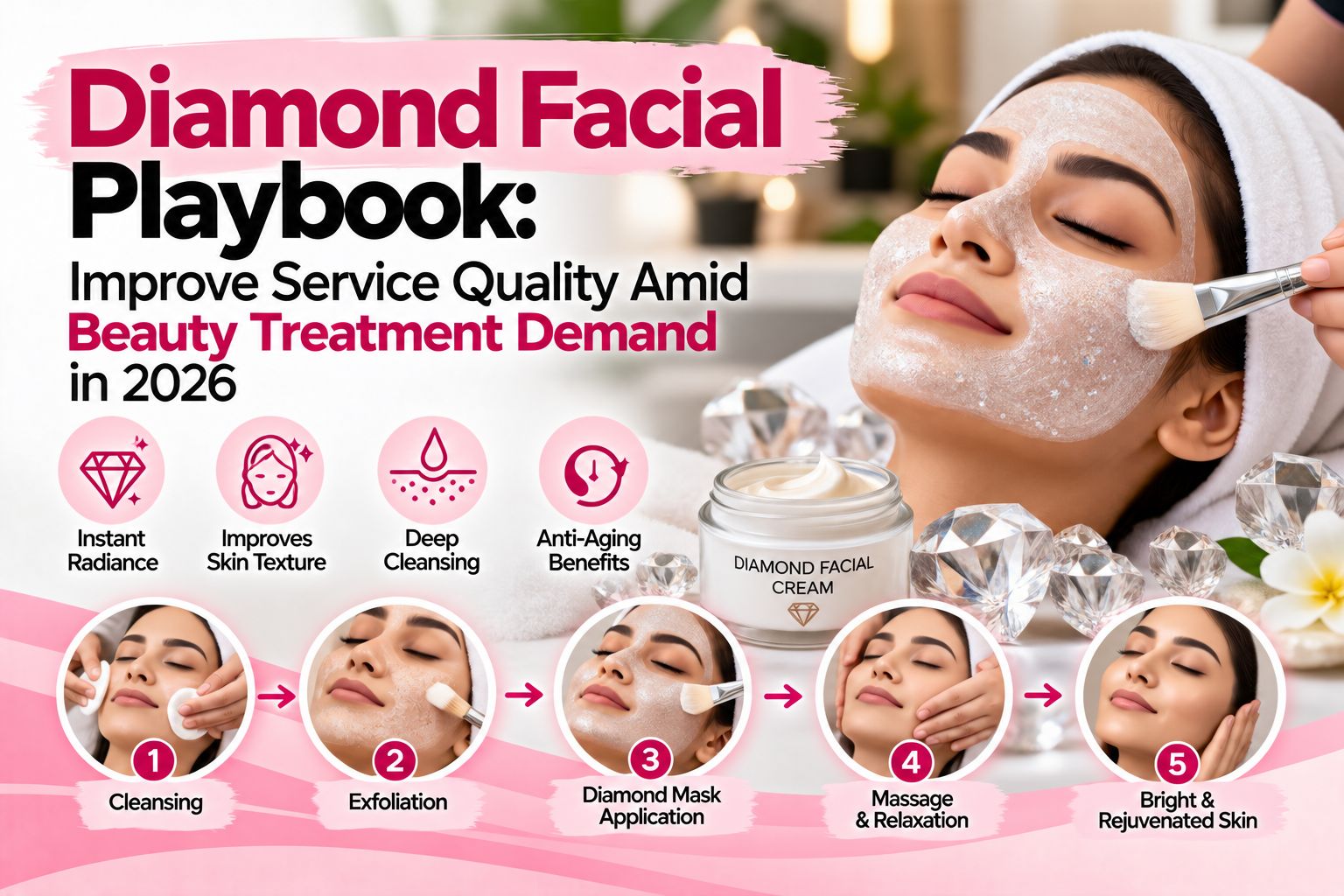


The Diamond Facial Playbook is a working guide salon and spa teams can use to deliver the diamond facial the same way for every client, so results stay predictable as more people book skin treatments in 2026. The problem it solves is simple: when consultation, exfoliation pressure, hygiene, aftercare advice, and follow-up differ from one therapist to the next, two clients with similar skin can leave with very different experiences. This playbook sets out the checkpoints that keep a diamond facial consistent, and it flags the point where a therapist should stop, refer the client to a doctor, and not repeat the service.
What the Diamond Facial Protocol Actually Involves
A diamond facial is a professional exfoliation and brightening treatment. It is usually built around a diamond-tip wand that buffs the surface of the skin, followed by a massage, a mask, and in some salons a mild peel. It is a mechanical resurfacing step, not a gemstone gimmick, and that matters because the amount of pressure, the number of passes, and the products layered afterward decide how the skin copes. Recovery time varies from client to client, so each therapist should follow the product maker’s or the clinician’s guidance on depth and timing instead of a fixed salon habit. A written protocol should list the wand setting, the passes per zone, the mask used, and the neutral products kept on hand for reactive skin, so any trained therapist can repeat the same service.
Client Consultation and Patch Test Checkpoints
Every diamond facial should start with a short, structured consultation, because most unhappy outcomes trace back to something that was not asked. Keep the intake to a fixed set of questions and record the answers on the client card. Ask about current skin treatments, prescribed creams, recent waxing, threading or laser work, allergies, and any burning or redness the client already has. Ask what the client expects from the session, and say plainly what the service can and cannot do. Then mark the patch test. A small test on the inner forearm or behind the ear before a first diamond facial gives the team a clear checkpoint, and it should be logged with the date. If a client is on medication, has an active breakout, or has recently had a peel or laser session, the decision boundary is to pause the service and ask for medical clearance rather than proceed.
Staff Training and Hygiene Standards That Hold Up
Consistency comes from training, not from one experienced therapist. New team members should practise the full sequence on a model under supervision before they touch a paying client, and refreshers should run on a set schedule. Hygiene is part of that routine. Wands, tips, bowls, and tools need cleaning and disinfection between clients, following the maker’s instructions, and single-use items must never be reused. Beds should be reset with fresh linen, and product jars should be scooped with clean spatulas rather than fingers. A short pre-service checklist at the trolley, signed before each client, catches most gaps before they reach the client.
Aftercare, Follow-Up and a Barrier-Recovery Handout
What a client does at home in the first days after the facial shapes how the skin looks in the following weeks, so aftercare should be handed over in writing, not spoken once at the door. A barrier-recovery handout works well: use a mild cleanser, a simple moisturizer, and daily sunscreen, and hold off on scrubs, strong serums, and fragranced products until the skin settles. Keep it to plain steps and one line on when to call the salon. The follow-up is the next checkpoint. A short message about 48 hours later, asking how the skin feels and whether there is any redness, tightness or flaking, tells the team whether the protocol suited that client and gives the client a clear path back. If the client reports burning, swelling, or spreading pigmentation, the right move is to stop booking further sessions and refer them to a doctor, not to offer another facial as a fix.
Practical Service-Quality Checks for Salon Teams
Log every diamond facial on one shared client card, so the wand setting, mask, and aftercare advice from the last visit are visible before the next one.
Ask the intake questions every time, even for regulars, because skin, medication, and home routines change between visits.
Record each patch test with a date, and treat a missing patch test as a reason to reschedule rather than proceed.
Space a diamond facial away from waxing, threading, and colour services, and give the skin its own recovery window before an event.
Send the 48-hour check-in as a set script, note the reply on the client card, and use the pattern across clients to adjust the protocol.
When results stop improving after a session or two, treat that as a signal to review the plan and the aftercare, with a doctor’s referral as the boundary rather than another round of exfoliation.
Review the playbook as a team each quarter, and change one item at a time so the effect of each change can be seen.
Written by: Parlour Time Editorial Desk
Published: 30 September 2026, 12:33 AM IST | Updated: 30 September 2026, 12:33 AM IST
Powered by: Parlour Time