

The pursuit of radiant, resilient skin has led to an explosion of innovative treatments. Among the latest and most intriguing advancements capturing significant attention is the Exosome Serum Facial. This cutting-edge approach has rapidly climbed the ranks in regenerative aesthetics, offering a sophisticated path to enhanced skin health and appearance that extends beyond traditional topical solutions or even earlier generation therapies.
For many, the idea of leveraging the body's own communication systems for cosmetic benefits is profoundly appealing. However, the promise of advanced skin rejuvenation often overshadows the complexity of the underlying biology. Misunderstanding what an Exosome Serum Facial truly entails, or selecting a clinic based solely on price, can lead to disappointing results, wasted investment, and even potential compromise to skin health if substandard products or protocols are used. Here's what's changed recently, and what's starting to matter now for those considering this powerful treatment.
The latest shift most people missed is not just the availability of exosome products, but the increasing refinement in their extraction, purification, and application protocols, directly impacting efficacy. Discerning individuals are now looking beyond mere surface-level claims, demanding clarity on the science and practical outcomes.
What Exactly is an Exosome Serum Facial?
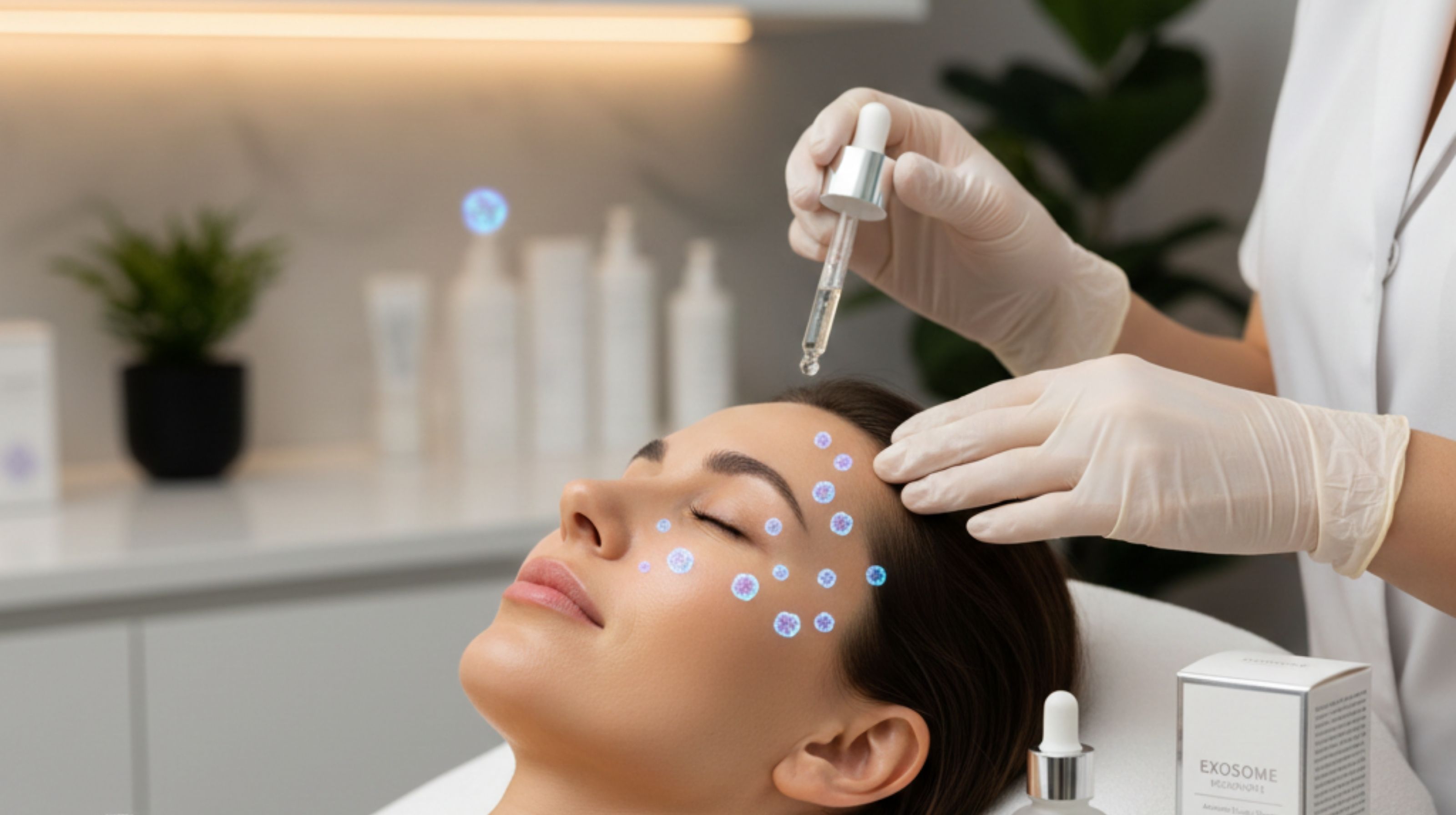
An Exosome Serum Facial is a cutting-edge dermatological treatment utilizing powerful nanovesicles, called exosomes, derived from stem cells. These extracellular vesicles deliver vital growth factors and regenerative proteins to skin cells, enhancing repair, stimulating collagen production, and significantly improving skin texture, tone, and overall health.
At its core, an Exosome Serum Facial involves applying a highly concentrated serum rich in exosomes to the skin, typically after a procedure that enhances absorption, such as microneedling, fractional laser therapy, or even advanced chemical peels. These exosomes are essentially microscopic "messenger bags" released by various cells, including mesenchymal stem cells. They contain a complex cargo of lipids, proteins, and genetic material (like mRNA and microRNA) that, once delivered to recipient skin cells, can influence their behavior.
Unlike therapies that introduce actual cells into the body, exosomes are cell-free, mitigating many of the complexities and potential risks associated with live cell treatments. Their power lies in their ability to signal and reprogram cellular functions, prompting the skin to repair itself, reduce inflammation, and accelerate the production of essential structural proteins like collagen and elastin. This bio-signaling capacity is what makes the treatment so compelling for addressing a wide array of skin concerns.
The Science Behind Regenerative Aesthetics and Exosomes
The science underpinning exosome therapy is rooted in cellular communication. Every cell in our body constantly communicates with its neighbors, orchestrating complex biological processes. Exosomes are a crucial part of this intercellular dialogue, acting as highly efficient transporters of critical information. When applied to the skin, these tiny vesicles are absorbed by epidermal cells and fibroblasts in the dermal layer.
Once inside, the exosomes release their regenerative cargo. This initiates a cascade of beneficial effects. Growth factors stimulate cellular proliferation and differentiation, accelerating wound healing and tissue repair. Anti-inflammatory cytokines help to calm irritated or compromised skin, reducing redness and swelling. Crucially, the genetic material within exosomes can effectively "switch on" genes responsible for producing new collagen and elastin, revitalizing the skin's structural integrity from within. This natural reprogramming offers a more holistic and sustainable approach to skin health than merely masking symptoms.
From working with real businesses managing patient expectations, it's clear that the perceived "magic" of exosomes is actually a sophisticated biological mechanism. They don't just add a substance; they activate the skin's inherent healing and rejuvenation capabilities. This activation leads to tangible improvements in skin firmness, elasticity, and overall radiance, making the skin appear more youthful and resilient.
Exosomes vs. PRP and Other Advanced Skin Treatments
Many individuals exploring advanced skin rejuvenation often encounter both Exosome Serum Facials and Platelet-Rich Plasma (PRP) treatments. While both fall under the umbrella of regenerative aesthetics, their mechanisms and components are distinctly different. PRP therapy involves drawing a patient's blood, processing it to concentrate platelets, and then reinjecting or topically applying the platelet-rich plasma. Platelets contain a range of growth factors that stimulate healing and collagen production.
However, exosomes represent a more refined, cell-free approach. Unlike PRP, which relies on the growth factors *within* platelets (and thus, the patient's own physiological state), exosome serums contain concentrated vesicles from carefully cultured and screened stem cells. This means a more consistent and potent delivery of regenerative signals, independent of the patient's age or health, which can sometimes impact the quality of their PRP. Based on how platforms behave today, discerning clients are looking beyond mere claims, seeking treatments with standardized efficacy.
Furthermore, while traditional serums primarily deliver nutrients and active ingredients to the surface or superficial layers, and even microneedling or lasers create channels for deeper product penetration, exosomes actively engage in cellular communication. They don't just nourish; they instruct cells to perform better. This distinction clarifies a common misconception: exosomes aren't simply "stronger growth factors"; they're complex biological packages designed for targeted cellular reprogramming, often offering benefits that surpass what a simple collection of isolated growth factors can achieve.
Who Can Benefit from an Exosome Serum Facial?
The versatility of the Exosome Serum Facial makes it suitable for a broad range of skin concerns and age groups, though it particularly excels in specific areas. Primarily, individuals seeking significant anti-aging benefits—reduction in fine lines and wrinkles, improved skin firmness, and enhanced elasticity—are prime candidates. The treatment's ability to stimulate collagen and elastin synthesis directly addresses the hallmarks of intrinsic aging.
Beyond anti-aging, the regenerative properties of exosomes make them highly effective for individuals dealing with compromised skin. This includes those with acne scarring, sun damage, uneven skin tone or texture, and even chronic redness or inflammation. The exosome's capacity for tissue repair and inflammation reduction can significantly diminish the appearance of scars and improve overall skin resilience. After analyzing recent patterns, it's evident that the application of exosomes extends to post-procedure healing, accelerating recovery after more aggressive treatments like laser resurfacing or deep chemical peels.
Even younger individuals looking for preventative measures or those with environmentally stressed skin can find value. By enhancing the skin's natural repair mechanisms, an Exosome Serum Facial helps fortify the skin barrier, making it more resistant to environmental aggressors and delaying the onset of visible aging. It's not just a corrective treatment; it's a profound investment in long-term skin health.
Common Misconceptions and What to Avoid
One of the most pervasive misconceptions regarding exosomes is confusing them with live stem cell therapy. It's crucial to understand that an Exosome Serum Facial does *not* involve injecting or applying live stem cells. Exosomes are cell-free derivatives, the biological messages *from* stem cells, not the cells themselves. This distinction is vital for safety, as it significantly reduces any concerns about immunological rejection or unintended cellular growth. While the "stem cell" origin is a powerful marketing point, the "cell-free" nature is a critical safety and efficacy feature.
Another common pitfall is assuming that all exosome serums are created equal. The market is seeing a surge in products, and unfortunately, not all adhere to the highest standards of sourcing, purification, and formulation. Some products might contain exosomes from less potent sources, or they may not be adequately purified, potentially containing unwanted cellular debris. This lack of standardization can lead to disappointing results, proving the contrarian insight that more exosomes don't automatically mean better results—quality and purity are paramount.
Furthermore, relying solely on the serum without an appropriate delivery method is a mistake. While some serums can be applied topically, treatments like microneedling or fractional laser create micro-channels that dramatically enhance exosome penetration into the deeper layers of the skin where they can exert their full regenerative potential. Skipping this crucial step can significantly diminish the overall effectiveness of the treatment, making it less of an "Exosome Serum Facial" and more of a superficial application.
Best Practices for Your Exosome Serum Facial
To maximize the benefits of an Exosome Serum Facial, several best practices should be observed, starting with the selection of your provider. Seek out reputable clinics and practitioners with extensive experience in regenerative aesthetics and a deep understanding of exosome technology. Don't hesitate to ask specific questions about the exosome product they use: its source, the purity, and the scientific backing for its efficacy. A transparent provider will be able to offer this information readily, indicating a commitment to quality and patient safety.
Preparation is key. Depending on the chosen delivery method (e.g., microneedling), your skin may require specific pre-treatment care, such as avoiding certain retinoids or acids, to ensure it is in an optimal state for absorption and healing. Your practitioner should provide clear, detailed instructions tailored to your skin and the procedure.
The post-treatment care phase is equally critical. Protecting your skin from sun exposure, using gentle cleansers, and diligently applying any recommended soothing or restorative products can significantly influence the healing process and the longevity of your results. A practical takeaway most blogs skip is the importance of integrating this advanced treatment into a broader, consistent skincare strategy. Exosomes are powerful catalysts, but maintaining results requires ongoing attention to skin health, including daily SPF, antioxidant serums, and a balanced routine.
The Future Outlook for Advanced Skin Rejuvenation
The field of regenerative aesthetics is evolving at an unprecedented pace, and the Exosome Serum Facial is at the forefront of this revolution. Looking ahead in the next 30-90 days, we can anticipate further refinements in exosome technology, including more targeted formulations designed to address very specific cellular pathways or skin conditions. Research continues into exosome stability, delivery mechanisms, and combination therapies, promising even more potent and personalized treatments.
What's starting to matter now is the integration of these sophisticated biotechnologies with personalized diagnostics. Imagine a future where a precise analysis of your skin's cellular health dictates the exact cocktail of exosomes needed for optimal rejuvenation. This shift towards hyper-personalized regenerative solutions will redefine what's possible in skin anti-aging and repair.
The Exosome Serum Facial offers a compelling glimpse into the future of skincare, where we move beyond superficial fixes to truly empower the skin's innate ability to heal, regenerate, and maintain its youthful vitality. By understanding the science, making informed choices, and committing to proper protocols, individuals can harness the profound potential of this advanced treatment for lasting, transformative results. The era of sophisticated cellular communication in aesthetics has truly arrived.