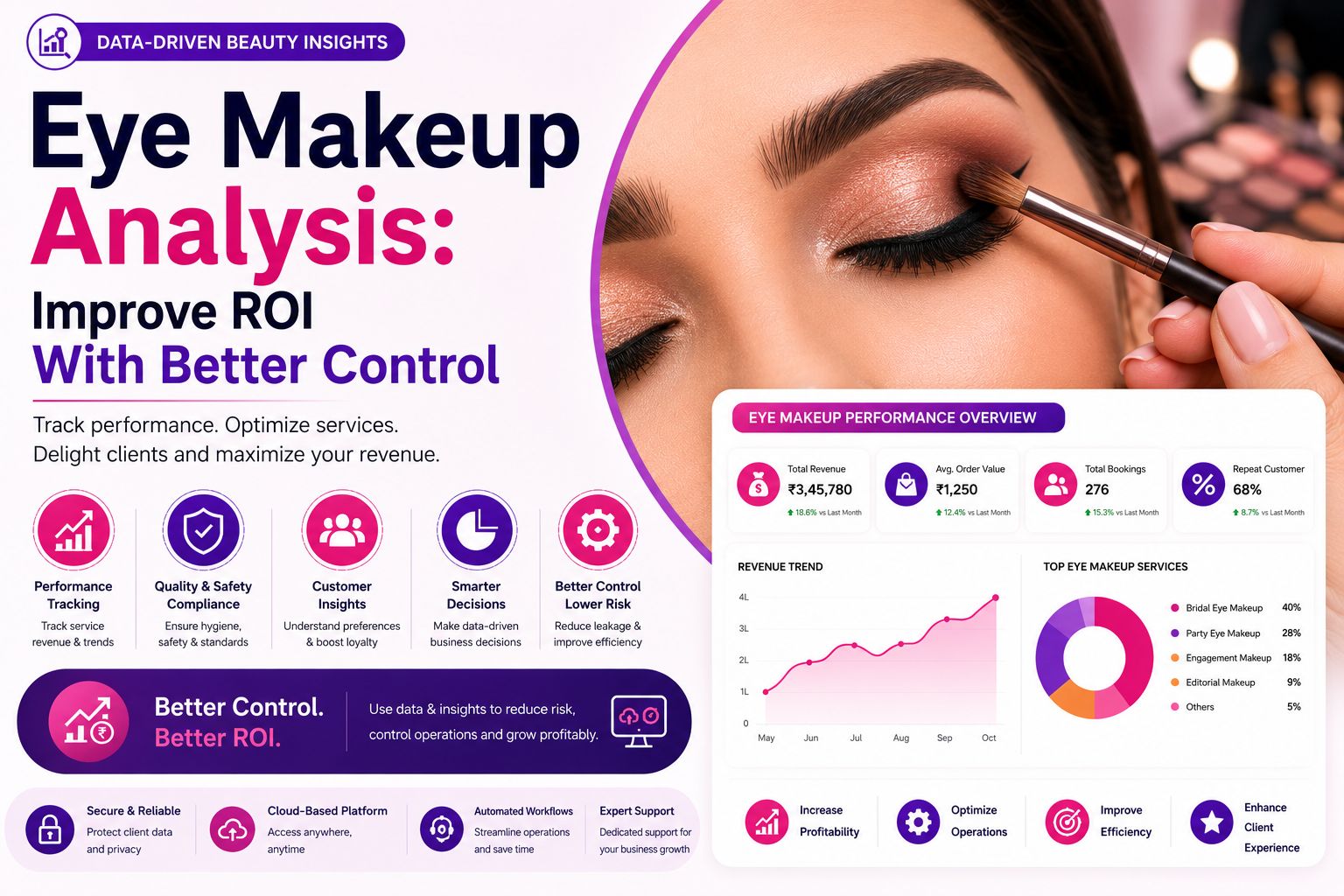


Many salon-goers and beauty professionals assume that high-cost eye makeup services automatically guarantee visible, lasting results. But honestly, the truth is more nuanced than that. During real consultations, customers often express disappointment when dramatic eye looks fade within hours or cause unexpected irritation—like, you paid good money, why is this happening? The confusion begins when perceived value does not match the outcome. An eye makeup analysis focused on identifying where control is lost—whether in product selection, application pressure, or maintenance routines—reveals why return on investment often falls short. This is not about spending more; it is about understanding which variables influence satisfaction and how small adjustments can create significantly better experiences.
What Does ROI Actually Mean During Eye Makeup Services
Return on investment in the context of eye makeup is rarely about money alone. During salon visits, customers evaluate ROI based on how long the look lasts, whether the products cause discomfort, and if the final appearance matches their expectations. In many cases, the dissatisfaction starts immediately after the service ends. Clients notice smudging within two hours, creasing before the evening event, or a heavy feeling that was unexpected—and then you're stuck wondering what went wrong. These signals indicate that control over product compatibility and application technique was missing. When customers understand that ROI depends on skin type, oiliness around the lash line, and environmental humidity, they can adjust their expectations and their choices. The real investment is not just in the service but in the preparation and aftercare that surrounds it.
Why Product Selection And Application Technique Control ROI
The most overlooked variable in eye makeup services is the interaction between the product formula and the individual client's skin chemistry. Many customers assume that premium brands guarantee performance, but in practice, water resistant formulas behave differently on oily eyelids compared to dry skin—it's not one-size-fits-all. During application, pressure and layering also affect how pigments settle and how long they resist running. When a professional uses too much product or applies it without considering the client's natural lash line moisture, the result begins deteriorating before the client leaves the salon. Additionally, poor hygiene practices such as using contaminated brushes can introduce bacteria, leading to redness or infection that completely undermines the service value. Control over these factors directly determines whether the customer feels the investment was justified or if they're just throwing money away.
The Hidden Risk Of Ignoring Aftercare And Touch Up Planning
A common mistake that reduces eye makeup ROI is the assumption that once applied, the look should remain flawless without intervention. In reality, natural oils, blinking, and exposure to wind or air conditioning all break down eye makeup gradually—your eyes are not a static painting. Customers who do not receive clear aftercare instructions often blame the service quality when in fact the issue is maintenance. Applying a primer appropriate for oily lids, using setting sprays designed for delicate eye areas, and carrying blotting papers for touch ups are all simple strategies that drastically extend wear time. Without these steps, even the most careful application loses its impact. Professionals who include aftercare advice as part of the service create longer lasting satisfaction and reduce the likelihood of negative feedback.
How To Decide When Control Is Sufficient And When To Adjust
For customers evaluating their eye makeup investment, the decision point is not after the service but before the event. Asking simple questions before booking helps clarify whether the current approach is appropriate. Does the client have naturally oily eyelids? Has the client experienced reactions to eye products before? Is the event duration longer than four hours? If the answer to any of these is yes, then standard application without additional prep or product selection will likely disappoint. In these cases, investing in a patch test, using waterproof formulations, and scheduling a touch up slot all become essential. When dissatisfaction continues despite these adjustments, it may indicate that the client needs a different treatment approach entirely, such as lash tinting or semi permanent makeup, rather than traditional eye makeup services. Parlourtime resources often help both customers and professionals identify when a change in service type is more effective than repeating the same process.