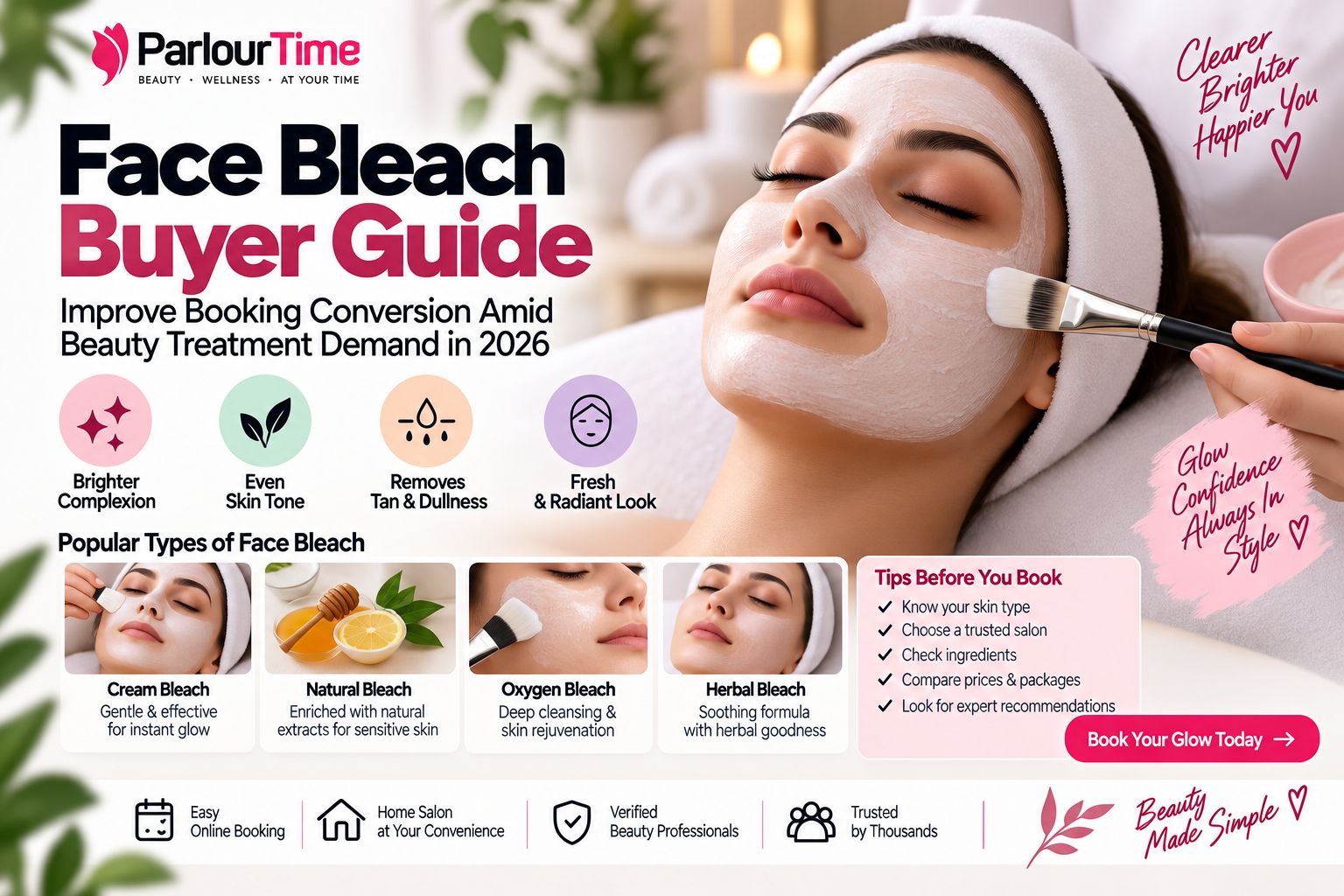


The practical problem this guide solves is simple. A salon owner or booking manager wants fewer abandoned bookings on the face bleach service line, but the service carries sensitivity questions that customers rarely raise out loud. We cannot verify that demand is rising in 2026, so treat the year as a scope label only. What we can work with sits on the operator side: service scope, intake fields, patch-test logistics, consent records, staff scripting, and aftercare communication. Get those in order and the booking conversation changes from guesswork to a defined sequence. That is the outcome this guide aims for.
Defining the face bleach service line and its boundaries
Start by writing down what your face bleach service actually covers. Is it a full-face application, or a targeted brightening step on specific areas? Which product lines are approved, and which staff members are cleared to apply them? These sound like obvious questions, but many salons answer them differently depending on who is on shift. When the scope drifts, the customer hears one thing at booking and another at the chair.
A face bleach buyer guide for operators should also separate the service from anything it is not. It is not a substitute for a dermatology consultation, and it is not a treatment you can promise outcomes for in advance. Rather than making clinical claims, define the boundary in procedure. Your service description should say what happens, in what order, over how long, and what the customer is expected to do before and after. We are not in a position to state which skin types are suitable, because no verified source is available here. Mark that as an open item and settle it with your product supplier or a qualified professional before publishing anything.
Intake and consent records that hold up under pressure
Most booking losses start with a form that asks too little. A name, a phone number, and a preferred time will not help you when a customer later says they reacted badly. Build an intake that captures skin history, current products in use, recent professional treatments, known sensitivities, and any past reaction to a similar service. Keep the fields short enough that a customer will actually finish them on a phone screen.
Consent documentation runs alongside intake, not after it. The customer should see, in plain words, what the service involves and what could go wrong, and confirm that they understand before the appointment is locked in. A salon face bleach service that treats consent as a checkbox is exposed when a complaint arrives. One that treats it as a record is protected and, in practice, calmer to run.
Practical decision signal: if intake returns a blank answer on recent treatments or past reactions, do not fill the gap with an assumption. Send a short follow-up message before confirming the slot. A delayed booking is cheaper than an avoidable incident.
Patch-test and timing logistics before the appointment
Patch testing is where scheduling gets real. A patch test has to sit at a fixed distance before the service, and that distance is a decision your salon makes with professional guidance, not a number pulled from a blog. Once you set it, hold to it. When a customer asks to skip the step because they are in a hurry, the answer should already exist in writing.
Timing around events is the other recurring pressure point, especially for bridal beauty booking. A customer planning for a wedding or a shoot will want the glow as close to the date as possible. We cannot state a safe window in days without a verified source, so treat this as a policy question. Decide the minimum gap your salon will accept, write it into the booking rules, and show it before payment. The same restraint applies to aftercare instructions: state what your salon recommends, and label anything beyond that as guidance to confirm with a qualified professional.
Customers who want to check general service questions often look at salon FAQs before choosing a slot, which means your answers there carry as much weight as your service page.
Staff scripting, escalation, and aftercare communication
Consistency across staff is the difference between a process and a personality. Give every team member the same opening lines, the same explanation of the patch test, and the same closing aftercare message. Scripts do not need to sound robotic. They need to cover the same three things every time: what the service does, what the customer must do, and who to contact if something feels wrong.
Escalation deserves its own rule. Decide in advance what a staff member does when a customer reports discomfort, and who takes over from there. A vendor with a managed-review workflow often builds this into their platform, and you can borrow the shape of it without buying anything: a named owner, a written step, and a log. Whether recording skin history at booking actually reduces incidents is an open hypothesis for your salon, not a settled finding. Test it on your own numbers.
Aftercare communication is where repeat bookings are won or lost. A short message the day after the appointment, plus a clear list of what to avoid, keeps the customer informed and gives you an early signal if something is off. The wise thing to do here is set the expectation that face bleach aftercare continues for several days after the visit, not just the evening of it.
Decision signals for your next booking cycle
The clearest signal is a completed intake form with no blank fields. If customers regularly skip or abandon that step, the form is too long, and the fix is editing, not chasing.
Second, watch patch-test compliance as a booking-stage metric. Track how many confirmed appointments carry a completed patch test against your own policy gap. If that number slides, the problem is usually in the script or the reminder sequence.
Third, log reschedules that come from the customer side and look for patterns. A cluster of reschedules near event dates suggests your timing policy is unclear at the point of booking, not that customers are unreliable.
Fourth, review consent records after any complaint. A complete record shortens the conversation and tells you which intake field needs to change.
Finally, treat every clinical or safety question in this guide as pending verification. Nothing here replaces advice from a qualified professional, and no claim about outcomes, suitability, or demand should go live until you have a source behind it.
Written by: Parlour Time Editorial Desk
Published: 23 September 2026, 09:44 PM IST | Updated: 23 September 2026, 09:44 PM IST
Powered by: Parlour Time