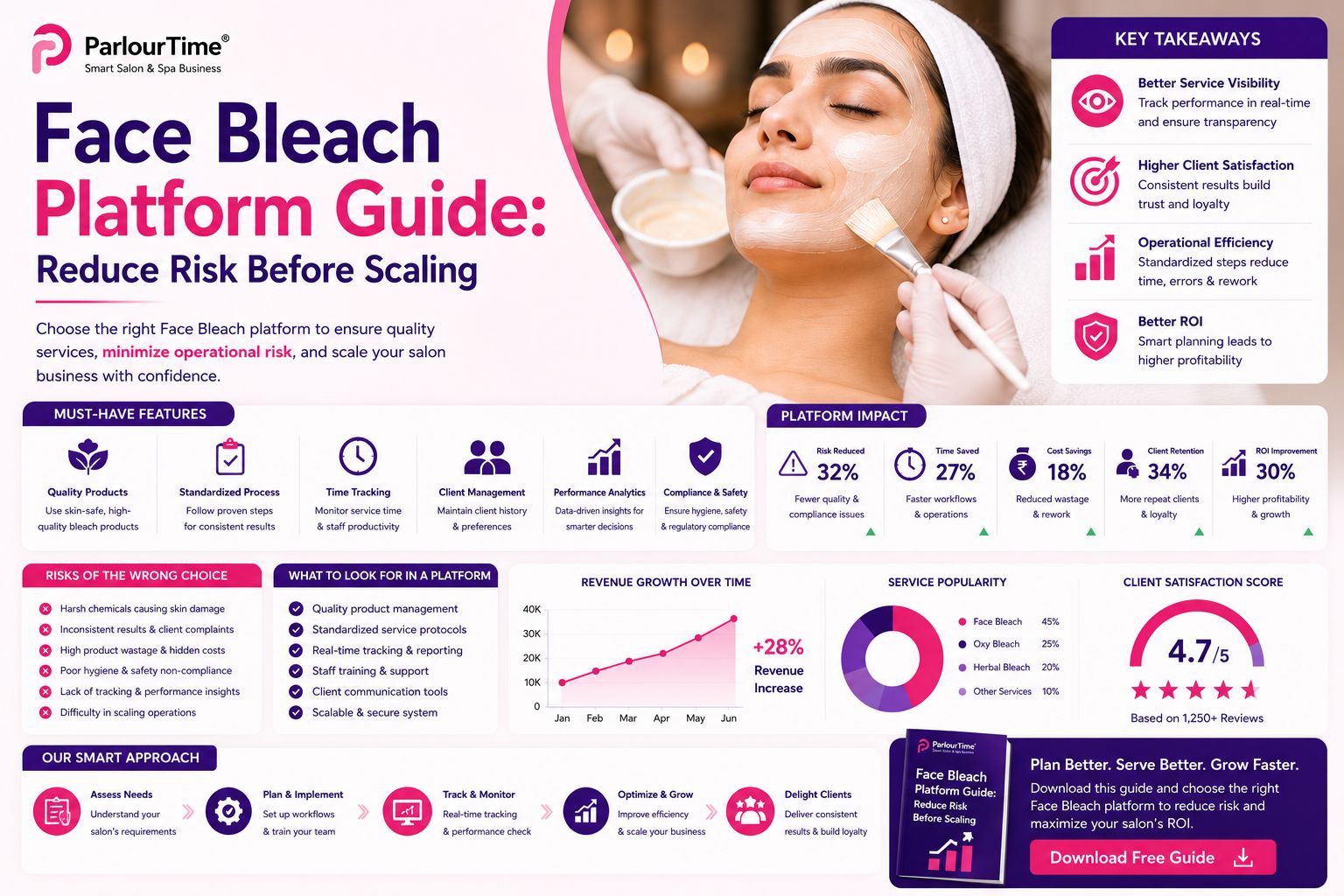


Many salon visitors experience a mix of curiosity and hesitation before booking a face bleach service. When applied correctly, bleach can lighten facial hair and brighten the skin temporarily. But honestly, the conversation often shifts quickly from expectation to concern. Some customers notice redness, irritation, or uneven results shortly after the service. Others feel the glow disappears faster than expected. These experiences create confusion about whether the treatment is suitable, especially for regular scaling. The real question is not about availability but about safety and predictability. When you step into a salon wondering if a face bleach will react differently this time, you are not alone. This guide helps you understand what happens, why results vary, and how to approach scaling decisions with less anxiety and more clarity.
Why Face Bleach Results Can Feel Unpredictable
The most common observation after a face bleach is temporary redness or a stinging sensation. Many customers expect instant brightness without side effects. In reality, the reaction depends on several factors that often go unnoticed. The type of bleach formulation, the concentration of active ingredients, and the condition of your skin barrier all play a role. A small patch test, when done correctly, reduces surprises. Yet many visitors skip this step or assume one brand works the same as another. The unpredictability comes from mismatched expectations. A customer who uses strong skincare products at home may have a more sensitive reaction during a salon bleach. Similarly, someone with a recent exfoliation routine might experience higher irritation. These signals are not always visible before the service. The confusion deepens when results vary between sessions. One month the skin looks even and smooth. The next month the same bleach leaves patchy marks. This inconsistency makes it hard to decide whether to scale the frequency of the service.
Reality Check: What Actually Happens on Indian Skin
Indian skin types respond differently to bleach than lighter skin tones — that's just a fact. Melanin levels, oil production, and natural barrier strength influence both the outcome and the risk of reaction. Pigment distribution can cause uneven lightening, especially near the jawline or upper lip. Many customers report a dull appearance instead of brightness after the bleach. This happens because the melanin in the skin absorbs light differently, and the bleach does not always lift evenly. A realistic observation from salon visits is that the skin often feels tight for several hours after the service. This tightness is a sign of temporary barrier disruption. When the skin feels overly dry or sensitive, the bleach has likely stripped natural oils. The result is a glow that fades within a day or two. Another common observation is that the upper lip area tends to react more quickly. That area is thinner and more exposed to environmental factors. For these reasons, expecting a consistent brightening effect across the entire face is unrealistic. The outcome depends on the skin's current condition, the product used, and the salon's technique. A customer who understands this can adjust expectations and reduce disappointment.
Common Mistakes and Overlooked Risks
The biggest risk before scaling face bleach services is skipping the patch test. Many customers assume that because they have used bleach before, the same formulation is safe. But here's the thing — skin changes. Seasonal humidity, new skincare products, and stress affect sensitivity. A reaction that did not happen three months ago can appear today. Another overlooked mistake is applying bleach over active breakouts or sunburned skin. This increases inflammation and can lead to hyperpigmentation. Some customers also ignore the timing of their last exfoliation. Using acids, retinoids, or scrubs within 72 hours of bleaching raises irritation risk significantly. A less discussed but equally important risk is product compatibility. Some salon bleaches contain fragrance, hydroquinone, or plant extracts that may not suit every skin type. A customer who asks for a quick service without discussing skin history often ends up with redness that lasts longer than the desired brightness. Another blind spot is expecting immediate scaling. After a single session, the skin needs recovery time. Booking another bleach within two weeks can worsen sensitivity and reduce long-term results. The dissatisfaction escalates when customers blame the salon without considering these factors. Awareness of these mistakes shifts the focus from frustration to informed decision-making.
How to Decide Timing and Maintenance for Face Bleach
The decision to scale face bleach services depends on three factors: your skin's recovery pattern, the gap between events, and your current skincare routine. If you notice that redness disappears within a few hours and the glow lasts at least four to five days, your skin tolerates the treatment well. In that case, you can consider repeating the service every three to four weeks. If you experience redness lasting more than twelve hours or a burning sensation during application, scaling is risky. A safer approach is to wait at least six weeks between sessions and focus on barrier repair in between. Another important consideration is the timing of special events. Bleaching three days before a wedding or a party gives the skin no recovery window. Redness or uneven lightening may still be visible. Planning the service at least one week before a major event allows time for any reaction to settle and for the glow to develop fully. Maintenance products also play a role. Using aloe vera gel, mild moisturisers, and fragrance-free sunscreens after bleaching reduces irritation and prolongs results. If the same results no longer appear after multiple sessions, your skin may be indicating that the treatment is reaching its limit. Repeated bleaching does not create more brightness beyond a certain point. At that stage, professional reassessment or switching to a milder alternative becomes appropriate. Some customers find that using parlourtime helps them compare service timing and salon types before making a decision. Understanding these boundaries helps you avoid repeating a service that no longer benefits your skin.
Frequently Asked Questions
q Is it normal to feel a burning sensation during a face bleach? a A mild tingling sensation can occur, but a strong burning feeling often indicates skin sensitivity or product incompatibility that needs attention.
q How many days should I wait between two face bleach sessions? a It is generally safer to wait at least three to four weeks to allow the skin barrier to recover fully before repeating the service.
q Can I apply bleach if I have acne or active breakouts? a Applying bleach over active acne can increase irritation and lead to pigmentation, so it is better to wait until breakouts heal.
q Why does my skin look dull instead of bright after bleaching? a Dullness often occurs because the bleach strips natural oils or because melanin distribution causes uneven lightening on Indian skin.
q What should I apply immediately after a face bleach? a A gentle, alcohol-free moisturiser and a fragrance-free sunscreen help reduce irritation and maintain the glow for longer.
q Does scaling up bleach frequency improve hair reduction? a No, bleach does not reduce hair growth. It only lightens hair temporarily, and frequent use can increase sensitivity without changing hair thickness.
q Can a patch test done days before still show a reaction on the day of service? a Yes, because skin condition changes daily. A patch test reduces risk but does not guarantee zero reaction on the service day.
q When should I stop repeating face bleach services entirely? a If you experience prolonged redness, burns, or consistently dull results, consider stopping and consulting a professional for alternative options.