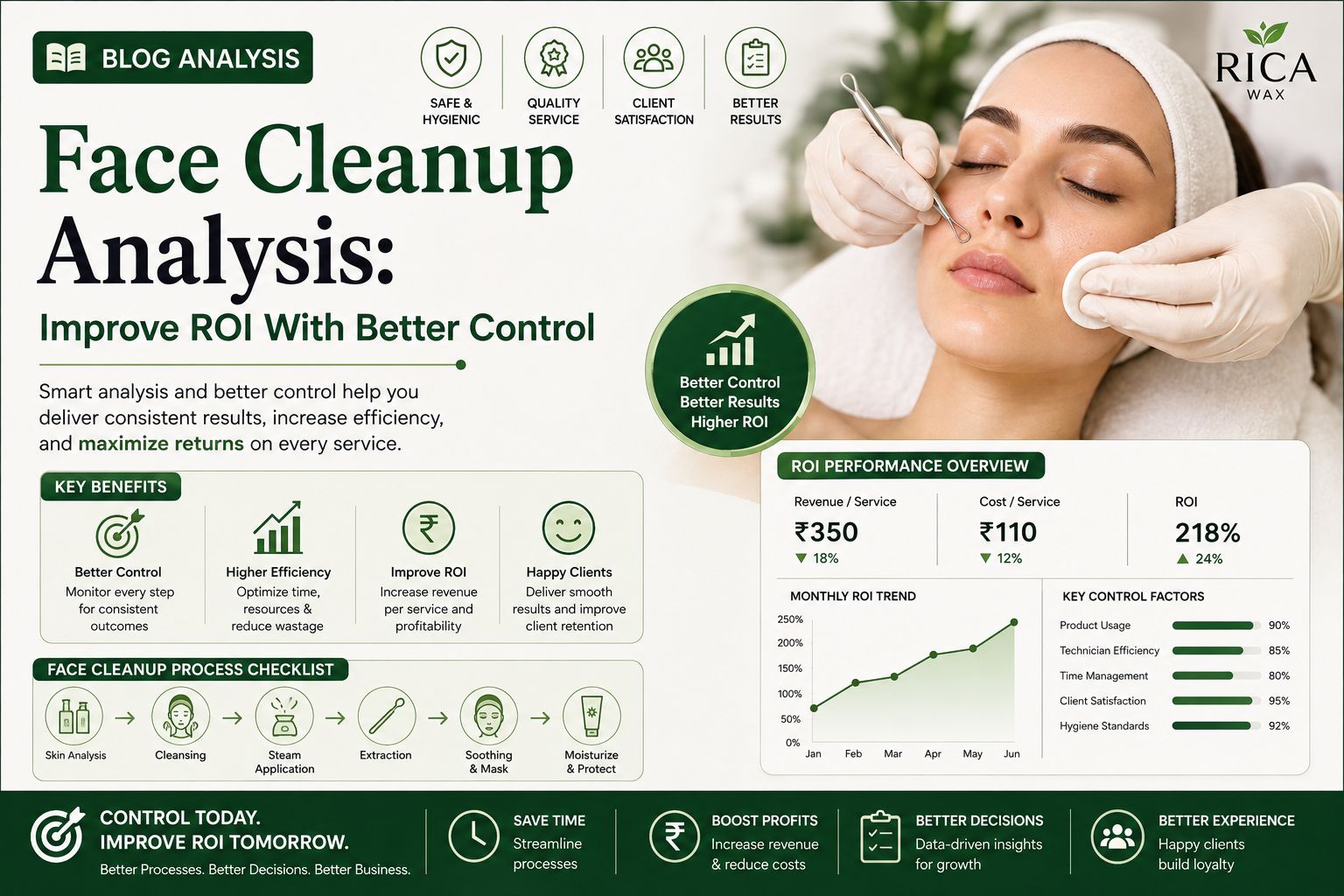


A face cleanup analysis often begins with a simple observation: the glow fades faster than expected. Customers frequently complain that the immediate freshness disappears within a day or two, which creates a gap between the cost of the service and the perceived value. This disconnect usually stems from a lack of control over the variables that determine the outcome. The focus shifts from the skill of the beautician to the preparation, the timing, and the aftercare routine. When a salon visit ends with tightness or unexpected dryness, the return on investment drops immediately. A proper face cleanup analysis must address the entire lifecycle of the treatment, not just the moment of application. The real question is whether the service can deliver lasting clarity and whether the customer understands their role in maintaining it. This initial reaction to a salon facial cleanup often dictates whether the client returns or seeks alternatives.
What Most People Miss About Cleanup Results
The first misunderstanding in any face cleanup analysis concerns the definition of "results." Most customers expect a visible transformation, like a brighter complexion or the complete disappearance of blackheads. However, a cleanup service is primarily about deep cleansing and mild exfoliation. The immediate glow is often a temporary response from increased blood circulation and the removal of surface oil. The real benefit, which is the reduction of congestion, takes a few days to become visible. This delay confuses individuals who want instant validation for their spending. The overlooked detail here is skin type and its reaction to the products used. Sensitive skin might experience temporary redness, which clouds the judgment about the actual effectiveness. A face cleanup analysis should clarify that the purpose is maintenance, not a corrective procedure.
Another common gap involves the distinction between a cleanup and a facial. A cleanup uses lighter products and less massage, focusing on unclogging pores. A facial is more intensive, addressing hydration and specific skin concerns through serums and masks. When customers book a cleanup expecting facial-like results, dissatisfaction becomes inevitable. The analysis reveals that setting the right expectation during the consultation is the first step toward satisfaction. Salons often rush this part, leading to mismatched expectations. The texture of the skin, the climate, and even the point in the menstrual cycle for female clients can alter the outcome. A face cleanup analysis that ignores these variables provides an incomplete picture.
Why Face Cleanup Results Vary Across Skin Types
One of the most critical conclusions from a face cleanup analysis is that results are never uniform. Oily skin typically responds well to strong astringents and exfoliating agents, offering a matte finish that lasts longer. Dry skin, however, may react with tightness and flaking if the products strip away natural moisture. This variability is not a failure of the service but a mismatch of protocol. Many salons use a standard procedure for all clients, which is a fundamental error. The analysis shows that a skin analysis up front can prevent most post-treatment complaints. Clients with combination skin often report that their T-zone feels great while their cheeks feel irritated. This explains why the same service receives contradictory reviews.
Weather plays a significant role in the longevity of cleanup results. In humid conditions, oil production increases rapidly, undoing the mattifying effect within a few hours. During dry winters, the lack of humidity can cause the skin to overcompensate, leading to dehydration. The timing of the cleanup relative to the weather forecast is a factor that is rarely considered. A face cleanup analysis should advise clients on the best season for the service or recommend appropriate moisturizers for the season. The quality of the aftercare products used at home either extends or shortens the interval between salon visits. This dependency on external factors proves that the salon experience is only 50% of the equation.
Common Mistakes That Ruin the Cleanup Experience
The most frequent mistake identified in a face cleanup analysis is the use of harsh physical scrubs immediately after the chemical exfoliation at the salon. Clients often think that more scrubbing equals more cleanliness, but this strips the acid mantle, causing irritation and breakouts. This reactive behavior leads to the conclusion that the salon service was harmful. The actual cause is poor post-treatment management. Another common error is scheduling a cleanup too close to an important event. The skin needs at least 48 hours to settle down, especially if extractions were involved. Redness and pinpoint scabs can appear if the client applies heavy makeup the same day.
Many clients also ignore the need for a patch test. Even if a product was used before without issue, changes in hormone levels or stress can alter skin reactivity. The analysis should cover the risk of skipping the patch test for the sake of time. There is also a persistent misconception that expensive products guarantee better results. A face cleanup analysis reveals that compatibility matters more than price. A high-end serum used on the wrong skin barrier will not penetrate correctly, leading to a sticky feeling and clogged pores. The dissatisfaction grows when the client blames the salon instead of the product mismatch.
How To Get Better Control and Higher ROI
To improve the return on investment, the control must shift to the preparation phase. Clients should stop all active ingredients, like retinoids and strong acids, five days before the cleanup. This prevents over-exfoliation and reduces the risk of chemical burns. Hydration should increase during this period to ensure the skin barrier is resilient. The analysis suggests that the salon must provide a pre-care checklist during the booking confirmation. This simple step reduces the likelihood of adverse reactions and sets a professional tone. Controlling the extraction process is also vital; the beautician should never force a stubborn comedone, as this leads to scarring.
Post-care is where the ROI is genuinely secured. Using a soothing moisturizer and a gentle cleanser for the next 48 hours is non-negotiable. Sunscreen application becomes critical because the fresh skin is more prone to pigmentation. A face cleanup analysis often points out that clients who invest in a simple aftercare routine retain the glow for up to two weeks longer. The decision to wait for an event should be based on the intensity of the service. A light cleanup can be done three days prior, while a deep extraction session requires a week. The understanding of this boundary prevents last-minute panic.
The decision to repeat the service should be based on skin condition, not just a calendar date. If the skin feels tight or looks dull, it is not ready for another exfoliating session. Waiting for the barrier to recover is more effective than forcing a schedule. When clients see a professional for a proper assessment, they understand the difference between a need and a habit. The service should be repeated only when the congestion reappears, which might be every three to four weeks for oily skin and longer for dry skin. The analysis concludes that professional judgment should always override the customer's desire for immediate scheduling.
Frequently Asked Questions
q Can a face cleanup make skin worse before it gets better? a A face cleanup analysis often shows that temporary purging or redness can occur if the skin is sensitive or if extractions were deep.
q How many days before an event should I get a cleanup done? a The analysis advises booking the cleanup at least a week before a major event to allow any redness to fade and the glow to peak.
q Is it necessary to use all the aftercare products the salon sells? a A face cleanup analysis review indicates that only a gentle cleanser, moisturizer, and sunscreen are essential for maintaining results.
q Why does my skin feel sticky after a cleanup? a The stickiness usually means the skin barrier is struggling to absorb the products, often due to over-exfoliation or product incompatibility, a key point in any face cleanup analysis.
q How often should a normal face cleanup be performed? a The recommended frequency for a standard cleanup is every three to four weeks, matching the skin's natural renewal cycle.
q Can I apply makeup right after the service? a The analysis recommends waiting at least 24 hours before applying makeup to allow the skin to breathe and recover from the extraction process.
q What is the difference between a cleanup and a facial? a A cleanup focuses on deep cleansing and light exfoliation, while a facial involves targeted serums and massage for hydration and specific concerns.
q When should I stop doing cleanups and seek a dermatologist? a If you experience persistent acne, severe irritation, or open wounds, a professional medical assessment is necessary rather than continuous salon cleanups.