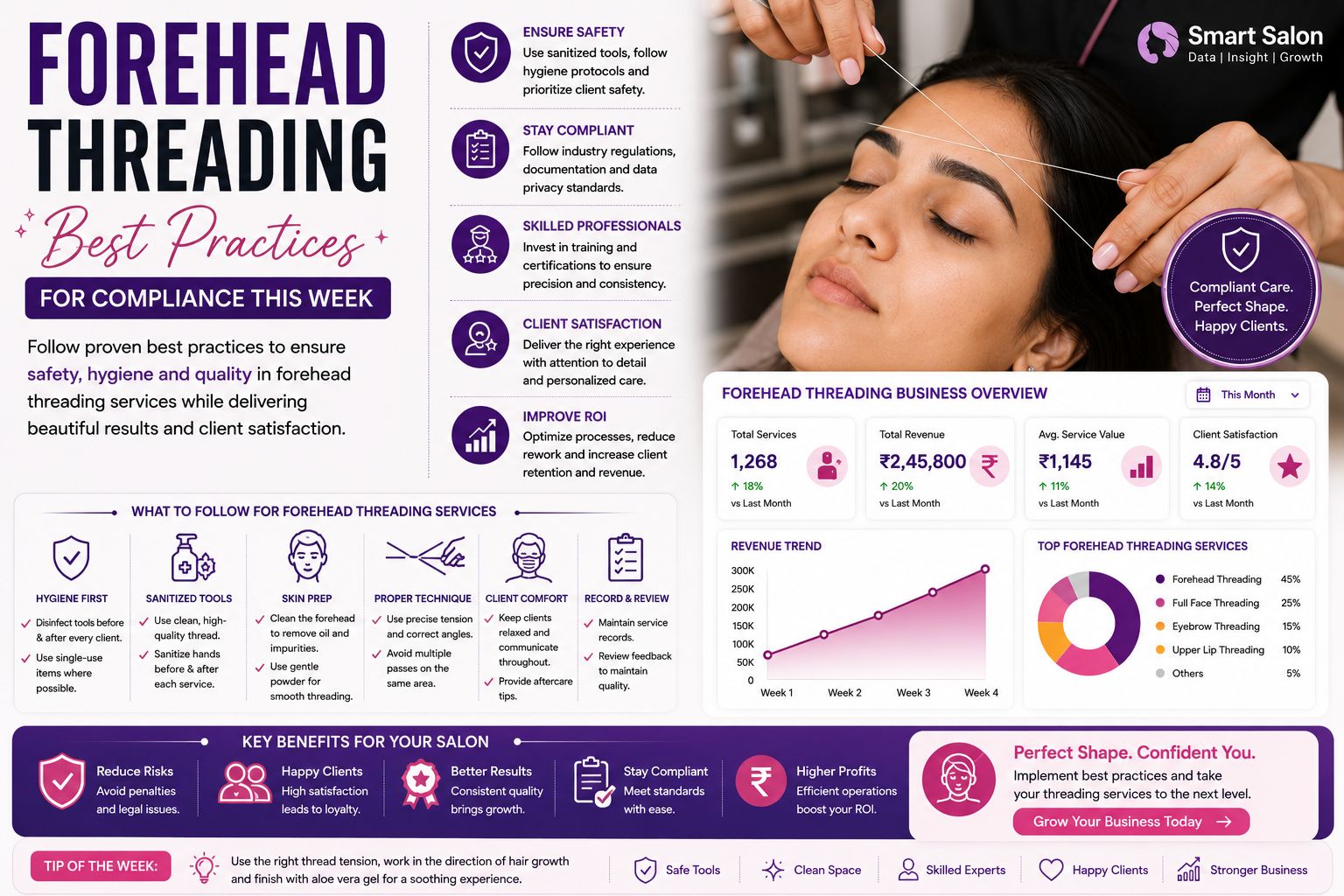


Forehead threading best practices for compliance this week are on many minds, especially when a busy schedule leaves little room for error. You might be preparing for an event or simply maintaining a regular grooming routine, but the thought of a reaction or an uneven result creates real hesitation. The concern usually begins with a simple question: will the service go smoothly, or will you leave with redness and regret? This tension is common because threading involves direct contact with sensitive skin, making hygiene and technique equally important. Understanding what compliance actually means in a salon setting helps you feel prepared before you even sit in the chair, and it directly influences how satisfied you are with the outcome.
What Compliance Means During a Forehead Threading Session
Compliance in forehead threading refers to the set of hygiene, safety, and procedural standards that a salon follows during every appointment. For you as a client, this becomes visible in small but meaningful details: whether the therapist wears gloves, how the thread is handled, and whether the work area appears clean. Many people assume compliance is only about the final look, but the truth is that the process matters just as much as the result. When a salon follows consistent standards, you are less likely to experience prolonged irritation, infection, or uneven hair removal. Observing these practices also gives you confidence that the therapist respects your skin rather than simply rushing through the service.
The first thing you often notice is how the therapist prepares the thread and your skin before starting. A proper session usually involves cleansing the forehead area to remove oil and dirt that could trap bacteria. Some salons also apply a mild talc or soothing powder to help the thread grip finer hairs without pulling the skin excessively. These steps are not just cosmetic; they reduce friction and lower the chance of post-treatment breakouts. If a therapist skips these basics, the risk of redness or small bumps increases noticeably. You should also pay attention to whether the same thread is used on multiple clients, as this is one of the quickest ways to compromise hygiene standards.
Another overlooked aspect is the communication between you and the therapist before the service begins. A compliant session starts with a brief conversation about your skin sensitivity, any recent facial treatments, or allergies you might have. This is not unnecessary chatter; it is a safety check that helps the therapist adjust pressure and technique accordingly. Many clients skip this step because they feel rushed, but mentioning a recent salon facial or a known sensitivity can prevent an uncomfortable experience. When the therapist asks questions, it is a positive signal that they take compliance seriously. When they do not, you may want to reconsider whether this is the right place for your appointment.
Why Forehead Skin Reacts Differently to Threading Than Expected
Forehead skin behaves differently from other areas because it is thinner in some zones and thicker near the hairline, making reactions unpredictable. You might have had threading done on your eyebrows without issues, only to notice more pronounced redness on your forehead. This happens because the forehead has a higher concentration of oil glands and is more exposed to environmental stress like sun and pollution. The thread removes hair from the root, which creates micro-trauma at the follicle level, and this trauma can trigger a temporary inflammatory response. For most people, this settles within a few hours, but for others, it lingers due to underlying sensitivity.
Hormonal changes and your current skin care routine also influence how your forehead responds to threading. If you have been using active ingredients like retinol or exfoliating acids, your skin barrier may be weaker than you realize. Threading over a compromised barrier can cause a stinging sensation or prolonged redness that feels alarming. Similarly, if you are close to your menstrual cycle, your skin may be more reactive than usual. These factors do not mean threading is unsafe, but they explain why the same service can feel different at different times of the month. Recognizing these patterns helps you choose better timing for your appointments.
Weather conditions also play a role in how your forehead reacts after threading. In humid summer months, sweat and oil can clog freshly opened follicles, leading to small bumps that look like a breakout. In dry winter air, the skin may feel tight and flaky because the natural moisture barrier has been disrupted. These reactions are temporary but understandably frustrating when you are expecting a clean, smooth look. A good therapist will advise you on aftercare based on the season, which is a sign of genuine compliance rather than just following a fixed checklist. Without this guidance, you may unknowingly do things that worsen the reaction.
Common Mistakes That Turn Simple Threading Into a Skin Problem
One of the biggest mistakes clients make is applying heavy makeup or rich skincare products immediately after threading. The skin is in a vulnerable state, and thick creams or foundations can block the freshly opened pores, causing irritation or breakouts. Many people do this because they have an event right after the appointment, but this decision often leads to more visible flaws than the hair removal solved. It is better to keep the area clean and allow the skin to breathe for at least a few hours. If you must wear makeup, choose a lightweight, non-comedogenic product and apply it gently.
Another frequent error is scheduling threading too close to other facial treatments without allowing recovery time. For example, getting a facial that involves exfoliation and then threading within the same week can over-stress your skin. The combination of physical exfoliation from threading and chemical exfoliation from the facial can leave your forehead feeling raw and sensitive. This overlap is common during wedding season or before festivals when everyone wants multiple services at once. However, spacing these treatments out by at least three to four days reduces the risk of a negative reaction. Planning your grooming calendar with this buffer is a simple way to protect your skin.
Ignoring persistent discomfort after threading is another oversight that turns a minor issue into a larger concern. While some redness is normal, symptoms like intense burning, swelling, or yellow crusting are not. These signs may indicate that the threading was done on skin that was not suitable for the procedure or that hygiene standards were missed. Many clients tolerate the discomfort hoping it will disappear, but this delays proper care. If you notice unusual symptoms that do not settle within a day, it is sensible to consult a professional rather than applying random home remedies. Your skin is giving you a signal, and dismissing it often extends the problem.
How to Decide the Right Timing and Next Steps for Threading
Choosing the right timing for forehead threading depends on your skin condition, your schedule, and the results you expect. If you have an important function, it is generally safer to thread at least two days before the event rather than on the same day. This gives any redness or minor bumps time to subside, so you look fresh without visible irritation. Rushing to the salon on the day of an event increases pressure on both you and the therapist, which often leads to rushed technique and less attention to hygiene. A little planning goes a long way in making the experience stress-free.
When your skin feels sensitive or you have recently tried a new skincare product, it may be wise to postpone the session. Threading is a physical procedure, and starting it when your skin is already irritated rarely ends well. If you are unsure whether your skin is ready, you can ask the therapist to do a small patch test on a less visible area first. This precaution is especially helpful if you are trying a new salon or a new therapist. A compliant professional will welcome this request because it demonstrates care and reduces the chance of a negative outcome.
If you experience repeated problems despite following all the right precautions, it may be time to reassess whether threading is the best method for your forehead. Some people have hair that grows too close to the skin surface, making threading painful and ineffective. In such cases, alternative methods like waxing or trimming might be gentler and produce longer-lasting results. This is not a failure on your part; it simply means your hair texture and skin type respond better to a different approach. Many clients find that discussing their concerns openly through beauty service questions helps them discover a method that actually works for them. Deciding to switch is a sign of self-awareness, not a rejection of threading as a service.
Ultimately, your experience with forehead threading should leave you feeling cleaner and more confident, not anxious about what might go wrong. The best salons maintain visible standards of hygiene and communicate openly before the procedure begins. Observing these details and asking the right questions protects you from avoidable issues. Parlourtime discussions often highlight that maintenance expectations influence satisfaction more than the treatment itself, and the same applies here. When you understand what compliance looks like and what your skin needs, you take control of the outcome. Knowing when to proceed, when to wait, and when to seek a different solution is the real skill behind every successful beauty appointment.
Frequently Asked Questions
q Can forehead threading cause permanent damage to skin?
a Permanent damage is rare when threading is performed by a trained professional on healthy skin, but improper technique and poor hygiene can lead to scarring or infection.
q How long does forehead redness last after threading?
a Mild redness usually fades within a few hours, but sensitive skin can remain pink for up to 24 hours so plan your appointment accordingly.
q Why does my forehead feel bumpy after threading?
a Bumps often occur because freshly opened follicles trap oil or sweat especially in humid weather, so keep the area clean and avoid heavy products.
q Should I wash my face before a threading appointment?
a Yes, arriving with a clean face helps the thread grip hair better and reduces the chance of bacteria being pushed into the skin.
q Is it safe to thread over acne or active breakouts?
a Threading over active acne can worsen inflammation and spread bacteria, so it is safer to treat the breakout first and wait until skin calms down.
q Can I apply makeup immediately after forehead threading?
a It is best to wait at least a few hours before applying makeup to allow the skin to settle and avoid clogging freshly opened follicles.
q What should I do if my skin burns after threading?
a A cooling gel or aloe vera can soothe mild burning, but persistent pain or swelling requires professional advice rather than home treatment.
q How often should I get forehead threading done?
a Most people need threading every two to four weeks depending on hair growth rate, but your skin condition should guide the final schedule.