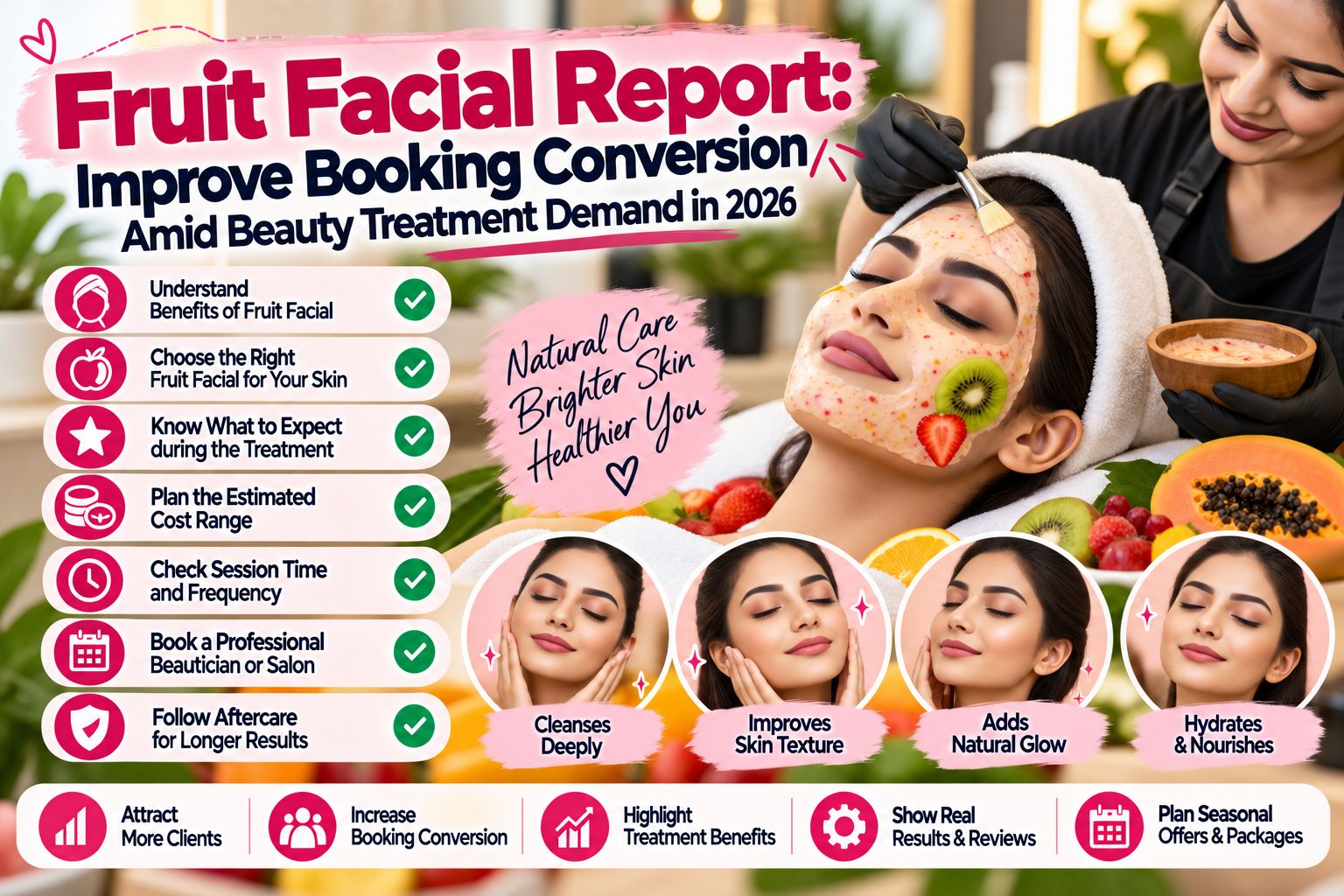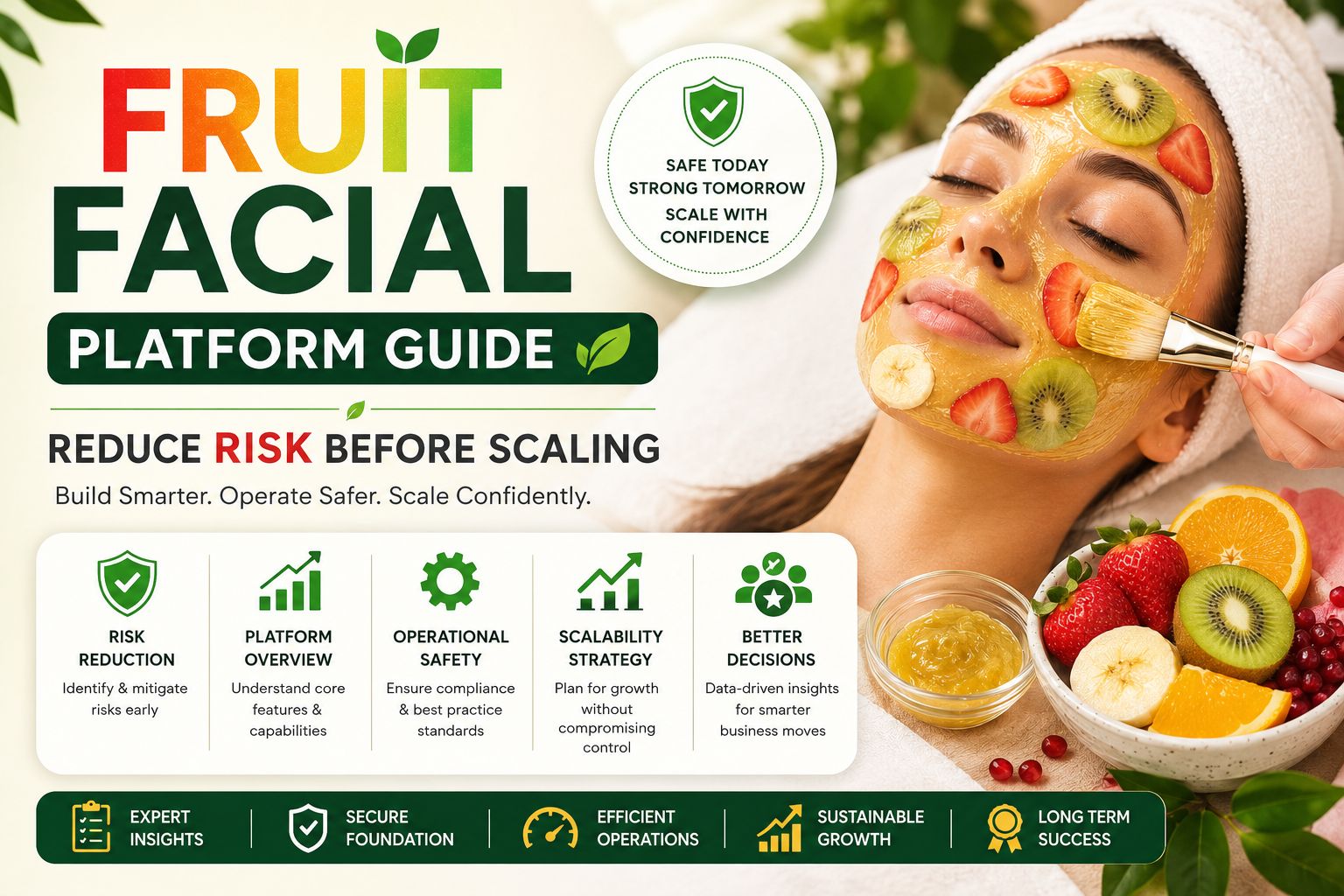


A fruit facial remains one of the most requested services across Indian salons. Many customers book this treatment expecting fresh, glowing skin without the harshness of chemical alternatives. But here's the thing—when salons begin scaling this service through a booking platform, new risks emerge. Consistency drops. Customer reactions vary. And satisfaction becomes harder to guarantee honestly. This guide addresses the real risks that appear when fruit facials expand beyond a controlled salon environment and offers practical ways to manage them before scaling further.
Understanding Why Fruit Facials Behave Differently on a Platform
When a fruit facial moves from a familiar salon setting to a broader platform listing, the experience changes. Customers discover the service through descriptions, photos, and ratings. Their expectations form before they ever sit in the chair—sometimes based on just one good review. The first risk surfaces here because the platform standardises the service name but not the actual fruit ingredients used. Different salons may use different fruit pulps, concentrations, or base creams. Some mix fresh fruit on the spot while others use pre-packaged formulas. This variation creates inconsistency, obviously. A customer who had a glowing experience at one salon may book the same fruit facial at another and face a completely different result. The platform amplifies this gap because customers expect the same outcome from the same listed service. This mismatch between listing and reality is where dissatisfaction begins. Understanding this difference is the first step toward reducing risk when scaling, though I'm still not sure how many salons actually think about this.
The Reality of Ingredient Variation and Skin Sensitivity
The second section moves into practical reality, which honestly scares me a little. Fruit facials depend heavily on active ingredients like citric acid, vitamin C, and fruit enzymes. These ingredients behave differently depending on the fruit's ripeness, the preparation method, and the concentration used. In many cases, salons adjust the mixture based on the client's skin type during a consultation. But when the service is booked through a platform, this consultation often happens too late or too briefly. The client may already have sensitive skin, active acne, or a history of allergic reactions—things they forget to mention in the rush. Without a proper patch test included in the platform booking flow, the risk of adverse reactions increases. Many customers report tingling, redness, or mild burns after fruit facials, especially when lemon or pineapple-based mixtures are used on compromised skin. The platform does not capture this nuance. The reality is that fruit facials are not uniform treatments. Their safety and effectiveness depend on pre-service assessment, which platforms often skip to simplify booking. I mean, who has time for a patch test these days, right?
Common Overlooked Risks When Scaling Fruit Facials
The third section highlights mistakes that become more dangerous at scale. Many salon owners assume that listing a fruit facial on a platform is straightforward. They believe the service is safe because fruits are natural. This assumption is the first blind spot. Natural ingredients can still cause irritation, allergic responses, or photosensitivity—ask anyone who's tried lemon juice on a sunny day. Another overlooked risk is storage and hygiene. Fresh fruit pulps spoil quickly. If a salon prepares large batches to handle increased bookings from the platform, the risk of contamination or reduced efficacy rises. Customers may notice a change in texture, smell, or sensation. They rarely complain directly. Instead, they leave a low rating or do not return. The platform records this as a failed service without revealing the real cause. Additionally, aftercare instructions are often missing from platform bookings. A customer may step out into the sun immediately after a vitamin C fruit facial, causing pigmentation instead of brightening. These gaps widen when scaling happens without updating the service delivery process. It's like nobody's really connecting the dots.
Making Smarter Decisions Before Expanding Fruit Facial Services
The final section provides practical guidance for salon owners and customers. For salon owners, the decision to scale should begin with standardisation. Define the fruit base, concentration, and preparation method clearly. Include a mandatory patch test as part of the booking process. Train staff to recognise skin barriers and avoid high-acid mixtures on sensitive or reactive skin. Update aftercare instructions within the platform confirmation message or through a follow-up system. For customers considering a fruit facial through a platform, the decision should include checking whether the salon conducts a skin assessment before the service. Reading recent reviews for mentions of reactions or inconsistency helps set realistic expectations. If the service feels too cheap or too standardised, it may lack the personalised attention that makes fruit facials effective. Many salon professionals and customers discuss these practical concerns on platforms like parlourtime, where real experiences help others make better booking decisions. The boundary between scaling successfully and failing publicly often comes down to how well the pre-service evaluation and aftercare preparation are handled. Expanding the fruit facial service without addressing these factors increases risk without improving outcomes—and honestly, that's a gamble I wouldn't take on my skin.