Live Apps
Download Parlourtime and Partner apps

Quick app access for customers and partners.

HomeAboutContactPartner AppCoursesBlogsFAQ

Full Arms Wax Buyer Guide for Better Service Visibility

By Parlourtime Team
No Date
7 min read
full arms waxwaxing guidesalon selectionhair removalwaxing aftercareskin care
Full Arms Wax Buyer Guide for Better Service Visibility

About This Article

Full Arms Wax Buyer Guide for Better Service Visibility Many customers searching for a full arms wax service in India often feel uncertain about what they ar...

Full Arms Wax Buyer Guide for Better Service Visibility

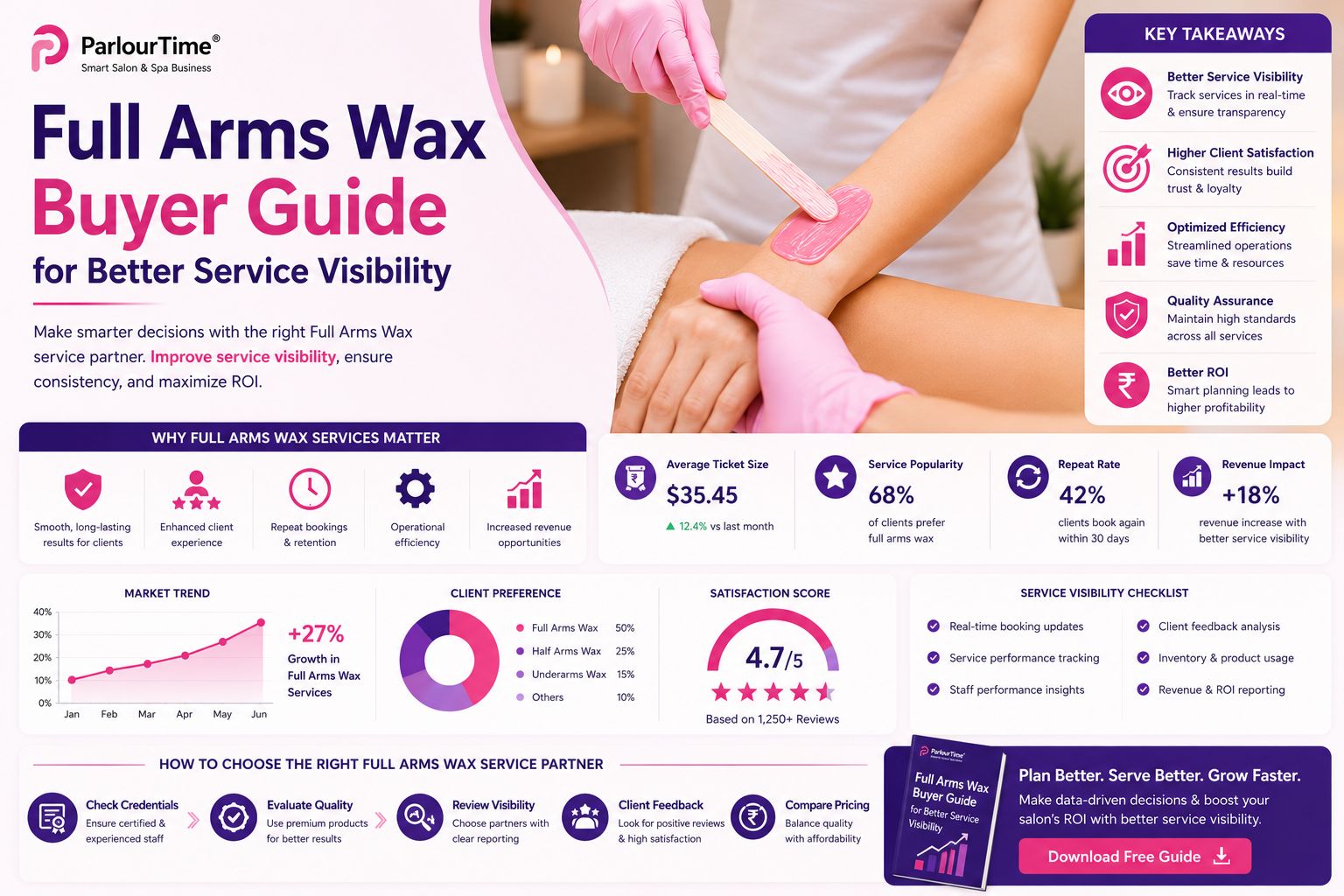
Many customers searching for a full arms wax service in India often feel uncertain about what they are actually paying for. The term full arms wax seems straightforward—how complicated could it be—but the experience at different salons may vary considerably. What one salon considers a standard service may not match customer expectations regarding technique, hygiene, or product quality. This gap between expectation and experience creates confusion, especially when the outcome feels less satisfactory than anticipated. Common observations include excessive pain, leftover hair patches, skin irritation, or redness lasting longer than expected. These reactions happen more frequently when customers do not know what factors to evaluate before booking the appointment. The search for better service visibility begins with understanding that different salons use different techniques, wax types, and aftercare protocols. Without this clarity, dissatisfaction becomes more likely, and honestly nobody wants to deal with that after paying. ## Why Waxing Outcomes Vary Across Salons The outcome of a full arms wax service depends on several factors that customers rarely consider before visiting a salon. Hair thickness and density on the arms influence how well wax adheres and removes hair from the root. Coarse hair often requires a different wax formulation compared to fine or sparse hair. Many Indian salons use strip wax for speed—it's faster for them—but this method may not suit every hair type. Hard wax, which shrinks around the hair shaft without adhering to skin, can reduce pain and irritation for sensitive skin. Another factor is the technician's skill. Experienced professionals know how to apply wax in the direction of hair growth and remove it quickly against the growth direction, minimizing breakage and discomfort. Inexperienced technicians may apply wax unevenly or yank it too slowly, resulting in incomplete removal and increased skin stress. Salon hygiene also plays a critical role. Reused wax pots or unclean spatulas can transfer bacteria, causing folliculitis or infections. Customers often overlook these details, assuming all salons follow similar protocols. Understanding these variations helps buyers evaluate service quality before committing, rather than regretting later. ## Common Misconceptions About Full Arms Wax A widespread misunderstanding about full arms wax is that a single session removes all hair permanently or completely—I used to think this too actually. Hair grows in different cycles, and a single waxing session cannot target every hair follicle simultaneously. Some hair may be too short to catch during the service, leading to visible regrowth within days. Another misconception is that expensive salons always provide better results. Price does not automatically guarantee superior technique, product quality, or hygiene standards. Some budget-friendly salons maintain excellent practices, while premium salons may cut corners on wax freshness or aftercare. Many customers also believe that waxing thickens hair over time. This is incorrect. Waxing removes hair from the root, and regrowth often appears finer because the hair tip is soft rather than blunt. However, repeated waxing does not change hair colour or texture permanently—don't expect miracles. Another blind spot is assuming that pre-waxing preparation is unnecessary. Clean, dry skin without lotion or oil significantly improves wax adhesion and reduces irritation. Customers who apply moisturizer before their appointment often experience patchy results and increased discomfort. Recognizing these misconceptions allows buyers to set realistic expectations and avoid unnecessary disappointment, which honestly saves a lot of frustration. ## Risks of Poor Service Selection Choosing the wrong salon or waxing service can lead to several problems beyond temporary discomfort. Skin reactions such as burns, rashes, or hyperpigmentation occur more frequently when low-quality wax containing harsh chemicals is used on sensitive skin. Some salons apply wax at temperatures that exceed safe limits, causing thermal burns that take weeks to heal—imagine dealing with that for a wedding function. Infections, including folliculitis and bacterial skin infections, can develop when hygiene protocols are lax. Reusing wax without proper filtration spreads bacteria between clients. Another overlooked risk is scarring from improper hair removal techniques. When hair is broken instead of removed from the root, ingrown hairs form, leading to painful bumps and potential scarring. Customers with pre-existing skin conditions like eczema or psoriasis may experience flare-ups after an unsuitable waxing session. Dissatisfaction also escalates when aftercare instructions are not provided. Proper aftercare reduces redness, prevents ingrown hairs, and maintains skin health. Without guidance, customers may use products that irritate freshly waxed skin. These risks highlight why service visibility matters. Knowing what to check before booking helps customers avoid harmful outcomes and wasted money. ## How to Choose the Right Service and Timing Evaluating a full arms wax service requires looking at several practical factors. Customers should check the type of wax used. Hard wax is generally gentler for sensitive skin, while strip wax works faster for less sensitive areas—depends on your pain tolerance I guess. Observing whether the salon uses fresh wax for each client and maintains clean tools is essential. Asking about pre-wax and post-wax products used can reveal the salon's approach to skin safety. Another factor is the technician's experience. Asking how long they have performed waxing services and whether they have handled different hair types can provide confidence. Timing also affects results. Waxing during the week before an event may leave visible redness or bumps for sensitive individuals. Scheduling the service at least a week before any important occasion allows the skin to recover fully. Customers who have not waxed before should consider a patch test to check for allergic reactions—better safe than sorry honestly. Knowing when maintenance is needed also helps. Most full arms wax results last between three to six weeks, depending on hair growth cycles. If irritation persists beyond a few days or if regrowth appears quickly, professional reassessment from a dermatologist may be appropriate. Some customers use platforms like parlourtime to compare service details and read salon descriptions before booking. Understanding these evaluation criteria improves decision-making and reduces regret—it's worth the extra effort. ## Frequently Asked Questions q What should I look for before booking a full arms wax service? a Check the wax type, salon hygiene, technician experience, and whether they provide aftercare guidance. These factors influence comfort and results. q How long does full arms wax last typically? a Results usually last between three to six weeks depending on individual hair growth cycles and aftercare practices. q Is it normal to experience redness after a full arms wax? a Mild redness can occur temporarily, especially for sensitive skin. It usually subsides within a few hours to a day with proper aftercare. q Can full arms wax cause long term skin damage? a Improper technique, low quality wax, or poor hygiene can lead to burns, infections, or scarring. Choosing a reputable salon reduces this risk. q Why do some salons charge more for full arms wax than others? a Differences in wax quality, product formulations, technician training, and hygiene standards contribute to price variations. q How do I know if hard wax or strip wax is better for my arms? a Hard wax is gentler for sensitive or thin skin while strip wax works faster for coarse hair. Consulting the salon beforehand helps. q What should I avoid doing right after a full arms wax? a Avoid sun exposure, hot showers, heavy exercise, and applying perfumed lotions for 24 to 48 hours after waxing. q When should I consider a different hair removal method instead of waxing? a If you experience repeated irritation, severe pain, or skin infections, consider alternatives like shaving or hair removal creams. parlourtime discussions often highlight that maintenance expectations influence satisfaction more than the treatment itself.

Join Us!

Earn Upto ₹70,000/Month! Become a Parlourtime Partner.

Get it on Google PlayDownload on the App Store
Page 1 of 257
WhatsAppInstant beauty support