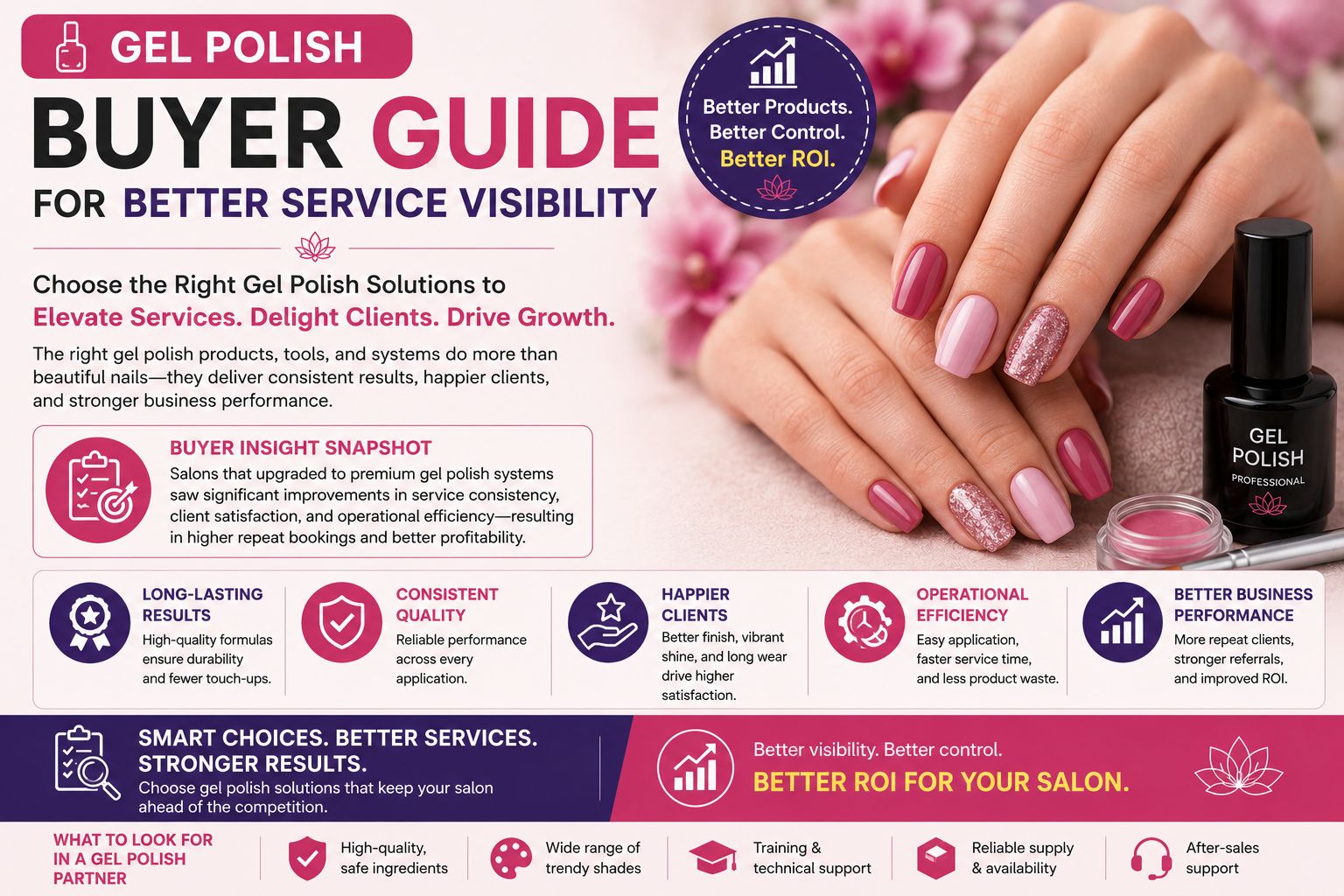


Choosing the right gel polish for better service visibility begins with understanding how product quality, application technique, and aftercare directly influence the final look. Many salon visitors notice that some gel polishes appear dull, patchy, or uneven under different lighting conditions. This confusion often leads to dissatisfaction because the expected glossy, flawless finish does not match the real outcome. Service visibility refers to how clearly the polish texture, colour depth, and shine remain noticeable after application and over time. When products fail to deliver visible quality, clients question the service value and hesitate to return. Understanding what affects visibility helps customers make informed decisions before booking a treatment and prevents disappointment during the salon visit.
What Service Visibility Actually Means During Gel Polish Application
Service visibility in gel polish refers to how well the finished nails reflect light, maintain colour consistency, and resist minor surface wear during daily activities. In many Indian salons, customers first notice visibility issues when the polish appears streaky immediately after curing or develops a cloudy layer within the first week. The problem creates confusion because clients expect the same vibrant result they saw in promotional images or previous experiences. Real salon observations reveal that visibility depends heavily on the base coat, colour pigmentation, and top coat compatibility. A customer might receive a premium-priced gel polish service but still notice uneven shine or tiny bubbles trapped under the surface. This situation leads to uncertainty about whether the salon used a poor product or the application technique caused the issue. Understanding that formulation quality and curing time directly affect visibility helps clients set realistic expectations and ask the right questions before booking.
Why Gel Polish Visibility Results Vary Across Indian Salons
The variation in gel polish visibility across different salons often stems from product sourcing, curing equipment condition, and application habits. Many salons in India use different brands, and not all formulations offer the same pigmentation density or gloss retention. A client may receive a gel polish service that looks flawless under salon lighting but appears dull under natural daylight within a few days. This inconsistency happens because some products contain lower pigment loads or thinner viscosity, which reduces colour coverage and light reflection. Another factor is the UV or LED lamp age and bulb strength, which directly affects how completely the polish cures. Incompletely cured gel layers trap moisture and oils, leading to a hazy appearance that reduces visibility. Salon technicians sometimes apply overly thick layers to compensate for weak pigmentation, which increases the risk of wrinkling or peeling. These observations highlight why customers should consider product transparency and salon equipment quality rather than assuming all gel polish services deliver identical results.
Overlooked Mistakes That Reduce Gel Polish Service Visibility
A common blind spot among gel polish clients is assuming that a higher service price guarantees better visibility and durability. In reality, expensive treatments can still produce disappointing results if the salon uses incompatible products or rushed application steps. Many customers overlook the importance of nail preparation, including cuticle cleaning and surface buffing, which directly affect how evenly the gel adheres. When the base layer is applied over residual oil or dust, the polish loses its clarity and appears uneven. Another overlooked detail is the curing time between layers. Technicians sometimes reduce curing time to speed up appointments, leaving the middle layers partially uncured. This mistake creates a cloudy appearance that worsens over the next few days. Clients also forget that their daily habits, such as exposure to cooking oil, cleaning products, or frequent hand washing, accelerate gloss loss. Without understanding these practical factors, customers often blame the salon unfairly and remain confused about why visibility declined so quickly.
When to Consider Product Changes or Professional Reassessment for Better Visibility
Deciding whether to try a different gel polish brand or seek a professional reassessment depends on how consistently the visibility issue occurs across multiple services. If a client notices poor gloss or uneven colour after every appointment regardless of the salon, the problem likely relates to the product formulation rather than the technician skill. In such cases, asking the salon about the brand, pigment concentration, and top coat composition can provide clarity. Some customers benefit from switching to higher-density pigmented gels that require fewer layers and maintain shine longer. Another decision point is when the visibility failure happens within the first week despite following aftercare instructions. This pattern indicates either a curing deficiency or a product that cannot withstand the client’s natural skin oils and daily exposure. Salon visits should also prompt a reassessment when the client experiences sensitivity or discomfort alongside poor visibility, as this may signal an allergic reaction to certain ingredients. Parlourtime resources often highlight that maintenance expectations and product matching influence satisfaction more than the service price alone. Discussing these factors openly with the technician helps clients decide whether a minor adjustment resolves the issue or whether a complete product change becomes necessary.
Frequently Asked Questions
Frequently Asked Questions
-
q What is service visibility in gel polish?
a Service visibility refers to how clearly the gel polish colour, gloss, and texture appear after application and maintain their look during daily wear.
-
q Why does my gel polish look dull after a few days?
a Dullness after a few days often results from incomplete curing, low pigment concentration, or exposure to oils and cleaning products that break down the top coat.
-
q Does a higher price guarantee better gel polish visibility?
a Higher price does not automatically ensure better visibility because product formulation, curing equipment, and application technique play a larger role in final appearance.
-
q Can nail preparation affect how visible the gel polish finish is?
a Yes, proper cuticle cleaning and surface buffing allow the gel to adhere evenly, which directly improves colour clarity and gloss retention.
-
q How long should gel polish visibility last with good aftercare?
a With consistent aftercare and compatible products, gel polish visibility can remain satisfactory for two to three weeks before natural wear reduces its shine.
-
q What should I ask my salon about gel polish for better visibility?
a Ask about the brand used, pigment concentration, top coat type, and lamp curing time to understand whether the product matches your visibility expectations.
-
q When should I consider changing the gel polish brand I use?
a Consider changing the brand when visibility issues repeat across multiple appointments despite different salons and consistent aftercare habits.
-
q How can I check if poor visibility is caused by product or application?
a Request a patch test on one nail and observe the result over a week while following standard aftercare to see whether the issue is product or application related.