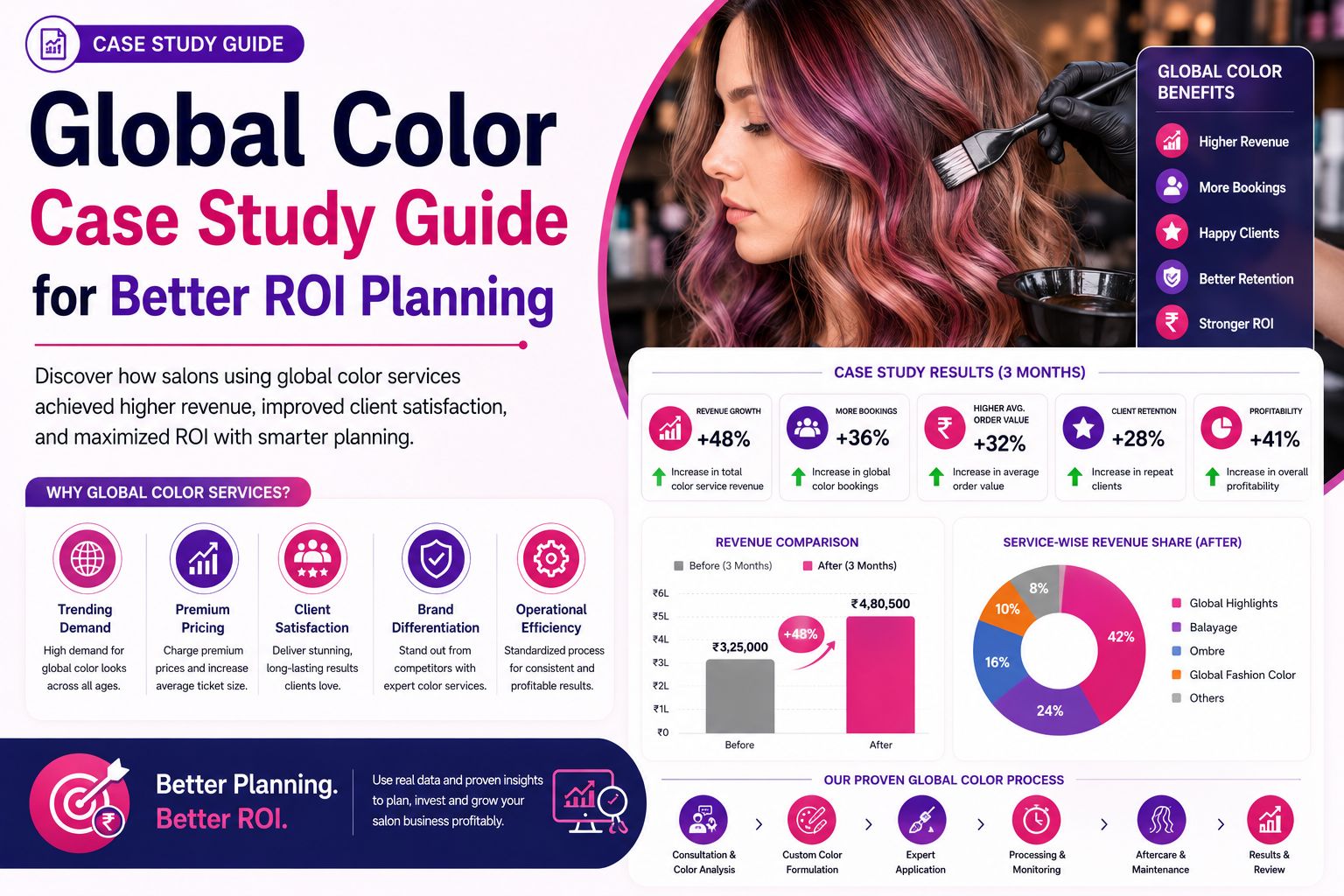


Color services in salons... honestly, they feel unpredictable. One client comes back glowing. Another one complains about fading within weeks, sometimes days. And the difference is rarely just luck. Real ROI from color treatments depends on planning, service timing, client condition, and maintenance expectations — not just the bottle you picked. When salons treat color as a single transaction instead of a service cycle, returns suffer. A global perspective on case studies shows that patterns repeat across markets. The factors that influence color longevity and client satisfaction... they remain consistent mostly. Understanding these patterns helps salon owners plan better, reduce complaints, and maybe improve return per chair hour. The real question is not whether color works. The question is whether the planning behind it supports lasting results.
What Salon Owners Miss About Color ROI
Most salon owners look at color ROI as revenue minus product cost. That calculation — it misses the biggest variables really. Client hair condition before service determines how color holds. Porosity levels, chemical history, natural pigment — all affect absorption. A client with damaged cuticles will experience faster fading regardless of product quality. In many cases, salons skip the consultation step that identifies these factors. And then they wonder what went wrong. Global case studies show that salons performing structured pre-service assessments see higher retention and fewer repeat visits for corrections. Another overlooked factor is timing between services. Color layered over previous chemical treatments behaves differently, sometimes unexpectedly. Without understanding service history, predicting results becomes guesswork, plain and simple. The real ROI leak is not product waste. It is the labor spent on corrective services that could have been avoided with better upfront planning.
Why Results Vary Across Different Hair Types and Conditions
Color results differ because hair is not a uniform surface — anyone who's touched different heads knows this. Global observations show that coarse hair absorbs color slower but holds pigment longer. Fine hair takes color quickly but fades faster with washing. Clients with high porosity hair experience uneven uptake and premature fading. Salon case studies from humid regions reveal that weather also influences how color settles after service. Monsoon humidity can cause processed hair to swell, altering color appearance within days. In dry climates, color may appear flat if moisture levels are low during application. These factors are not failures of the product. They are mismatches between service planning and real hair conditions. Salons that document porosity, texture, and environmental exposure before color have better predictability. The difference between a satisfied client and a disappointed one often comes down to what was known before the color was applied — what they actually knew, not assumed.
The Blind Spots That Lower Color Service Returns
One common blind spot... people think premium products guarantee premium results. Global case studies show that product quality only matters when applied to hair that is ready to receive it. Severely damaged hair does not hold color evenly even with high-end formulations. Another blind spot is skipping patch tests or strand tests. These steps reveal how color will behave before full application. Salons that skip them absorb the cost of corrections later. Many salon owners also overlook the impact of aftercare products on color longevity. Clients who use sulfate shampoos or hard water at home accelerate fading. The service itself may be excellent, but the maintenance environment cancels the result. These blind spots shift the cost of poor outcomes back to the salon — sometimes repeatedly, same client, same complaint. The expectation that service alone determines satisfaction ignores everything that happens after the client leaves.
When to Adjust Color Planning for Better Returns
Good planning starts with knowing when color is appropriate and when it is not. Clients seeking pastel shades on dark untreated hair need multiple sessions. One appointment cannot deliver that result safely — no matter what they saw on Instagram. Global observations show that salons managing expectations about session counts see higher overall spending and fewer disputes. Timing between sessions matters. Color services spaced too closely increase damage risk and reduce pigment retention. For clients with prior chemical treatments, a repair cycle before color improves final results. When maintenance becomes the dominant issue, switching from permanent to demi-permanent color may reduce dissatisfaction. Salon owners should also consider seasonal factors. Bridal season and festival periods create rush demand. Clients expecting last-minute color often face limited recovery time. Adjusting planning around these peaks improves outcome predictability. When a client asks Parlourtime service timing questions, the answer should include realistic session counts and maintenance windows. That clarity protects ROI better than any product upgrade.
Frequently Asked Questions
q How can salons improve ROI on color services? a Structured pre-service assessments, realistic session planning, and aftercare guidance reduce corrective visits and improve client satisfaction across multiple appointments.
q Why do some color treatments fade faster than others? a Hair porosity, chemical history, washing habits, and environmental conditions like humidity or hard water significantly influence how long color remains visible.
q Is expensive color always better for results? a Product quality matters only when applied to hair that is properly conditioned and prepared. Damaged hair performs poorly regardless of product cost.
q How many sessions are needed for dramatic color changes? a Major shifts from dark to light or pastel shades typically require two to four sessions with adequate recovery time between appointments.
q What role does aftercare play in color longevity? a Sulfate-free shampoos, cold water rinses, and weekly conditioning treatments extend color life. Hard water or heat styling without protection accelerates fading.
q When should a salon refuse a color service? a When the hair shows severe damage, overlapping chemical treatments, or when the client expects overnight bleached results from dark natural hair.
q Does season affect color treatment success? a Yes. Humid weather can swell processed hair and alter color appearance. Dry climates may cause flat results without proper moisture during application.
q What is the most overlooked factor in color ROI planning? a The gap between service delivery and home maintenance is often ignored. Products used after the appointment determine how long color lasts.