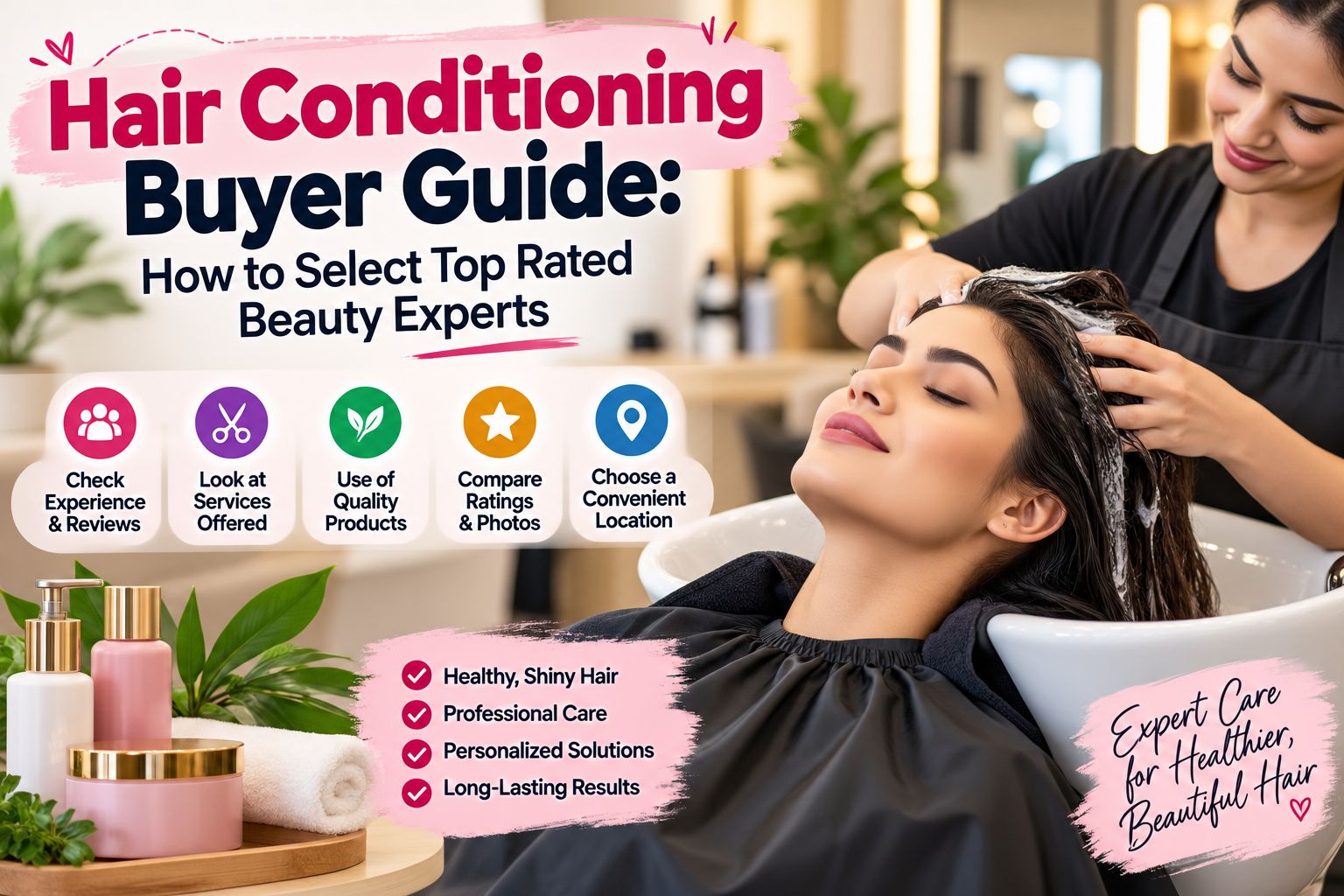


Choosing top rated beauty experts for hair conditioning is harder than it looks. You paid for a deep conditioning session, walked out with soft hair, and then watched it turn dry and rough within a week. The gap between the salon chair and your bathroom mirror is where the confusion starts. Hair conditioning is not one single service, and top rated beauty experts are not interchangeable. A therapist who handles hair smoothening well may not be the right person for dry scalp or chemically damaged hair. This guide is built only on what you can check yourself during the consultation, because no verified trend or performance data is available for this category. What you are buying matters more than the star rating on a listing.
What hair conditioning searches usually mean in real salon visits
Most people searching for hair conditioning are not looking for a basic wash-and-conditioner routine. They are responding to something they noticed after a previous salon visit. Dry ends that snap easily. A rough texture that appeared after hair coloring. Or an oily scalp that sits oddly against dry lengths. During consultation, many describe this as hair that does not hold softness anymore. That phrase usually signals a bigger issue than simple dryness. Some also notice faster color fading alongside rough texture, which can suggest the earlier conditioning service was matched poorly to their hair type rather than being a bad treatment. Your first job as a buyer is to say this out loud in the chair and watch how the therapist responds.
Why conditioning outcomes differ across hair types and services
Conditioning results vary because the service is only one part of the outcome. Hair texture, scalp health, service history, and chemical exposure all shape how long softness lasts after a session. Customers who had keratin treatment or hair smoothening earlier often need a different approach than someone with virgin hair and frizz. Dry scalp changes how products sit and absorb. Sensitive skin can limit which creams or masks a therapist can safely use. A good therapist will ask about these factors before touching your hair. If they skip straight to a price and a service name, you have learned something useful about how they work.
Mistakes customers make when choosing top rated beauty experts
A common mistake is assuming a high price or a busy salon guarantees a better outcome. Conditioning is a maintenance-led service, and the session still depends on whether your aftercare matches what was used in the chair. Another blind spot is skipping the consultation entirely because a friend recommended someone. Hair damage repair and routine softness maintenance are different jobs, and a therapist who cannot explain the difference may not be the right fit. Some customers also rebook the same conditioning service without addressing an underlying scalp issue, which is often why the results stop feeling different after a while.
Practical decision points before you book a conditioning service
Use the consultation to judge expertise, not the listing. A therapist who asks about your last hair coloring, your scalp comfort, and your home wash routine gives you more to work with than one who only quotes a price. Ask what the conditioning service is meant to achieve for your specific hair texture, and ask how you will know whether it worked. Here is how to separate maintenance from repair using what you can see and feel. If the hair feels rough along the lengths but the scalp is comfortable, that reads more like a surface issue. If the scalp is itchy, tender, or flaky, the problem sits closer to the root and a conditioning mask will not settle it.
- If your scalp feels itchy or tender before the appointment, treat that as a signal to postpone rather than push through.
- Uneven softness after a previous session is worth describing in detail so the next therapist can judge whether it is application or product related, rather than you deciding alone.
- Ask a new therapist how they would handle your hair type, and compare the answers you get across two or three providers.
- Some customers use salon FAQs before booking, which often reveals that aftercare matters as much as the treatment itself.
- Compare aftercare instructions across providers. A therapist who gives you clear wash timing and product guidance is showing you their process.
- If two conditioning sessions in a row have not changed how your hair behaves, treat that as a boundary point and ask for a reassessment instead of rebooking the same service.
Common field signals to check next
- Softness that fades within days usually points to product compatibility or missing home maintenance rather than a poor salon session.
- Tightness or mild burning during service is sensitive skin reacting, which is a signal to stop and reassess rather than tolerate it.
- Patchy or uneven texture after conditioning is often an application or sectioning issue that a different therapist can correct.
- Repeated rebooking without any change often points to scalp health or chemical history being ignored.
- Softness that only looks good for a day usually comes down to aftercare products and how often you wash.
- Booking under event pressure leaves less room for the hair to settle, so set expectations lower and ask what can realistically be done in the time you have.
Working through these signals gives you a clearer next step, whether that is a lighter service, a second opinion, or simply better home care. To check a therapist's stated experience, ask how many clients they have handled with your exact hair history, and ask them to walk you through what they would do first and why.
Written by: Parlour Time Editorial Desk
Published: 04 October 2026, 12:03 AM IST | Updated: 04 October 2026, 12:03 AM IST
Powered by: Parlour Time