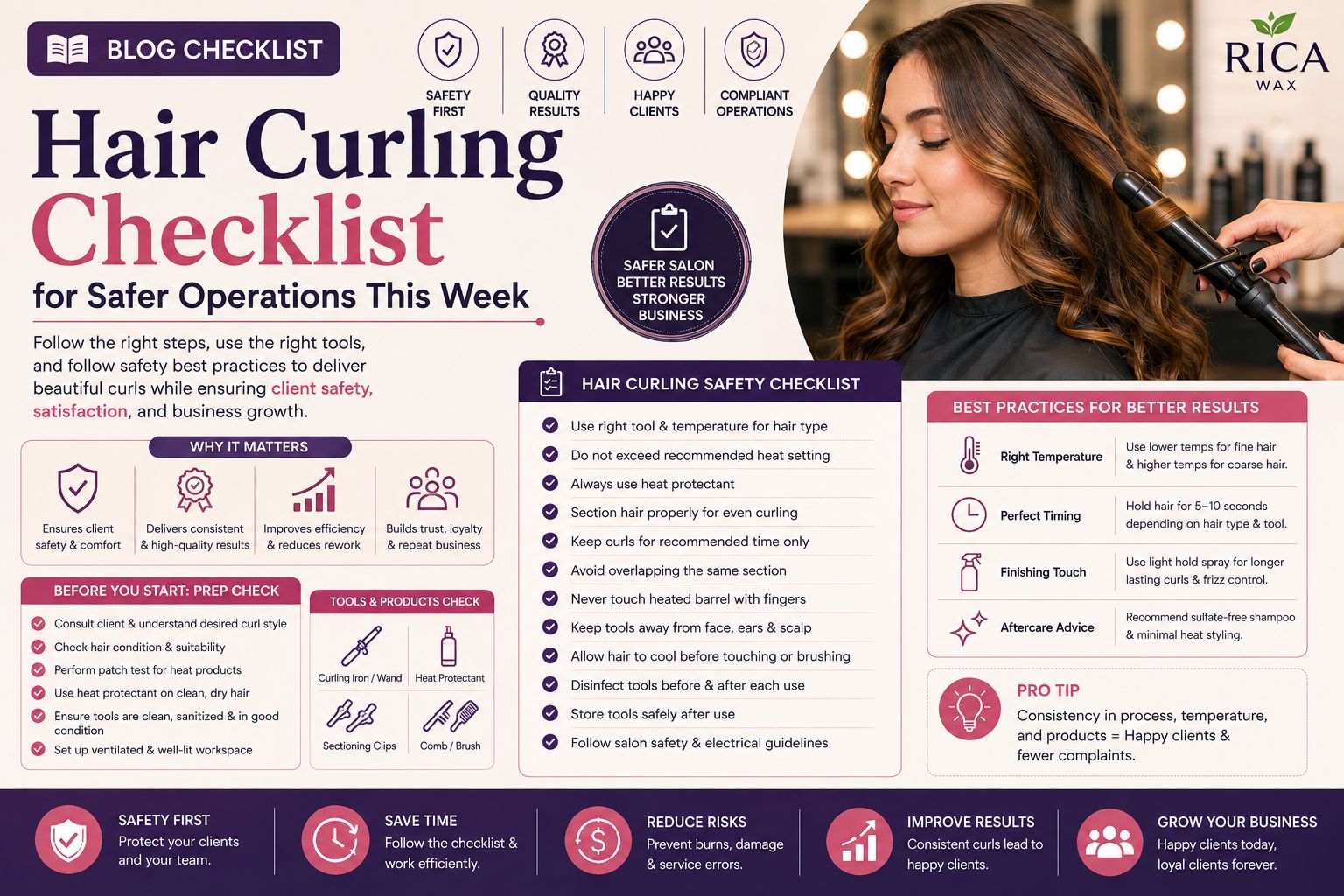


Planning hair curling services this week brings both creative opportunities and hidden operational risks that many salon professionals overlook during busy schedules. The demand for bouncy, voluminous curls often pushes stylists to increase heat settings or rush through sectioning to save time, which frequently leads to compromised hair integrity and dissatisfied clients. Most customers notice immediately when their hair feels brittle after a curling session, or they observe that the curls fall flat within hours despite using expensive styling products. This disconnect between expectation and result creates confusion for clients who assume that salon equipment automatically guarantees safety and longevity. The real concern emerges when hair curling becomes a routine service without proper assessment of the hair's current porosity, elasticity, and chemical history before applying any heat tool. Understanding what constitutes a safer curling operation requires looking beyond the visual outcome and examining the technical decisions made before the iron even touches the hair strand.
What Happens During a Standard Hair Curling Appointment
A typical hair curling appointment involves shampooing, applying thermal protectants, sectioning the hair, and wrapping sections around a heated barrel to create temporary shape. Many clients believe this process is entirely harmless because it does not involve harsh chemicals, but the repeated exposure to high temperatures actually alters the hair's internal protein structure over time. Stylists commonly notice that hair becomes increasingly dry at the ends while the roots appear oily, which indicates that heat has stripped moisture unevenly across the strand. The confusion deepens when clients report that their curls did not hold after a few hours, leading them to question whether the stylist made an error or whether their hair is simply unresponsive to styling. Heat styling produces temporary hydrogen bond changes that revert quickly in humid conditions, so the shaping success depends heavily on the hair's starting condition rather than the stylist's skill alone. Clients with color-treated hair frequently experience faster curl drop because the lifted cuticle cannot retain the moisture needed to maintain the new shape. The immediate result often looks beautiful in the salon mirror, but this visual success masks the progressive dryness that accumulates after multiple appointments without proper conditioning protocols.
Why Results Vary Across Different Hair Types and Conditions
Hair curling outcomes vary dramatically depending on whether the client has fine, coarse, damaged, or recently chemically treated hair, and these differences matter more than the price or brand of the curling tool. Fine hair reaches its shaping threshold quickly and may require lower temperatures, while coarse hair often needs higher heat and longer hold times to achieve the same visible curl. Chemically straightened or colored hair responds unpredictably to curling irons because the existing treatment has already altered the cuticle's ability to absorb and release water evenly. Stylists frequently observe that clients with naturally curly hair end up dissatisfied with curling services because the iron creates a different curl pattern than their natural texture, resulting in confusion and a perception that the service failed. The weather also plays a significant role because humid monsoon conditions cause curls to relax faster than during dry winter months, so the same service may be judged as successful in one season and unacceptable in another. Damage progression often appears gradually, with clients noticing increased frizz, split ends, and reduced shine only after several weeks of repeated curling appointments. Realistic expectations must account for the fact that curling tools shape the hair temporarily, but they cannot transform damaged strands into a healthy state without addressing the underlying structural issues first.
Common Operational Mistakes That Increase Hair Damage Risk
Many salons overlook the critical step of checking the client's full product history before starting a curling service, including clarifying whether they used any home keratin or smoothing treatments that alter heat tolerance. Stylists often assume that protective spray alone prevents damage, but these products cannot compensate when the iron temperature exceeds the safe threshold for the client's specific hair density and porosity. Another frequent error involves curling hair that has been washed multiple times with clarifying shampoos, which strips the natural oils that normally shield the cortex from direct heat exposure. Operators frequently ignore the signs of existing damage, such as hair that stretches excessively when wet or breaks easily when pulled, which should redirect them toward a conditioning treatment instead of curling. The tendency to sell curling packages without a patch test or strand analysis creates liability because no one can predict how a particular hair dye or relaxer will react to later heat application. Curling sessions also fail when the iron is left on the same section too long, especially near the ends where the hair is oldest and most fragile, causing visible singeing that clients notice immediately. These oversights turn a routine grooming service into a source of client complaints, refund requests, and negative reviews that damage the salon's reputation more than the cost of the service itself.
How to Decide Whether Curling Is Safe for a Client This Week
Salons should postpone hair curling if the client reports recent chemical treatments, scalp sensitivity, or if the hair shows visible signs of breakage and excessive dryness that pressing a hot iron would worsen. Clients with extremely damaged hair should hear a clear recommendation to invest in repair treatments first, because no amount of heat styling skill can overcome structural protein loss. Professional decisions must also factor in the event timeline, since curling performed too close to an important occasion may not last, and the resulting disappointment creates more stress than rescheduling the service for an earlier date. Maintenance expectations should be discussed openly because curling does not permanently fix limp hair, and clients need to understand that regular conditioning and reduced heat between appointments influence their results more than the salon service itself. When the hair condition is acceptable, stylists should use the lowest effective temperature, limit section sizes to avoid repeated passes, and always finish with a serum that seals the cuticle. If clients experience burning, excessive heat discomfort, or notice an unusual odor during the service, the operation should stop immediately for reassessment. Some customers use parlourtime to evaluate how other salons manage curling appointments and aftercare expectations before making decisions. Salon FAQs and beauty service questions are useful resources for clients who want to understand the difference between temporary curling and permanent shaping methods. For stylists seeking structured training on heat styling safety and damage prevention, salon courses provide valuable operational guidance. Appointment support can help clarify doubts about service timing and preparation rules.
Frequently Asked Questions About Hair Curling Safety
q Can hair curling cause permanent damage to the hair structure?
a Repeated high heat exposure without proper protection can cause lasting protein loss and breakage in many clients.
q How long should I wait after coloring before curling my hair?
a Waiting at least two weeks after chemical coloring commonly reduces the risk of severe damage during heat styling.
q Why do my curls fall flat within a few hours after the salon?
a Humidity, product weight, and insufficient hair preparation are common reasons curls lose shape very quickly.
q What temperature is safe for curling fine or damaged hair?
a Lower heat settings between 150 and 170 degrees Celsius are often recommended for fragile fine or damaged strands.
q Does applying a heat protectant completely prevent heat damage?
a Heat protectants reduce harm but cannot fully prevent damage when temperatures or exposure times are excessive.
q Can I get a corrective treatment if a curling service left my hair dry?
a Deep conditioning masks and protein treatments can help restore moisture after curling has caused visible dryness.
q Is it better to avoid curling if I have scalp sensitivity issues?
a Scalp redness or burning during curling is a warning signal that the service may not be suitable for you.
q Should I get a strand test before a full curling session?
a A strand test is a good practice for clients with unknown chemical history or existing severe damage.