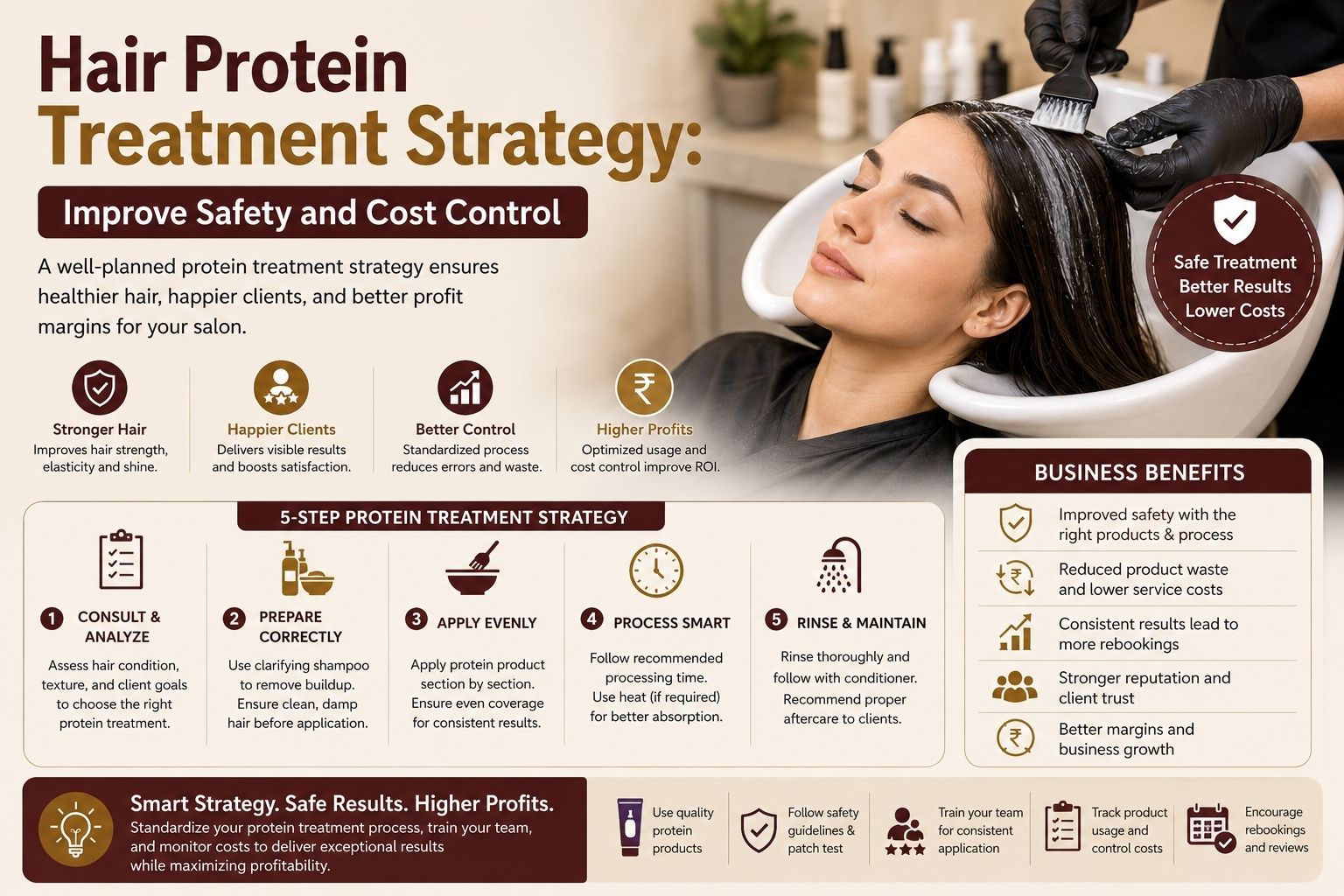
Hair Protein Treatment Strategy: Improve Safety and Cost Control
Planning a hair protein treatment can feel confusing when you are balancing safety concerns with salon expenses. Many customers book this service expecting stronger strands and healthier-looking hair, but the outcome often depends on factors that are not discussed before the appointment. A practical strategy should address both protection and spending without compromising the final result. Hair protein treatment strategy improvements begin with understanding that safety and cost control are connected. You cannot decide on price alone, and you should not ignore how your scalp, hair history, and maintenance routine affect the service. This decision becomes clearer when you recognize what the treatment can realistically do for your hair.
## What a Protein Treatment Actually Does to Your Hair
Protein treatments are designed to temporarily fill gaps in the hair shaft and add structure to weakened strands. When you visit a salon for this service, the stylist applies a protein-based formula that binds to the hair surface and improves its immediate strength. Customers often notice that their hair feels firmer and looks shinier right after the appointment. However, this change is not permanent, and the improvement depends on how much damage already exists in your hair. A protein treatment works best when your hair has mild to moderate porosity issues, and it may not provide dramatic change for severely over-processed strands.
The confusion increases when you see conflicting reviews about the same treatment. Some people report excellent smoothness while others experience dryness and stiffness after the service. This difference usually comes from the balance between protein and moisture in the hair. Too much protein can leave hair feeling brittle. Too little moisture makes the hair shaft hard. A skilled stylist should assess your hair type and previous chemical history before choosing the formula. Without this assessment, the treatment becomes a gamble rather than a strategy.
Most salon visits for protein treatment follow a similar pattern. The hair is washed, the protein formula is applied, and heat is sometimes used to help the product penetrate. After rinsing, a sealant or conditioner locks in the effect. The entire process may take between thirty and sixty minutes, depending on the product and hair length. The visible result lasts for several washes, and then the hair gradually returns to its previous state. This gradual return is natural, and it helps set realistic expectations for what the service can achieve.
## Why Protein Treatment Results Vary from Person to Person
Hair protein treatment strategy effectiveness varies because every scalp and hair type responds differently to the same product. Indian hair, in particular, reacts differently based on humidity, previous chemical treatments, and the current state of the scalp. A customer with dry and frizzy hair may see better definition after a treatment, while someone with already healthy hair may notice little difference. The variation does not mean the service failed. It simply means the starting point determines the outcome.
The frequency of protein treatments also influences how long results last. In many cases, the improvement fades after three to four weeks because the protein is washed out during regular shampooing. Customers who expect long-lasting smoothness often feel disappointed when the hair returns to its previous texture. This disappointment stems from a misunderstanding about the temporary nature of the service. It is not a repair for permanent damage.
Your maintenance routine at home plays a larger role than most people expect. Protein treatments last longer when you use sulfate-free shampoos and avoid excessive heat styling. The products you apply after the salon visit either protect the protein layer or strip it away quickly. Additionally, environmental factors such as monsoon humidity or winter dryness can change how the hair feels after treatment. In humid weather, the hair may frizz even after a successful service. These variables are rarely discussed during the consultation, which creates a gap between what you expect and what actually happens.
## Common Mistakes That Increase Risk and Waste Money
Many customers choose the heaviest protein treatment or add extra add-ons because they believe higher cost means better results. This assumption creates financial pressure without improving safety. Expensive products do not automatically suit your hair type, and unnecessary chemical exposure can trigger scalp sensitivity. In some cases, the scalp becomes red or itchy after a treatment that was stronger than needed. These reactions are not always the fault of the salon. They often occur because the customer did not disclose existing scalp conditions or prior chemical treatments.
Another frequent mistake is booking a protein treatment too close to a special event. The hair may look good immediately, but the result can shift after a few days if the balance between protein and moisture is off. Some customers experience tightness or dryness around the hairline, which becomes visible in photographs. This risk increases when the treatment is combined with coloring or bleaching in the same week. Stylists sometimes warn against this combination, but event pressure pushes customers to ignore the advice.
Blind spots in the consultation process also contribute to poor experiences. Many customers do not mention that they have been using home keratin kits or DIY protein masks before visiting the salon. This buildup changes how the salon product performs. The stylist may apply a full-strength formula on top of residual protein, leading to overly stiff hair. Conversely, customers who recently colored their hair may not realize that their strands are already vulnerable. Adding protein without adjusting the formulation can lead to breakage rather than improvement.
## How to Make Smarter Decisions for Timing and Budget
The safest approach is to schedule a protein treatment only when your hair actually needs it. Signs of protein deficiency include excessive softness, limpness, and difficulty holding a style. If your hair feels strong and bouncy, a protein treatment may be unnecessary, and the money could be spent on a good trim or a hydrating mask instead. Before booking, ask the salon about a patch test if you have sensitive skin. This small step prevents reactions and helps you understand how your scalp will respond.
Timing is equally important. If you have an upcoming event, schedule the treatment at least one week before the date. This gap allows your hair to settle and gives you time to adjust your home care routine. Booking too early means the result may fade before the event. Booking too late increases the risk of visible side effects. A middle ground works best because it balances freshness with stability.
Parlourtime consultations often highlight that maintenance expectations influence satisfaction more than the treatment itself. Before committing to an expensive package, ask the stylist about aftercare products and whether they are included in the price. Many salons offer a cheaper option that includes a follow-up mask or serum. Choosing this package can improve the longevity of the treatment without requiring a second full appointment. This type of decision is where cost control becomes practical rather than difficult.
## What to Do When Results Do Not Match Your Expectations
When the protein treatment does not deliver the smoothness you expected, assess your home routine before blaming the salon. If you washed your hair within two days of the service, you likely stripped away some of the protein. If you used a clarifying shampoo or an oil-based mask, the effect may have broken down prematurely. In many cases, adjusting your shampoo and styling habits improves the results without any additional salon visit. Give your hair a few days to settle before deciding that the treatment failed.
If you experience dryness or stiffness, add a moisture-rich conditioner and reduce protein-based home products. The hair may be in a protein overload state, and the correction is not more treatment but less of it. Customers often make the mistake of repeating the treatment immediately to fix the issue. More protein does not correct over processing. The boundary here is clear: stop additional treatments and focus on hydration until the hair feels balanced again.
Severe scalp irritation that does not reduce within two days should be checked by a professional. Normal redness after a treatment usually fades quickly, but prolonged discomfort may indicate an allergy or a product incompatibility. Do not wait for an event to pass before addressing this issue. Seeking quick advice from a professional is cheaper and safer than managing a prolonged reaction at a critical time. Many customers use parlourtime to compare service timing before booking follow-up appointments, which helps them avoid repeating mistakes.
## Frequently Asked Questions
### q Can a hair protein treatment be safe for sensitive scalps?
a Sensitive scalps can react to protein treatments, so a patch test and a lighter formula are recommended before the full service.
### q Why did my hair feel stiff after a protein treatment?
a Stiffness after a protein treatment usually indicates protein overload, which requires moisture-based products to correct the balance.
### q How long does a hair protein treatment normally last?
a A protein treatment typically lasts three to four weeks, depending on your shampoo routine and the amount of heat styling you use.
### q Does a more expensive protein treatment guarantee better results?
a A higher price does not guarantee better outcomes because your hair type and maintenance routine determine the final effect.
### q Can I color my hair immediately after a protein treatment?
a Coloring immediately after a protein treatment increases breakage risk, so waiting at least a week between services is recommended.
### q Is it necessary to buy salon aftercare products for maintenance?
a Salon aftercare products can extend the result, but a sulfate-free shampoo from any trusted brand may work just as well.
### q How do I know if my hair actually needs a protein treatment?
a Your hair may need protein if it feels overly soft, limp, and lacks structure, but strong hair does not require this service.
### q What should I do if the treatment does not last until my event?
a Adjust your washing routine and avoid heavy oils before deciding if a second treatment is necessary.Earn Upto ₹70,000/Month! Become a Parlourtime Partner.