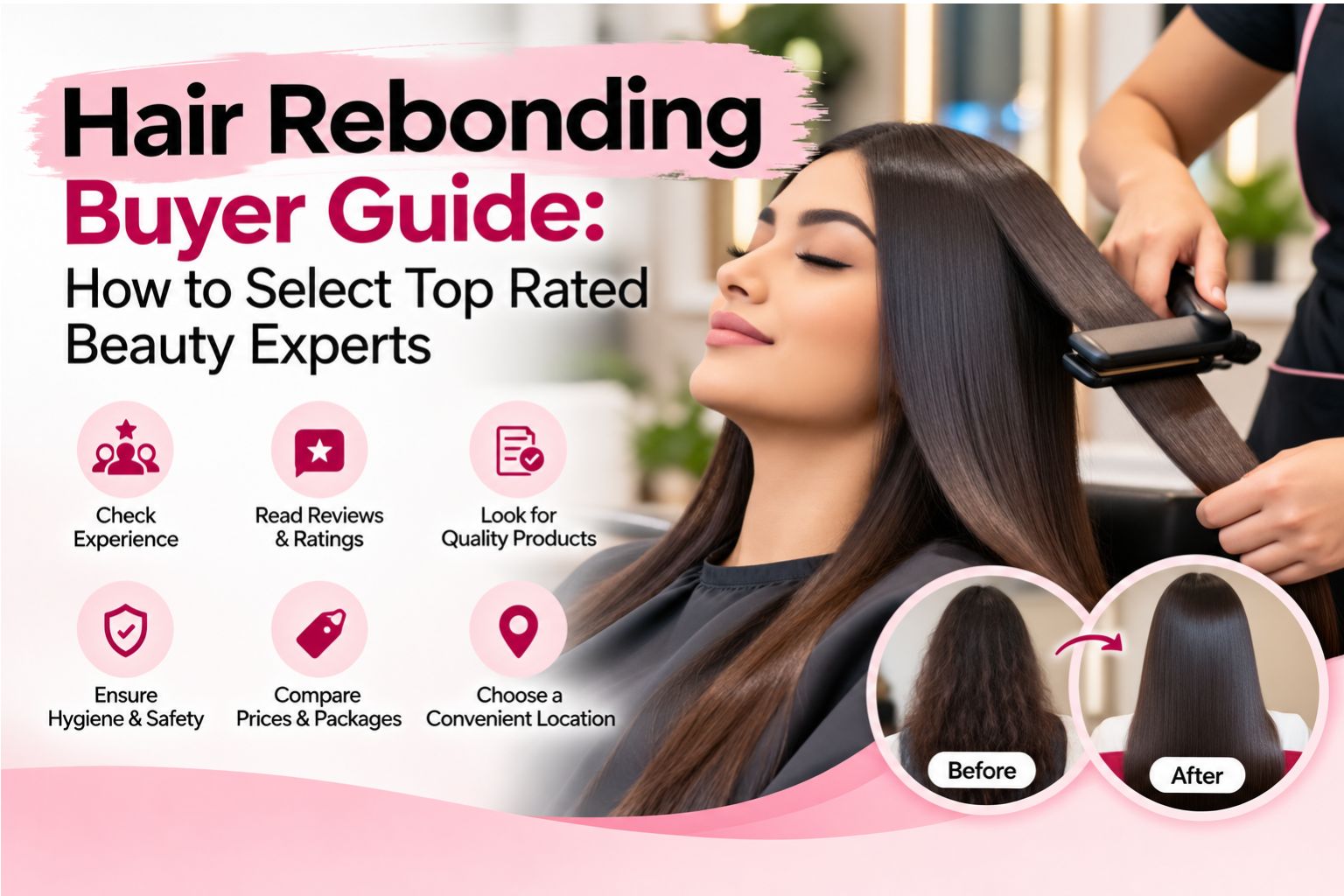


Searching for top rated beauty experts for hair rebonding can feel overwhelming when every salon claims similar expertise. You see perfect before-and-after photos, read glowing testimonials, and still wonder whether the results will genuinely suit your hair type. The confusion is real because rebonding outcomes depend on far more than the salon's marketing. The exact problem is that ratings alone cannot tell you how a stylist will assess your hair, which products they will use, or what aftercare they will plan with you. This guide helps you compare hair rebonding experts on credentials, consultation depth, product transparency, and aftercare planning, so your decision matches your hair condition and your maintenance routine.
What Your Search for a Rebonding Expert Really Means
When you begin looking for top rated beauty experts for hair rebonding, you are usually trying to solve a deeper problem. Perhaps a previous treatment left your hair uneven, or you have seen friends struggle with breakage after rebonding. You want someone who understands your concern and will not treat you like just another appointment. In many salon visits, customers describe feeling rushed through consultations where nobody asks about their hair history. They notice the stylist recommending the strongest option without checking whether their scalp can handle chemical processing. Star ratings rarely capture this gap between a polished listing and a careful assessment. Recognising that gap early helps you ask better questions before committing, and it also tells you whether the expert is listening or simply selling.
Reading Stylist Credentials and Salon Consultation Quality
A useful first check is what the stylist actually documents before touching your hair. Ask which smoothing or rebonding systems they are trained on, how long they have worked with your texture, and whether the salon keeps records of past services. A credible expert will talk through your history of colour, smoothening, or keratin treatments rather than jumping to a recommendation. Product disclosure matters too. Ask to see the brand used, whether a patch test is offered, and how the strength is chosen for your hair. You can also use beauty guidance to compare service timing before booking. The clearest signal of a good consultation is simple: the stylist asks more questions than you do.
Where Hair Damage Risk Actually Comes From
Rebonding changes hair structure, so damage risk is a genuine factor rather than a scare tactic. The risk usually grows when hair has already been chemically processed, when a patch test is skipped, or when the same strength is applied to every client regardless of condition. Hair that is already breaking or thinning deserves careful thought before another chemical service. A responsible expert will say plainly when rebonding is not the right choice and suggest a gentler route instead. If a stylist promises identical results for every customer or pressures you to book the same day, treat that as a caution flag rather than a bargain. Your own notes on how your hair behaved after past treatments are more reliable than any promotional claim.
Choosing Your Rebonding Expert: Decision Points
Set your decision criteria before you compare salons, not after. Timing matters, because scheduling a chemical service right before a wedding or a trip leaves little room for adjustment. Ask directly about your hair history and current scalp condition, and expect the stylist to explain realistic longevity instead of only the immediate transformation. Compare how each expert handles aftercare: whether they recommend specific products, explain washing and heat-styling habits, and offer a follow-up check. A vendor with a managed-review workflow sometimes shows only curated photos, while an independent stylist may show raw client images on request, so weigh what you can verify. If you notice persistent scalp discomfort, unusual hair fall, or results that fade quickly despite following the advice given, go back for reassessment before considering another session.
Decision Signals Before You Book
Use these signals to sort a shortlist quickly, and treat any missing signal as a reason to ask one more question.
Credential transparency: the stylist names the systems they are trained on and how long they have worked with your hair type, and the salon can show records of previous services.
Consultation depth: your hair history, scalp condition, and past chemical treatments are discussed before any product or price is quoted.
Product disclosure: you can see the brand in use, ask about strength selection, and are offered a patch test rather than having to request one.
Honest boundaries: the expert says when rebonding is unsuitable for your hair and suggests a gentler option instead of pushing the strongest service.
Aftercare plan: washing, heat-styling, and product guidance are written down or explained clearly, with a follow-up check offered after the service.
Review quality: testimonials describe specific experiences and include balanced detail rather than only perfect photos, which helps you judge how the salon handles problems.
Written by: Parlour Time Editorial Desk
Published: 30 September 2026, 12:17 AM IST | Updated: 30 September 2026, 12:17 AM IST
Powered by: Parlour Time