

A hair spa checklist matters most when your last appointment did not go the way you expected. You sit in that chair, the stylist promises smooth, soft hair, and a few days later your hair feels heavy, limp, or dry again. The confusion usually starts before the service begins. Nobody asked about your scalp condition, your hair texture, or your treatment history. They simply started. A salon hair spa can support a dry scalp, calm frizz, and ease stress-related shedding, but only when the service matches what your hair actually needs instead of whatever standard package is being pushed that day. Knowing what to expect protects both your money and your hair.
What a hair spa appointment actually involves before the massage starts
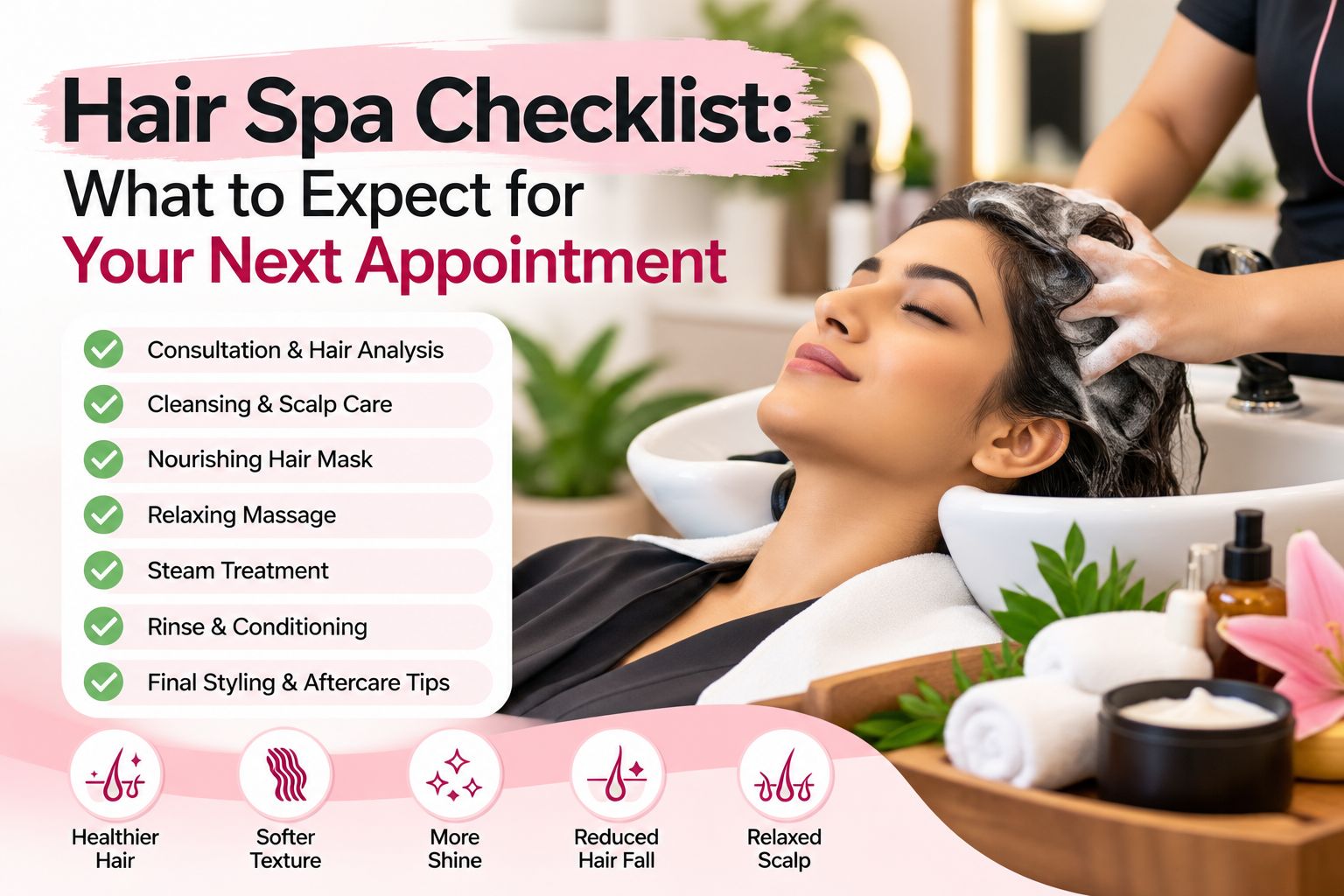
The part most people skip over is the consultation. Before any product touches your scalp, someone should check for oiliness, flaking, and sensitivity, and ask about recent colouring, smoothening, or keratin work. When that does not happen, you can sit through a relaxing massage and still walk out with an oily scalp or itchy roots the next morning. If your stylist goes straight to the wash basin without asking a single question about your hair history, that is your signal to speak up. You can check salon FAQs for common service questions before booking. Keep one boundary in mind: a hair spa is a conditioning and scalp treatment, not a repair procedure for structural damage. That distinction matters more than most people realise.
Why hair spa results vary so much from person to person
Two people get the same hair spa and walk out with completely different experiences. Scalp health, hair porosity, water quality, and how much chemical exposure your hair has already been through all play a part. Someone with untreated hair and mild dryness may feel softness that holds for a while. Someone with bleached or repeatedly smoothened hair may find the effect fades quickly. Sometimes the cream sits mostly on the surface, improves manageability, and does not change much inside the strand. A dry scalp often responds well to a moisturising massage. An oily scalp can feel greasier when a heavy cream is used without a proper cleanse first. Humidity and hard water also shape how long the softness lasts after you leave. The real tell is not the label on the jar but how your roots and ends feel in the days that follow.
Signs the real problem is your hair condition, not the salon
A common misconception is that a more expensive hair spa will automatically fix brittle ends, heavy shedding, or constant flaking. But when hair is already badly damaged from colouring or heat styling, no massage oil will reverse split ends or rebuild broken bonds. Customers repeat the same session every month hoping for a different result, when the actual issue is cumulative chemical damage or an untreated scalp condition. Watch for warning signs during and after the service: tightness, burning during the massage, leftover residue at the roots, or increased shedding after the wash. Those mean the product or technique did not suit you. Repeating a treatment that already disappointed you rarely solves the underlying problem, and it can keep you paying for the same frustration.
How to decide your next step after a disappointing hair spa
What you do next depends on whether the issue is surface dryness, scalp health, or structural damage. If your hair simply feels dry and frizzy, a gentler routine and a longer gap between sessions is usually more useful than booking again immediately. If you notice persistent shedding, scalp pain, or reactions after the service, professional reassessment makes more sense than another spa. You can read through salon service questions before committing to a repeat visit. Set a clear boundary for yourself: maintenance products cannot reverse severe damage, and piling on more sessions stops helping once the hair already feels coated, stiff, or weighed down. More is not always better, and noticing when you have crossed that line saves both time and money.
Practical decision points for your next appointment
Ask about your scalp first, hair second. If your scalp flakes, itches, or feels tight, request a scalp-focused cleanse before any conditioning massage, because heavy creams on an inflamed scalp often make discomfort worse.
Know your chemical history before you sit down. If you have had smoothening, keratin, or colouring recently, say so upfront so product strength and massage duration can be adjusted.
Check for heaviness or limpness at the basin. Hair that feels weighed down after the wash usually means the cream was too rich for your texture or was not rinsed properly, and it is easier to fix before you leave the chair.
Separate lasting softness from temporary smoothness. A good hair spa improves manageability for a while; it does not permanently repair damaged strands, and expecting that leads to repeated disappointment.
Plan around events with room to adjust. Leaving a buffer before a wedding or festival gives you space to change products if your hair reacts badly rather than scrambling on the day.
Tell your stylist what happened last time. Whether hair felt greasy at the roots, dry at the ends, or heavy after the wash, that feedback is what a good consultation is built on.
How often you book a hair spa depends on your scalp condition, your hair porosity, and how much chemical treatment your hair has already been through, so a fixed schedule rarely suits everyone.
A hair spa can improve scalp comfort and reduce breakage from rough handling, but it does not treat the underlying causes of hair fall such as nutritional gaps or medical conditions.
Oily roots after a spa usually point to a heavy cream applied too close to the scalp or an incomplete rinse for your hair type.
A hair spa after keratin or smoothening can be safe when the product is chosen for treated hair, though strong creams applied too soon may leave hair limp or greasy.
A higher price does not guarantee a better result, since scalp condition, hair porosity, and your home routine influence the outcome more than the package cost.
If softness fades quickly, check whether your scalp is dry, whether you wash with hard water at home, and whether your shampoo and conditioner suit the service you just had.
Before any appointment, mention your chemical treatment history, scalp sensitivity, and how your hair reacted to previous sessions so the product can be adjusted.
If you notice persistent hair fall, scalp pain, or reactions after repeated services, a professional hair and scalp assessment is more useful than another appointment.
Written by: Parlour Time Editorial Desk
Published: 30 September 2026, 12:15 AM IST | Updated: 30 September 2026, 12:15 AM IST
Powered by: Parlour Time