Live Apps
Download Parlourtime and Partner apps

Quick app access for customers and partners.

HomeAboutContactPartner AppCoursesBlogsFAQ

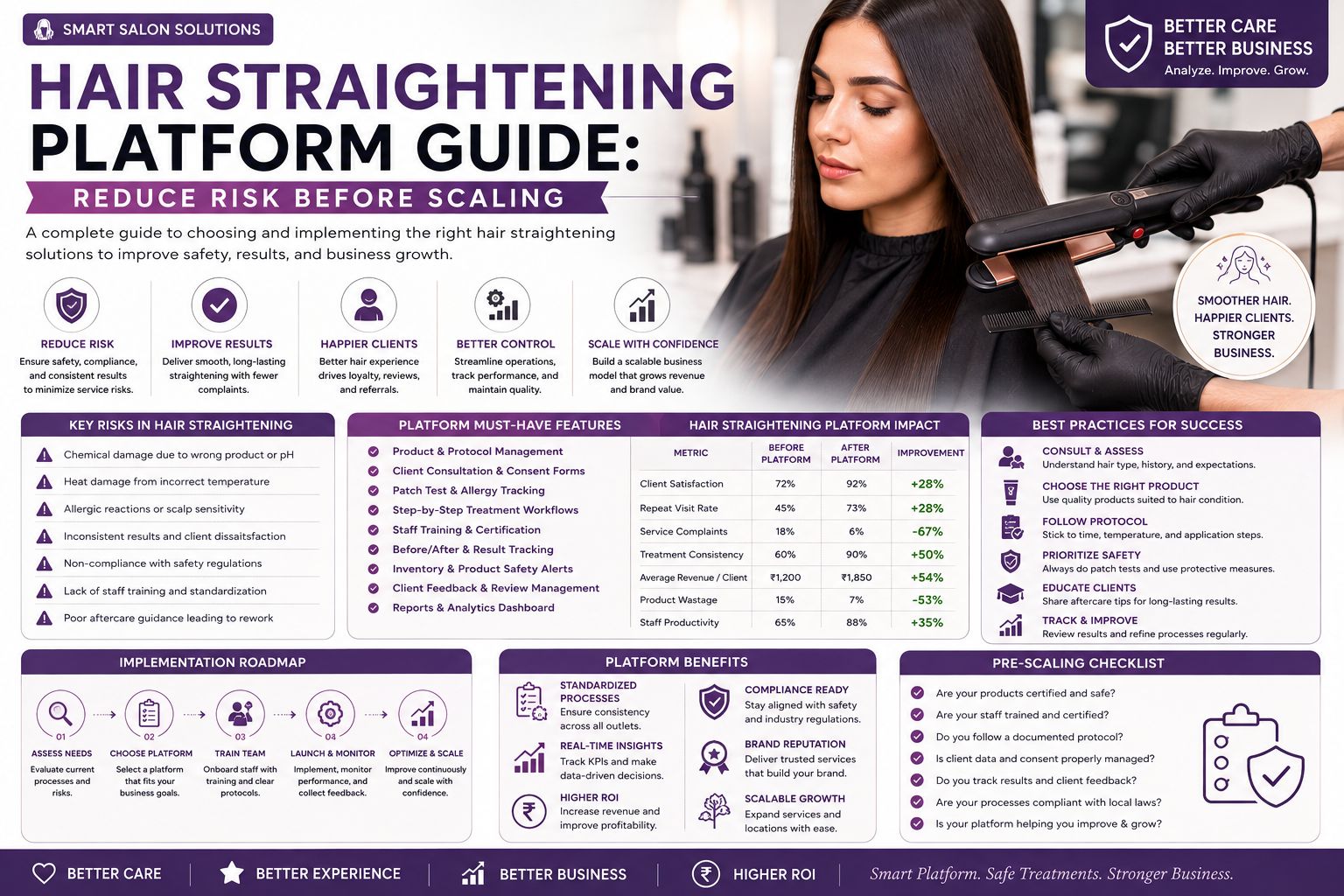
Hair Straightening Platform Guide

By Parlourtime Team
No Date
7 min read
hair-straighteningsalon-serviceshair-damagechemical-treatmenthair-caresalon-booking
Hair Straightening Platform Guide

About This Article

Hair Straightening Platform Guide When you search for a hair straightening platform guide, you are usually not looking for a chemistry lecture. You are looki...

Hair Straightening Platform Guide

When you search for a hair straightening platform guide, you are usually not looking for a chemistry lecture. You are looking for a decision. You are trying to figure out if the service you booked is worth the risk, or if you have already booked it and are now nervous about the damage. This concern is common in Indian salons, where straightening is often sold as a simple fix for frizz and volume. The reality is more complicated. The result depends on your hair history, the products used, and how much time you have before the treatment fails or your hair weakens. This guide helps you understand where the risks sit, what actions reduce those risks, and when scaling back the treatment frequency is the smartest move. The goal is not to scare you, but to give you a clear risk map before you sit in the chair. A hair straightening platform guide should help you see the full picture, not just the glossy end result. ## What a Straightening Platform Actually Involves A hair straightening platform is not a single product. It refers to the entire system of chemicals, heat, and aftercare that salons use to alter your hair structure. The process usually starts with a clarifying shampoo, followed by a chemical cream applied to your strands. This cream breaks the disulfide bonds in your hair, which are the natural protein links that determine curl and wave. After the cream sits for a specific time, your stylist neutralizes it, flattens the hair, and seals everything with a flat iron at high heat. The entire sequence changes how your hair behaves for several months. The first thing customers notice is the smoothness and shine immediately after the service. That immediate effect often creates confusion, because the hair looks perfect for the first week. Problems like dryness, split ends, or new frizz usually appear later. This delay makes it hard for customers to connect the damage back to the straightening service. Understanding the platform structure helps you recognize that every stage carries risk, and the risk can increase if the hair is already compromised before you start. ## The Real Risks Hidden Behind the Smooth Finish The chemical process that straightens hair is aggressive, and the risks are not always visible on day one. The most common risk is protein loss. Breaking disulfide bonds removes natural strength, leaving strands fragile and porous. Over time, this leads to breakage, split ends, and a dry texture that feels rough even after conditioning. Another risk is scalp sensitivity. The cream can irritate the skin, especially if it stays on too long or if the scalp has small cuts or dryness. Many customers report temporary redness, itching, or a burning sensation during the sitting. The flat iron adds another layer of risk. High heat on chemically treated hair can cause thermal damage, which creates white dots on the strands and leads to snapping. The risk increases if the hair has already been colored, bleached, or treated with keratin in the past. You also have to consider the long-term impact. Repeated straightening services every few months can make hair permanently weak, which means even the best aftercare products cannot fully repair the structure. The risk is not just about the immediate result; it is about what happens to your hair six months or a year later. Many customers overlook this timeline because they focus on the first month. But permanent damage is often the cost of frequent scaling without proper assessment. ## Mistakes That Increase Damage After Straightening The biggest mistake is assuming that more sealing or more heat makes the treatment last longer. In reality, applying the flat iron multiple times over chemically relaxed hair increases breakage. Another common mistake is washing the hair too soon after the service. Most salons advise waiting at least two to three days before the first wash, but customers often skip this rule because of sweat or oiliness. This reduces the lifespan of the treatment and forces an early rebooking, which leads to more chemical exposure. A third mistake is using the wrong shampoo. Shampoos with sulfates strip the neutralized bonds and shorten the smooth effect. Even if the salon product is good, home maintenance can undo it quickly. Some customers also make the error of scaling up to a harsher treatment when the first one does not hold. For example, if straightening fades in two months, they book a stronger straightening service instead of addressing the real issue, which might be damaged hair unable to hold a new bond. This creates a cycle of chemical damage that becomes harder to reverse. The overlooked condition here is that your hair may not be eligible for the result you expect. If the hair is severely damaged, dry, or chemically overloaded, straightening will not look good regardless of the product brand. Recognizing these mistakes helps you stop repeating the same cycle. ## How to Decide When to Skip or Space Your Service The most important decision is not which product to choose, but whether you should go ahead at all. You should skip the service if you have active scalp irritation, visible hair breakage, or if you have had a chemical treatment within the last three months. You should also postpone if you have an event within the next two weeks, because if the hair reacts badly, you will not have time to recover. For bridal preparation, scheduling straightening at least two to three weeks before the event gives your hair time to settle and looks more natural. When you do decide to proceed, spacing is critical. Intervals of six to eight months are safer than every three months. Your hair needs time to rebuild some protein and moisture between chemical exposures. When the treatment fades, that is the moment to assess the state of your strands. If your ends are dry or split, applying a new chemical straightener will not fix them. You need a trim and a series of repair treatments first. This guide acts as your boundary condition: straightening cannot permanently repair damaged hair, and repeating it will not make your hair healthier. It is a cosmetic alteration, not a repair solution. Some customers use parlourtime to compare service timing and read salon FAQs before booking a straightening session, which helps set realistic expectations. When your hair condition cannot hold the chemical bond, no amount of styling will give you the smooth finish you want. At that point, you should step back and focus on damage repair rather than repeating the same service.
Frequently Asked Questions
  1. q Is hair straightening safe for all hair types?

    a No, straightening is riskier on bleached, colored, or severely damaged hair because the chemical bond breakdown can cause excessive breakage.

  2. q How long should I wait between two straightening sessions?

    a A safe interval is at least six to eight months, giving your hair time to rebuild protein and moisture before the next chemical service.

  3. q What should I do if my scalp burns during the straightening process?

    a Inform your stylist immediately, as prolonged burning can indicate chemical overprocessing or an allergic reaction that should not be ignored.

  4. q Can I color my hair after straightening?

    a It is safer to wait at least two to three weeks, as combining chemicals too closely can increase porosity and cause the color to fade quickly.

  5. q Why does my hair look frizzy after the straightening effect wears off?

    a This often happens because the new hair growth is natural, while the treated ends are porous and dry, creating an uneven and frizzy texture.

  6. q How do I know if I should stop straightening my hair?

    a If you notice excessive split ends, sudden breakage, or a rough texture that does not improve with conditioner, you should stop further chemical treatments.

  7. q Does expensive straightening guarantee no damage?

    a No, cost does not guarantee protection, because the outcome depends heavily on your existing hair strength and the aftercare routine you follow.

  8. q What is the safest way to maintain straight hair at home?

    a Use a sulfate-free shampoo, a deep conditioning mask weekly, and avoid high heat styling to extend the effects and reduce mechanical damage.
Join Us!

Earn Upto ₹70,000/Month! Become a Parlourtime Partner.

Get it on Google PlayDownload on the App Store
Page 1 of 279
WhatsAppInstant beauty support