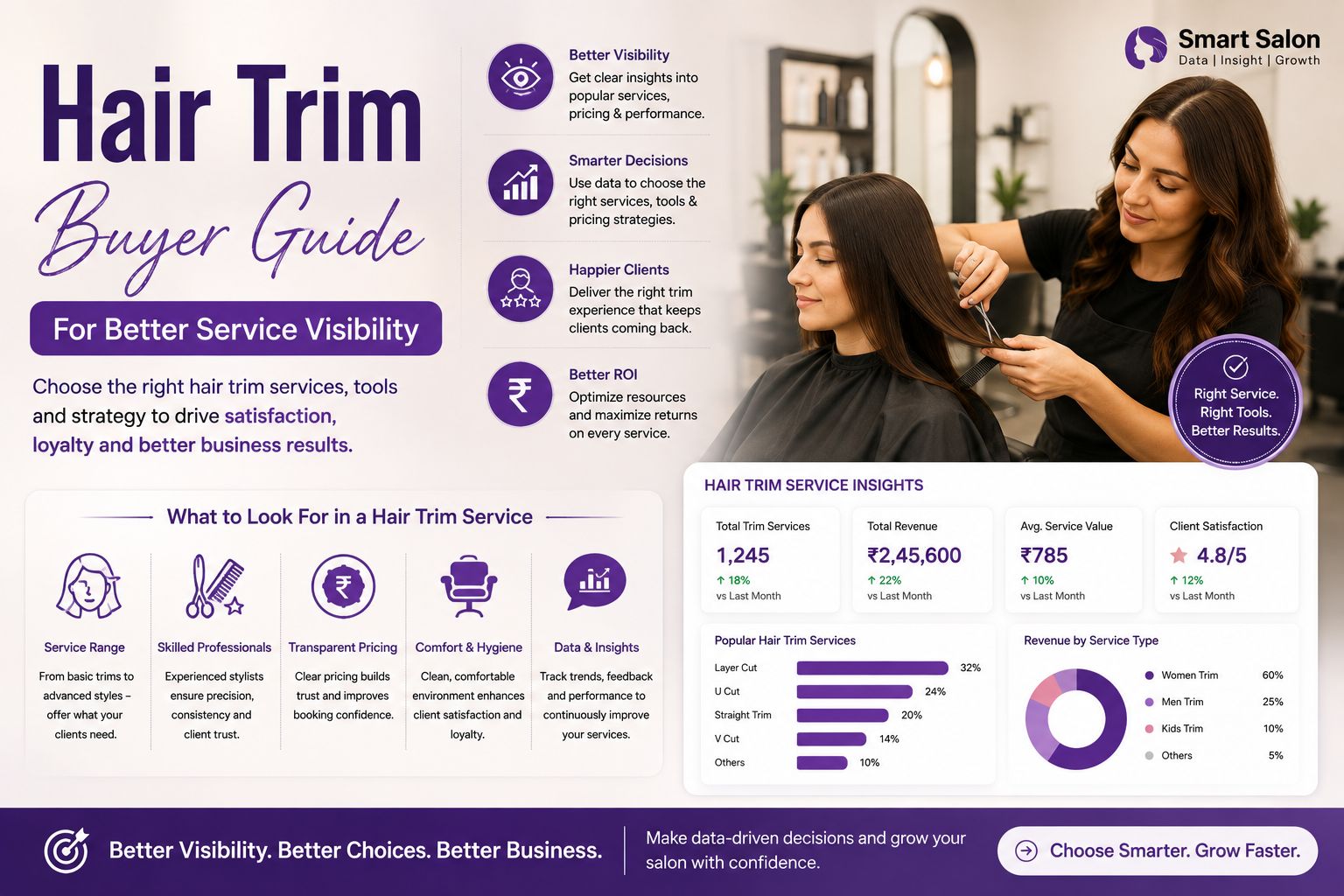


Booking a hair trim often feels simple, but the outcome can confuse many customers. Service visibility, which means how clearly you can see the changes and how well the salon explains them, affects your satisfaction. Many people walk into a salon expecting a specific length change and leave feeling the result does not match the request. This hair trim buyer guide for better service visibility explains what happens during a real salon visit, why misunderstandings occur, and how you can improve your next experience. The focus is on practical clarity, not just technical details.
What Service Visibility Means During a Salon Visit
Service visibility begins with how clearly the stylist explains what will happen to your hair before picking up the scissors. In many Indian salons, a simple request like "just a trim" leads to different interpretations. One stylist may remove one inch, while another may remove three inches. Customers often notice the gap between expectation and reality only after the service ends. This creates confusion because you cannot easily measure or verify the change while sitting in the chair. The mirror and lighting in the salon may also distort how much hair is actually removed.
A visible outcome depends on the initial consultation, the stylist's communication, and the clarity of your own instructions. When the stylist holds up the hair and explains the planned cut, you get a better sense of control. However, this does not always happen in busy salons. Many customers report that the stylist begins cutting immediately without showing the amount to be removed. This lack of visibility leads to dissatisfaction. Understanding this dynamic helps you realize that the problem is often communication, not the haircut itself.
The condition of your hair also affects service visibility. Straight hair shows trimming more clearly than curly or wavy hair. Split ends become less visible when hair is dry, but more obvious when wet. Dense hair may hide unevenness, while thin hair exaggerates every change. These physical factors influence what you see after the service. Customers with thick hair often feel the trim was insufficient, while those with fine hair feel too much was removed. This hair trim buyer guide for better service visibility helps you recognize how your hair type changes the perceived result.
Reality Check: What Actually Happens to Your Hair
Hair trimming does not repair damage. It only removes the damaged portion at the ends. Many customers assume that trimming regularly makes hair grow faster or become healthier overall. This is a common misunderstanding. Trimming prevents split ends from traveling upward, but it does not affect the scalp or the root. The growth rate depends on genetics, diet, and overall hair health. When the trim does not produce visible growth, customers feel disappointed because they expected a transformation.
Indian hair texture varies widely, and this diversity influences trim outcomes. Thick, coarse hair may look unchanged after removing half an inch, while fine, limp hair may appear noticeably thinner. Humidity and weather conditions also play a role. During monsoon season, hair appears frizzy even after a fresh trim, making the service look less effective. In winter, dry air can make the ends look rough shortly after the cut. These seasonal factors are often overlooked, leading to unjustified dissatisfaction with the stylist's work.
The products used after the trim also affect visibility. Some salons apply serums or creams that make hair look sleek and shiny immediately. This temporary effect fades after the first wash at home. Customers then believe the service quality was poor, when in reality the styling products wore off. A good trim should look good without heavy product reliance. Understanding these realities helps set realistic expectations. This hair trim buyer guide for better service visibility emphasizes that the initial mirror image is not always the final result.
Common Mistakes That Lead to Poor Service Visibility
One common mistake is relying solely on verbal instructions without visual references. Saying "just a little" is subjective and can mean different things to different people. Using your fingers to show the desired length often helps, but stylists may still interpret this differently. A better approach is to bring a photo of the desired style or point to a specific spot, like the shoulder or chin, to define the target length. Without this clarity, the risk of miscommunication increases.
Another mistake is booking a trim right before an important event. When you go for a trim the day before a wedding or festival, you leave no room for adjustment. If the result feels too short or uneven, you cannot fix it immediately. Hair needs a day or two to settle after cutting. Freshly cut hair often looks different after washing and drying at home. This is an overlooked detail that causes panic and regret. Planning your trim at least one week before an event gives you time to assess and correct if needed.
Many customers also forget to consider their previous hair services before trimming. If you have colored, straightened, or chemically treated hair, the trim behavior changes. Chemically treated hair is more fragile at the ends. Trimming it may expose thinner sections that were previously hidden. This can make the hair look damaged even though the cut was performed correctly. Some customers also have scalp conditions like dandruff or dryness that affect how the hair falls after cutting. These factors are rarely discussed during the consultation, leading to confusion and frustration.
Decision Help: How to Ensure Better Service Visibility
Start by choosing a salon that allows clear communication. When you book the appointment, mention that you want to discuss the exact amount of hair to be removed. A reputable salon should allow you to ask questions before the service begins. During the consultation, ask the stylist to show you the amount of hair they plan to cut while your hair is wet. Wet hair looks longer and straighter, so this gives you a better preview of the intended change. Dry hair can be misleading because it shrinks or curls.
Decide on the timing of your trim based on your hair condition and your schedule. If your hair is heavily layered, you may need more frequent trims to maintain the shape. If you are trying to grow your hair, you should request only the split ends to be removed, typically a quarter to half an inch every eight to twelve weeks. If your hair is severely damaged from coloring or heat styling, a single trim will not restore its health. You may need multiple sessions spaced over several months to gradually remove the damaged portions.
When a trim does not look right, assess the situation before taking drastic action. If the cut is too short, there is no quick fix. You must allow it to grow. If the cut is uneven, you can return to the salon for a correction, but you should communicate your concern calmly and clearly. In many cases, a minor adjustment can solve the issue. However, if you have seen the same stylist multiple times and consistently face visibility problems, it may be time to try a different salon. This decision is practical, not emotional.
Maintenance begins after you leave the salon. The products you use at home affect how long your trim looks good. A good shampoo and conditioner for your hair type will maintain the shape of the cut. Avoiding excessive heat styling prevents the ends from splitting quickly, so the trim lasts longer. Regular oiling or deep conditioning can also improve the overall appearance of the ends. This hair trim buyer guide for better service visibility also suggests that you track your hair's growth pattern over time to understand what is normal for you.
External factors like climate and lifestyle also dictate the frequency of trims. In humid climates, hair gets tangled and damaged faster. In dry climates, the ends become brittle and break. Active individuals who swim or exercise frequently expose their hair to more stress. These individuals may need trims more often than someone with a sedentary lifestyle. Timing is part of the decision help. You should align your trim schedule with your seasonal activity patterns. This proactive approach prevents the shock of sudden damage.
If you are still confused about whether you need a trim or a more comprehensive treatment, consider what your hair is asking for. If you only have split ends, a trim suffices. If your hair is frizzy, breaking, or unmanageable beyond the ends, a trim alone will not solve the problem. You may need a deep conditioning treatment, a hair spa, or a protein treatment. This distinction is critical for service visibility. A trim is a maintenance service, not a transformation service. Understanding this boundary helps you set the right expectations.
At this point, some customers use parlourtime to compare service timing and stylist communication before booking a trim. Reading about others' experiences with different salons can clarify what to look for. For further queries about hair care routines and service expectations, you can explore the salon FAQs to understand standard practices. This guidance is meant to support your decision-making without providing false promises. You can also check the beauty service questions for more context on how different salons handle consultations.