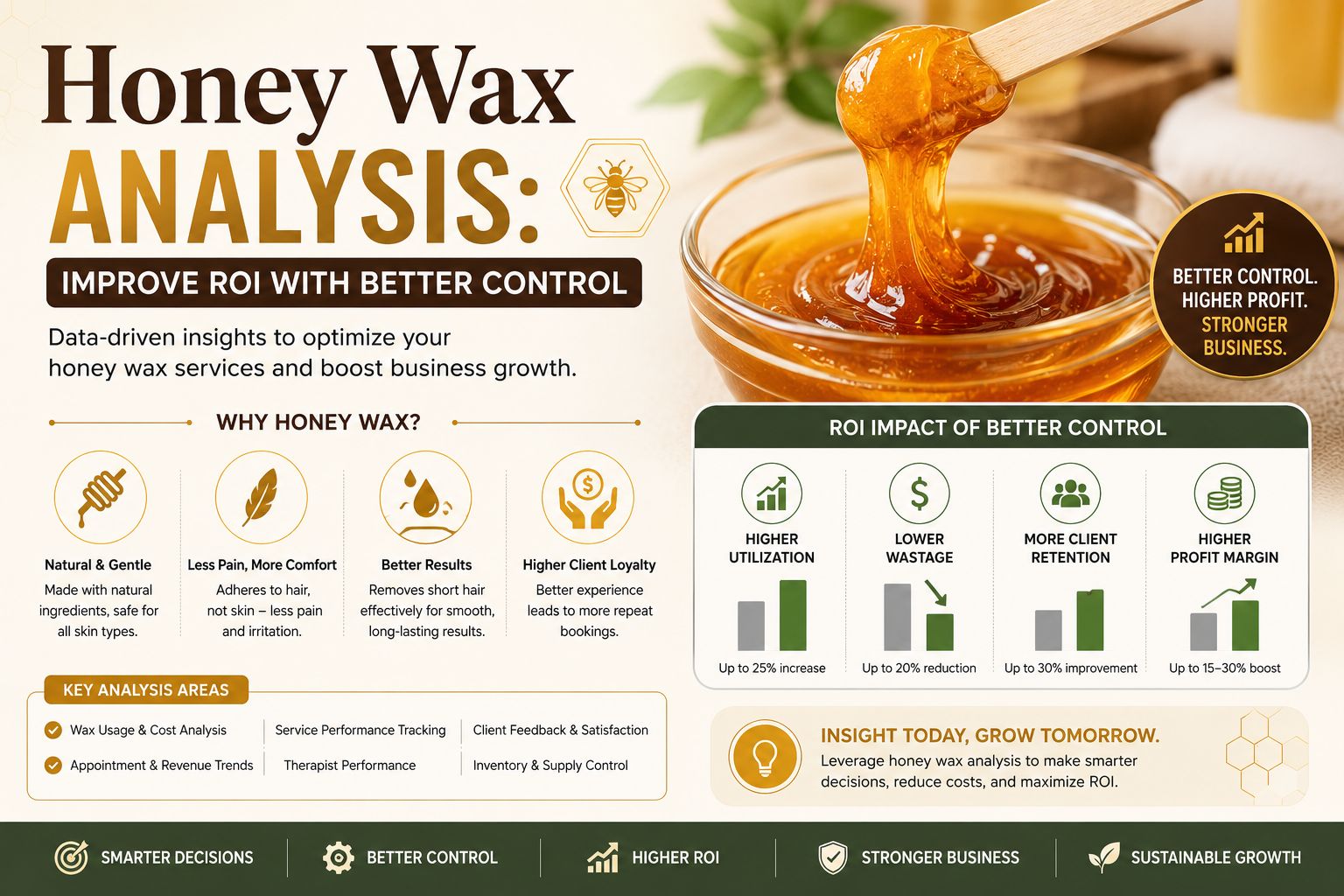


Honey wax analysis has become a growing concern for salon owners who notice their waxing service profits shrinking without a clear reason. When clients complain about inconsistent results or when wax supplies seem to disappear faster than expected, the real issue often lies in how the waxing process is controlled. Many parlour owners across India expect honey wax services to deliver steady returns, yet they struggle when the same service produces different outcomes depending on time, weather, or staff handling. The frustration usually begins when the cost of materials rises while client satisfaction falls, creating a confusing situation that directly impacts return on investment.
What Honey Wax Analysis Means for Salon Profitability
Honey wax analysis, honestly, it sounds technical, but it just means examining how every part of the waxing service affects your business finances and client experience. This includes checking how much wax is used per client, whether the application technique matches the required thickness, and whether the wax temperature is consistently correct throughout the day. Salon owners often overlook that honey wax behaves differently in humid conditions compared to dry weather, which changes how much product gets consumed during each session. When staff members apply thick layers unnecessarily or when wax gets wasted during reheating, the service cost rises quietly without appearing on any report.
The first signal of poor control appears when the same honey wax service takes longer than expected or when clients mention uneven hair removal. Honestly, a common observation in busy parlours is that the wax pot gets refilled more often during monsoon months because humidity affects the wax consistency. This means your material cost changes seasonally, but your service pricing stays fixed, which slowly reduces the profit margin from this popular service. Analysing these variations helps you understand that honey wax is not a fixed-cost service but one that requires constant monitoring to protect your return on investment.
Why Honey Wax Results Vary Across Salons and Seasons
The reality of honey wax services is that results depend heavily on the condition of the wax itself, the room environment, and how the technician prepares the skin before application. In many Indian salons, the wax is heated multiple times during the day, which changes its viscosity and makes it either too sticky or too runny for effective hair removal. Clients who visit during summer often report that honey wax feels more painful because the wax adheres to the skin differently when the temperature is already high.
Seasonal shifts also affect how often you need to reorder honey wax supplies, and this is where many salon owners lose control over their inventory. During wedding season, the sudden rush of clients requesting full-body honey wax can exhaust your stock faster than anticipated, forcing you to purchase expensive last-minute supplies from nearby vendors. This reactive purchasing behaviour directly harms your ROI because emergency purchases always come with higher costs and less time to compare quality. Understanding these variations helps you build a purchasing calendar that matches your actual service demand rather than guessing based on previous months.
Your staff's technique also plays a significant role in how much honey wax gets consumed per client. Some technicians instinctively apply thicker strips than necessary, believing this ensures better grip on the hair, but this actually wastes product and increases client discomfort. Training your team to spread the wax thinly and evenly not only improves the client experience but also reduces the amount of wax used per session, directly improving your cost per service.
Common Misunderstandings That Reduce Honey Wax ROI
The biggest mistake salon owners make is assuming that expensive honey wax automatically guarantees better results and customer satisfaction. Many premium wax brands require specific handling temperatures and storage conditions, and when staff miss these details, the expensive product performs worse than a mid-range option. This creates a false impression that the brand is faulty, while the actual problem lies in how the product was managed inside the salon.
Another common blind spot is ignoring the condition of the client's skin and hair before applying honey wax. When clients come with freshly moisturized skin or after oil massage treatments, the wax does not grip the hair properly, leading to patchy results and the need for repeat applications. The cost of redoing a strip is rarely tracked, so salon owners do not realize how much extra wax gets wasted correcting this preventable situation.
A third overlooked factor is the maintenance of the wax heating equipment itself. A wax pot that heats unevenly creates hotspots that burn the wax, changing its texture permanently. Once honey wax has been overheated, it no longer spreads smoothly, forcing the technician to apply more product to cover the same area. This equipment-related waste quietly increases your material cost while simultaneously reducing the quality perceived by the customer.
Practical Steps to Improve Control and Increase Honey Wax ROI
Start by tracking your honey wax usage per client over a week to identify patterns in wastage and overuse. Measure the number of refills needed for the wax pot each day and compare this against the number of waxing services performed. This simple operational data gives you a baseline for what normal consumption looks like, and any sudden increase signals a problem that needs immediate attention. Once you establish this baseline, discuss the findings with your staff so they understand that honey wax is a valuable material that requires respectful handling.
Create a simple checklist for honey wax preparation that includes the target temperature, the required spread thickness, and the ideal waiting time before applying the fabric strip. When staff follow a consistent process, the results become more predictable, and the amount of wax used per client stabilizes. This consistency also helps clients trust your service because they receive the same experience regardless of which technician performs the treatment. For those handling busy periods, you can refer to salon FAQs for guidance on managing appointment volumes without sacrificing service quality.
Schedule regular training sessions where technicians practice applying honey wax on different skin types to understand how pressure and speed affect the outcome. During these sessions, demonstrate how thin, even application removes hair effectively without requiring additional passes over the same area. This training investment pays for itself through reduced product consumption and fewer client complaints about patchy results. You may also explore salon courses to keep your team updated on efficient waxing techniques that protect both client comfort and your material costs.
Review your honey wax purchasing schedule at the beginning of each season and adjust quantities based on anticipated demand from wedding bookings or vacation periods. Buying in bulk from reliable suppliers before the rush starts gives you better pricing and eliminates emergency purchases that hurt your margin. When evaluating different honey wax brands, make your decision based on how the product performs under your specific salon conditions rather than relying only on brand reputation. The goal is to find a product that works consistently in your environment and supports efficient use.
If you are expanding your service menu or planning for peak season traffic, consult with other salon professionals through platforms like parlourtime to learn how they manage honey wax inventory during high-demand periods. Practical advice from peers often reveals solutions that are not obvious when you only analyze your internal data. This collaboration helps you address problems before they become costly, keeping your honey wax service profitable throughout the year.
Frequently Asked Questions
q What is honey wax analysis in a salon business?
a Honey wax analysis is examining how the wax used in services affects your costs, client satisfaction, and overall profitability so you can find ways to improve control.
q How can honey wax analysis improve ROI for my salon?
a It improves ROI by identifying wasteful usage, reducing material costs, and ensuring consistent service quality that encourages repeat customers and better profit margins.
q What factors cause honey wax results to vary between different salons?
a Temperature control, room humidity, technician technique, skin condition, and the quality of the heating equipment all cause significant variations in how honey wax performs.
q Why does my honey wax often feel too sticky or too runny to use?
a Repeated reheating during the day changes the viscosity of honey wax, making it either too sticky or too runny for smooth and even application on the skin.
q How much honey wax should be used per client for a single service?
a The amount depends on the body area and hair density, but using thin even layers normally results in lower product consumption compared to thick strip applications.
q Does choosing a more expensive honey wax always give better results?
a No, the highest quality wax still underperforms when handled incorrectly, so proper technique and heating practices matter more than the brand alone.
q What should be tracked daily to maintain control over honey wax costs?
a You should track the number of wax pot refills, the count of waxing services, and any repeat applications needed due to patchy results.
q When should salon owners consider retraining staff on honey wax application?
a Retraining is necessary when material consumption increases, clients report uneven results, or staff habits change after seasonal demand pressures begin.