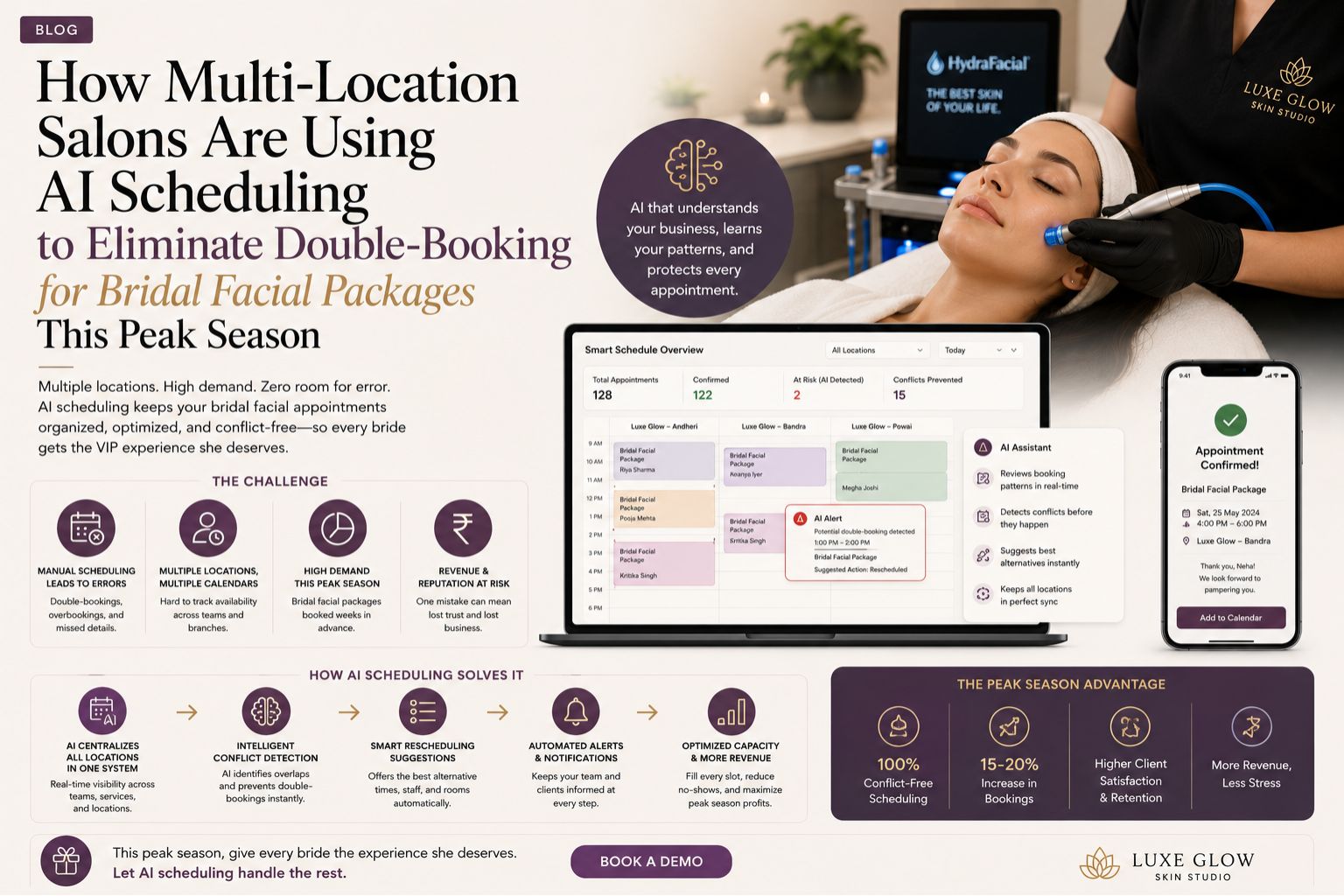


Double-booking a bridal facial package during peak season is a nightmare every multi-location salon owner dreads—it leads to angry brides, last-minute cancellations, and lost revenue that can take months to recover... honestly, it's the kind of mistake that keeps you up at night. AI scheduling tools are now stepping in to solve this mess by centralizing all branch bookings in real time, ensuring that no two locations double-book the same premium bridal package slot. Instead of relying on manual spreadsheets or disconnected phone logs—which, let's be real, are a total gamble—salons are adopting smart systems that automatically block overlapping appointments.
What Double-Booking Means for Bridal Facial Packages in Multi-Location Setups
When a bride books a facial at one salon location but the system doesn't update across all branches, another location might accidentally confirm the same time slot—a common issue during peak wedding months like November to February, and honestly, it happens more often than you'd think. This causes chaos: the bride arrives only to find her therapist is already occupied, forcing the staff to scramble with an awkward apology or a downgraded service, and you're left standing there thinking "how did this even happen?" The real consequence is a loss of trust—brides often share their bad experience on social media, hurting your salon's reputation faster than any advertisement can fix.
How the Conflict Actually Arises During Peak Wedding Season
The peak season for bridal facials stretches from October to March, when salons see a 60% spike in bookings, but manual systems create painful blind spots—like a bridal party member calling one branch while another is serving a walk-in, both creating overlapping entries without anyone noticing. Staff often overlook this because they assume different therapists or rooms are available, but the reality is that premium packages require specific equipment and experienced hands that are limited—and nobody's checking properly during the rush. This is where the scheduling tools that update instantly across all branches prevent the chaos before it happens.
Why Relying on Memory or Physical Logs Creates Hidden Risks
The common mistake is trusting that a receptionist will remember a past booking or that a ledger note is enough—but during the rush, a bride's name might be misspelled or the time slot misread, leading to a double-booking that only surfaces on the day of the service, and by then it's too late. This risk multiplies with multi-location salons where each branch has its own paper trail, combining into a mess that wastes time and creates awkward confrontations—like when you have two receptionists pointing fingers at each other. For instance, one salon had to refund an entire bridal party because two branches accepted the same facial package for the same bride, a situation that could have been avoided with shared digital calendars.
When to Implement AI Scheduling to Prevent Double-Booking
The best time to adopt AI scheduling is before peak season bookings ramp up—ideally in August or September—so your staff can test the system on quieter days, you know, when things aren't already on fire. This allows you to set rules like blocking overlapping time slots for the same client name across all branches and sending automatic confirmations that reduce human error, which honestly, we all make when we're tired. Salons that wait until mid-season often face resistance from staff who are already overwhelmed, so early adoption ensures smoother coordination with minimal disruption to your existing workflow.
FAQ
q Why do bridal facial bookings get double-booked during peak season?
a Double-booking often happens because manual logs or phone calls don't sync across multiple salon branches, especially when staff rely on memory or separate spreadsheets that aren't updated in real time—it's like playing telephone with a bride's appointment.
q What is the biggest risk of double-booking a bridal facial package?
a The biggest risk is losing the trust of the bride, which can lead to negative word-of-mouth, social media complaints, and potential loss of her entire wedding party's business—damage that is hard to repair during peak season, and honestly, a bad review can sink you.
q How can salons scale scheduling to avoid conflicts across locations?
a Salons should adopt centralized AI scheduling tools that automatically block overlapping bookings for the same client name across all branches, creating a single source of truth that updates with every new appointment—no more guessing games.
q Is it too late to fix the scheduling problem once peak season has started?
a No, but it requires immediate migration to a digital system that can integrate with your existing data—many platforms, like those referenced at Parlourtime, offer onboarding support even mid-season to reduce ongoing conflicts, so don't panic just yet.