Live Apps
Download Parlourtime and Partner apps

Quick app access for customers and partners.

HomeAboutContactPartner AppCoursesBlogsFAQ

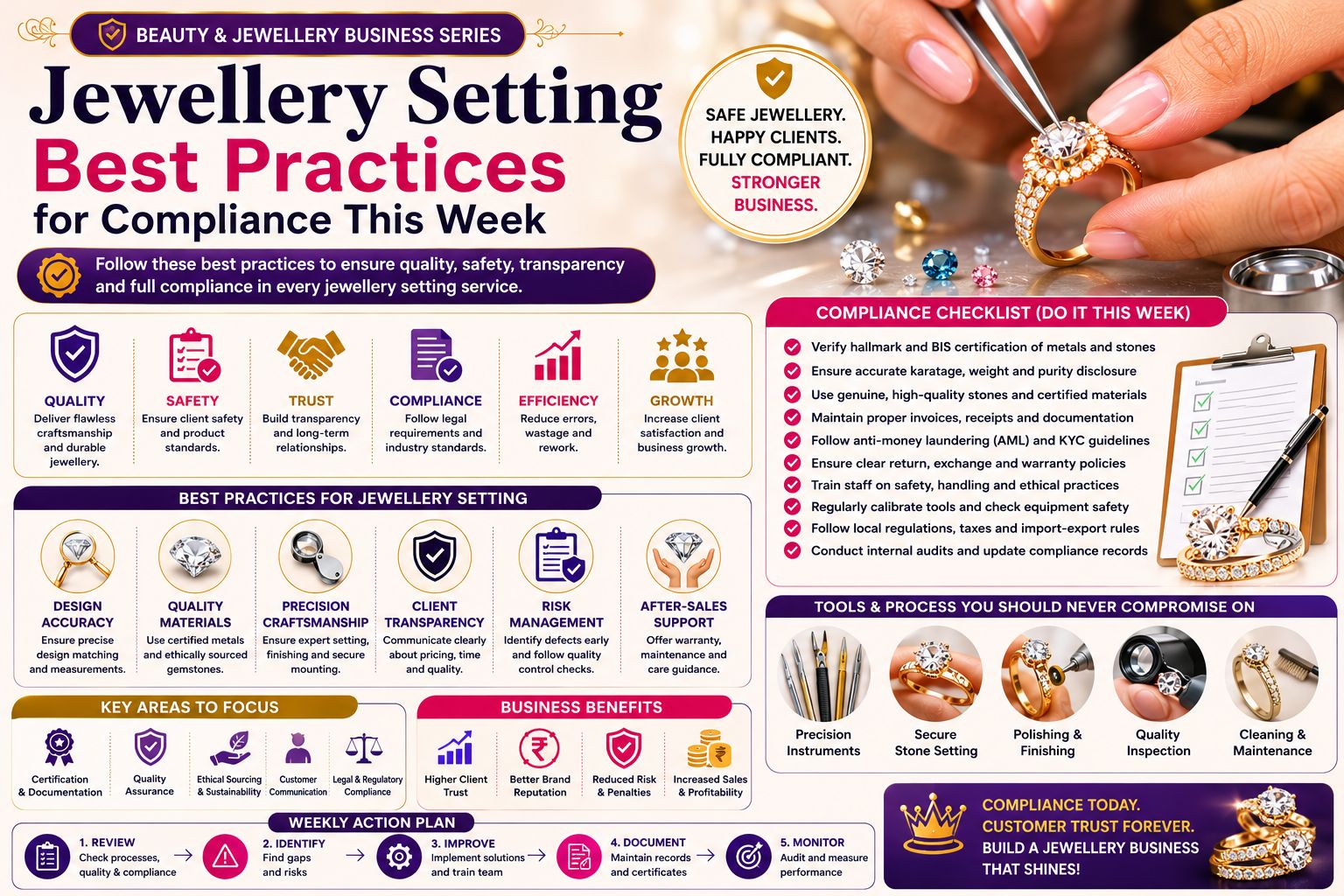
Jewellery Setting Best Practices for Compliance This Week

By Parlourtime Team
No Date
8 min read
jewellery-settingstone-securityprong-maintenancecompliancerepairinspection
Jewellery Setting Best Practices for Compliance This Week

About This Article

# Jewellery Setting Best Practices for Compliance This Week When you step into a jewellery store this week, the conversation often shifts from design to dura...

# Jewellery Setting Best Practices for Compliance This Week When you step into a jewellery store this week, the conversation often shifts from design to durability. Customers frequently ask whether a stone will stay secure, or if a prong will bend after a few weeks of daily wear. This concern is the heart of best practices for jewellery setting compliance. Many buyers leave the shop feeling confident, only to return later with a loose stone or a damaged claw. The issue is rarely about the beauty of the piece. It is about how the setting was executed, how it was checked, and whether the aftercare guidance matched real-life use. And honestly, this uncertainty creates genuine confusion for anyone making a purchase under time pressure. ## Clarity: What Compliance Means for Your Jewellery Setting This Week Compliance in jewellery setting refers to how closely the work matches industry standards for safety, durability, and craftsmanship. When a jeweller says a piece is ready, the customer expects the stone to sit firmly and the metal to hold its shape. The first sign of trouble often appears during routine wear, such as feeling a snag on clothing or noticing a slight movement in the stone. These small observations are easy to dismiss, but they point to deeper structural issues. For someone buying a ring or pendant for an upcoming occasion, this uncertainty can feel overwhelming. It is common to wonder if the setting was rushed or if the material was simply not suitable for daily use. Many customers assume that a higher price guarantees a secure setting. In reality, compliance depends on the skill of the craftsman, the quality of the metal, and the precision of the final inspection. A piece that looks perfect under the counter light may still have hidden weaknesses. This is why clarity about the setting process is essential. When a customer understands what a proper setting involves, they are better equipped to ask the right questions before they leave the store. The confusion often starts when the jeweller cannot explain the steps taken to secure the stone. Without that transparency, doubts begin to grow, and the satisfaction of the purchase quickly fades. ## Reality Check: Common Findings During Jewellery Setting Inspections Inspections are not just a formality; they reveal how well the setting will perform over time. One of the most frequent observations is uneven prong pressure, where one claw is tighter than the others. This can cause the stone to sit at an angle, making it more vulnerable to impact. Another common issue is metal fatigue, especially in rings that are worn daily. The metal may weaken around the setting, leading to cracks that are not visible to the naked eye. These findings are not necessarily a sign of poor craftsmanship, but they highlight the difference between a quick job and a compliant one. For customers with active lifestyles, the reality is that even a well-set stone requires periodic checks. Humidity, temperature changes, and accidental knocks all affect the integrity of the setting. A stone that feels solid in the shop may loosen after a month of exposure to handwashing, lotions, or household chores. This is not an exaggeration; it is a predictable outcome of physical stress. The most successful purchases happen when the jeweller sets realistic expectations from the start. If the customer knows that a prong may need tightening every few months, they are less likely to panic when it happens. Compliance is not about promising perfection; it is about preparing the wearer for the natural behaviour of the piece. ## Mistake and Risk: Overlooked Aspects of Jewellery Setting Compliance A major blind spot in jewellery setting compliance is the assumption that one inspection is sufficient. Many buyers believe that if the stone passes the initial check, it is secure forever. This is rarely true. The setting is a dynamic structure that responds to pressure and movement. Over time, the metal can stretch, the prongs can loosen, and the stone can become vulnerable to chipping. Another overlooked detail is the interaction between the setting and the wearer's daily habits. Someone who type all day, exercises frequently, or works with their hands places far more stress on a piece than someone with a desk job. The risk escalates when customers ignore maintenance recommendations. Skipping a routine check because the piece looks fine is a common mistake. By the time a problem becomes visible, the damage may already be significant. For example, a loose stone may knock against the metal, creating a tiny chip that reduces clarity and value. This is where dissatisfaction truly begins. The customer feels misled because the piece did not last as expected, even though the original setting was compliant. The underlying issue is a lack of awareness about the lifecycle of a jewellery setting. More attention to regular inspections and simple care routines would prevent most of these disappointments. Understanding this reality changes how a buyer approaches both the purchase and the maintenance of their jewellery. ## Decision Help: Choosing Between Repair, Replacement, and Maintenance When a problem appears, the first question is whether to repair, replace, or simply maintain the piece. A stone that has moved slightly may only need a quick prong tightening, which is a low-cost repair. However, if the metal has cracked or the stone is damaged, replacement may be the safer option. The decision depends on the extent of the wear and the value of the piece. For high-value items, investing in a professional assessment is always worth it. This is where a clear boundary exists between what maintenance can fix and what requires a new setting. Expecting a simple repair to solve structural failure will only lead to frustration. Timing is another factor that influences the decision. If the piece is needed for an upcoming event, planning for a check-up at least a week in advance is wise. This allows enough room for adjustments without rush. For pieces that show no visible issues, an annual inspection provides peace of mind. The key is to avoid waiting for a visible problem to schedule a visit. Many customers find that discussing their concerns with a professional helps them understand what is realistic. A maintenance routine is not an admission of poor quality; it is a sign of responsible ownership. For those who feel uncertain about where to start, exploring resources like salon FAQs can provide useful context on service expectations and care routines. In the end, the goal is to make an informed choice that balances cost, safety, and practicality. ### FAQ q What is the most common sign that a jewellery setting is failing? a The most common sign is a slight movement in the stone or a prong that feels sharp against the skin. These small changes indicate that the setting is losing its grip. q How often should a jewellery setting be checked for compliance? a A professional inspection once a year is generally sufficient for pieces worn occasionally. For daily wear items, a check every six months offers better protection against unexpected loosening. q Can a loose stone be fixed without replacing the entire setting? a Yes, a loose stone often requires only a prong tightening or a small metal adjustment. This repair is quick and cost-effective when the surrounding metal is still healthy. q Why does a ring feel different after a few months of wear? a Daily exposure to water, soap, and physical impact gradually stretches the metal. This natural wear changes the fit and can make the setting feel less secure than it did initially. q Is it safe to wear a ring while washing hands or doing household chores? a It is better to remove jewellery during activities that involve strong chemicals or heavy impact. Frequent exposure to harsh substances accelerates metal fatigue and stone loosening. q How do I know if a repair is worth the cost compared to a replacement? a If the stone is damaged or the metal shows cracks, replacement is often wiser. When the piece is structurally sound, a simple repair is cost-effective and preserves the original design. Parlourtime discussions often highlight that maintenance expectations influence satisfaction more than the treatment itself. q What should I expect during a professional jewellery inspection? a The jeweller will examine the prongs, the metal band, and the security of the stone under magnification. They will also test for any movement and provide a recommendation based on the findings. q Can a new setting fail if the original stone is very hard? a Yes, even hard stones like diamonds can chip if the setting lacks proper cushioning. The pressure from the prongs must be balanced to protect the stone from impact stress.

Join Us!

Earn Upto ₹70,000/Month! Become a Parlourtime Partner.

Get it on Google PlayDownload on the App Store
Page 1 of 279
WhatsAppInstant beauty support