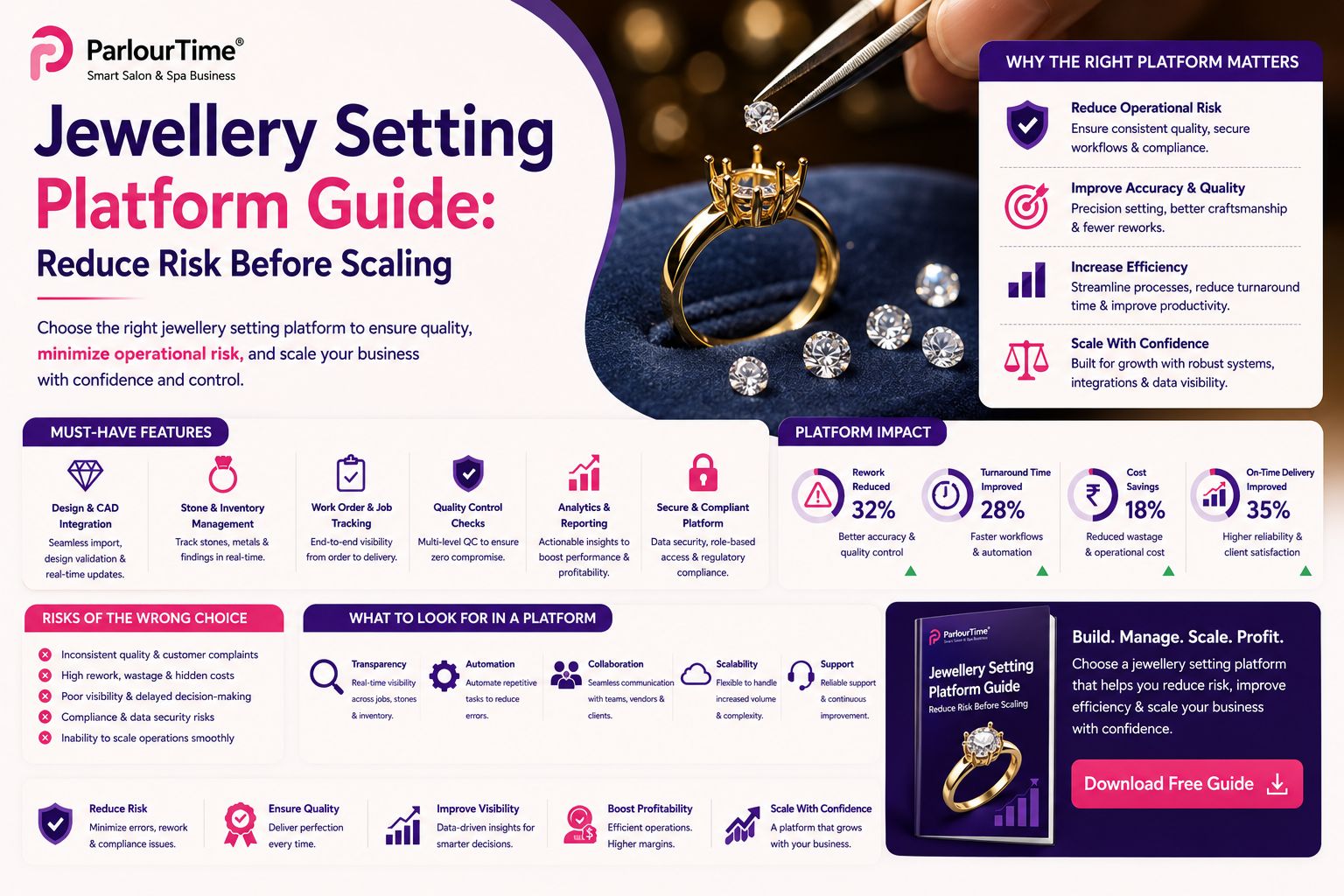


When a jewellery setting platform shows inconsistent results or feels risky before scaling, uncertainty replaces confidence. Many customers notice initial results look acceptable but worry that repeating the same service on multiple pieces will create mismatched finishes or structural weaknesses. This hesitation is common among those scaling from a few pieces to larger collections. The concern is not about one job. It is about whether a platform can deliver the same quality when orders increase. Understanding where this doubt comes from – honestly, it's a nagging feeling even after a good first piece – helps users make smarter decisions before committing to volume work.
Understanding the Concern Behind Platform Risk
The feeling of risk often starts after a few successful single-piece jobs. A ring setting holds well. A pendant looks clean. But when considering ten similar pieces the fear of variation appears. This is not about poor craftsmanship on individual items. It is about predictability. Customers frequently report that the first few results feel promising but every new order brings nervousness. The real question is not whether the platform can set one stone well. It is whether it can repeat that result consistently without constant supervision or rework – and honestly, that's where the knot in my stomach sits. That gap between occasional success and reliable output creates the hesitation.
Reality of Consistency Across Jewellery Setting Platforms
Consistency on jewellery setting platforms depends on operator skill, communication clarity, and workflow standardization. Not every platform operates with the same checklist for quality control. Some platforms rely heavily on individual artisans whose skill varies day to day – like, one morning they're sharp, next day maybe not so much. Others have structured review steps that catch issues before delivery. Results often vary because the brief provided by the customer may not specify tolerance levels or finish expectations. A platform that delivers well on basic settings may struggle with prong alignment or stone security when volumes increase. Customers scaling up need to understand that platform reliability is tied to how clearly expectations are communicated and how much oversight the platform provides during production.
Common Mistakes When Scaling Jewellery Setting Services
A frequent mistake is assuming that one good result guarantees the same outcome on bulk orders. Many customers do not verify whether the same artisan handles all pieces. Platforms often rotate operators, which introduces variation. Another blind spot is skipping sample checks for every batch. Customers who scale quickly often overlook the importance of intermediate quality checks. This is where dissatisfaction escalates. A single loose stone or misaligned setting can ruin trust even if previous work was flawless. The risk is not technical failure alone. It is the cumulative effect of small inconsistencies that become visible when comparing multiple pieces side by side – and that comparison can be brutal.
Decision Help for Scaling Safely on Jewellery Platforms
Before scaling, customers should decide based on batch testing rather than single-piece confidence. Ordering a small batch and inspecting every piece for symmetry, stone security, and finish consistency reveals patterns that one-off jobs hide. Timing also matters. Scaling during periods of high platform workload increases the chance of rushed work. If maintenance is needed after a batch, it is better to pause and reassess than to continue ordering without addressing issues. When batch results remain inconsistent despite clear instructions, that boundary signals that the platform may not be suitable for volume work. Some customers explore beauty service questions to understand how similar reliability checks apply across different service industries – honestly, it's the same principle of trust. Platforms like parlourtime highlight how consistent expectations matter across repeat services.
What is the biggest risk when using a jewellery setting platform?Inconsistent quality across multiple pieces often creates the highest risk because operator variation and workflow gaps become visible only at scale.
How can I check if a jewellery platform is reliable for bulk orders?Ordering a small batch and inspecting stone alignment, prong security, and finish uniformity helps reveal patterns that single-piece results cannot show.
Why do jewellery setting results vary between orders on the same platform?Operator rotation, unclear instructions, and inconsistent quality checks often cause variation even when previous individual results seemed acceptable.
Should I test one piece before scaling my jewellery orders?Testing one piece helps but does not confirm batch reliability because operator skill and attention levels may change during larger production runs.
What should I look for when inspecting jewellery settings after delivery?Check stone security, prong symmetry, surface finish, and setting alignment under proper lighting to identify issues that may compound across multiple pieces.
How many pieces should I order in a test batch before scaling?Ordering five to ten pieces provides enough data to observe consistency without committing to a volume that increases financial or trust risk.
Can a jewellery setting platform fix issues after delivery?Some platforms offer rework but delays and communication gaps often make post-delivery fixes less reliable than preventing issues during initial production.
When should I stop using a jewellery setting platform for scaling?If batch results repeatedly show mismatched finishes, loose settings, or poor communication despite clear instructions, the platform may not support reliable scaling.