Live Apps
Download Parlourtime and Partner apps

Quick app access for customers and partners.

HomeAboutContactPartner AppCoursesBlogsFAQ

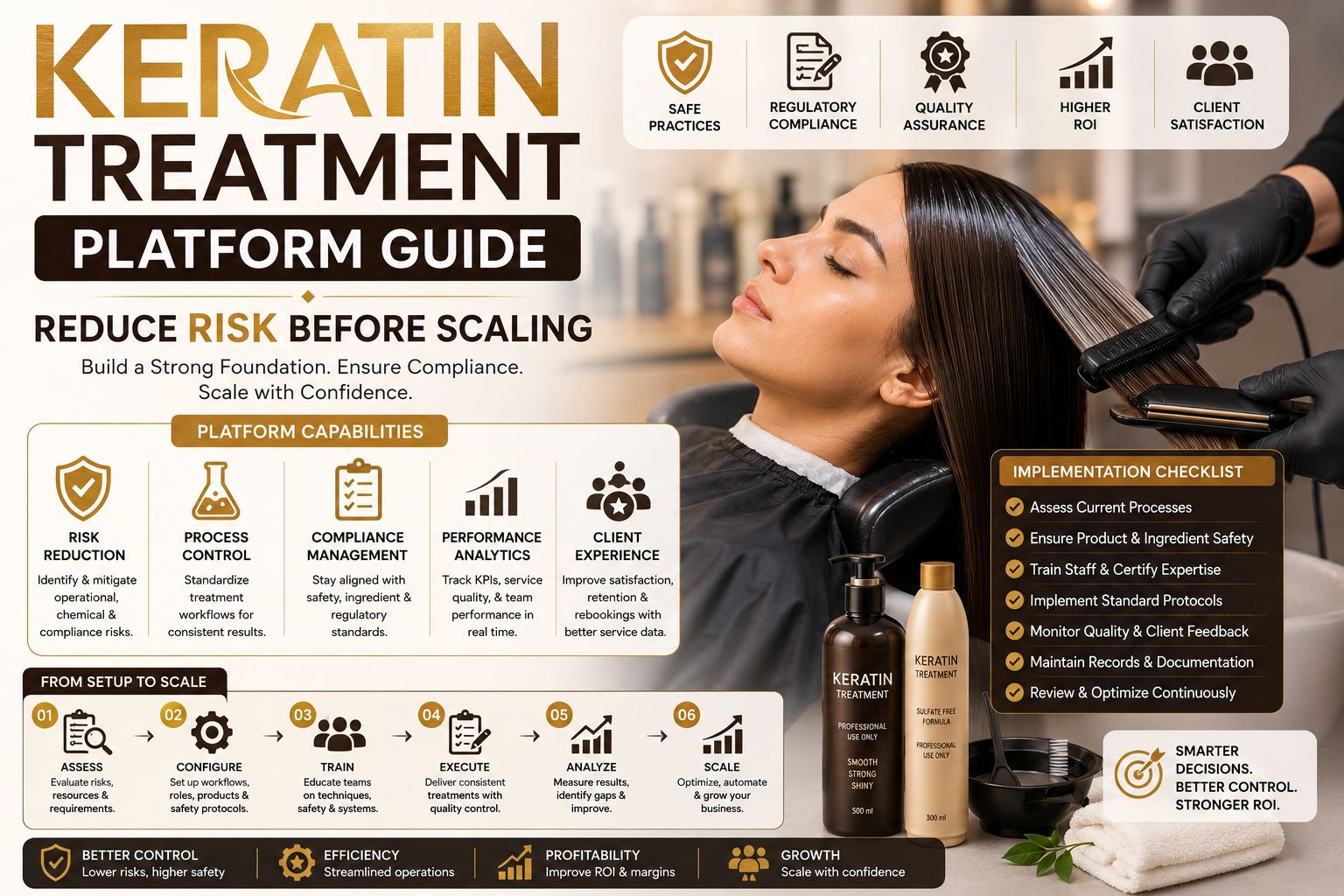
Keratin Treatment Platform Guide: Reduce Risk Before Scaling

By Parlourtime Team
No Date
5 min read
keratin treatmenthair smoothingsalon serviceshair carescalp sensitivityhair porosity
Keratin Treatment Platform Guide: Reduce Risk Before Scaling

About This Article

Keratin Treatment Platform Guide: Reduce Risk Before Scaling Many customers begin searching for keratin treatment options after noticing frizz, unmanageable...

Keratin Treatment Platform Guide: Reduce Risk Before Scaling

Many customers begin searching for keratin treatment options after noticing frizz, unmanageable hair, or dissatisfaction with previous smoothing methods. The desire for sleek, manageable hair often drives them toward professional keratin services. But here's the thing — the gap between expectation and reality tends to widen when risks are not identified early. Customers commonly assume that a keratin treatment will deliver uniform results across all hair types, but real salon experiences reveal a different story. The first sign of trouble appears when the treatment does not last as long as promised, or when the hair feels unusually heavy or sticky after the service. Honestly, this confusion arises because individual hair porosity, previous chemical exposure, and maintenance routines significantly influence outcomes. Without understanding these variables, customers risk disappointment and unnecessary expense. Recognizing these early signals helps both customers and salon professionals approach keratin treatments with clearer expectations and better planning. ## What Causes Inconsistent Results After Keratin Treatments The primary reason keratin treatments produce inconsistent results lies in how differently each person's hair responds to protein and heat. Hair that has undergone multiple coloring sessions, bleach treatments, or regular heat styling tends to have higher porosity, meaning it absorbs keratin unevenly — and not in a good way. In many Indian salon settings, customers arrive with hair that has experienced years of chemical processing, yet they expect the same smoothness seen on untouched hair. Another overlooked factor is the product formula itself. Some keratin treatments contain higher concentrations of formaldehyde or similar aldehydes, which can cause temporary scalp irritation, burning sensations, or even breathing discomfort during application. Customers often mistake this discomfort for an allergic reaction, when it is actually a sensitivity to the chemical composition. The smoothness duration also depends on how frequently the customer washes their hair, what shampoo they use, and whether they follow sulfate-free aftercare routines. When these dependencies are ignored, results fade faster than anticipated, leading to dissatisfaction and the feeling that the service was not worth the investment. ## Common Misconceptions That Lead to Unnecessary Dissatisfaction A widespread belief among customers is that expensive keratin treatments guarantee longer-lasting smoothness. Look, this misconception pushes people toward premium packages without understanding that their hair condition matters more than the price tag. Another common misunderstanding involves thinking that a single session can permanently transform damaged hair. In reality, keratin treatments provide temporary smoothing that requires maintenance treatments every three to five months, depending on hair growth and exposure to humidity. Many customers also assume that a burning sensation during application indicates a high-quality product working intensely, when it often signals scalp sensitivity or product incompatibility. Salon professionals frequently observe customers ignoring patch test recommendations — I mean, who actually does that? — which increases the risk of unexpected reactions. The dissatisfaction escalates when customers compare their results with friends who have completely different hair textures or histories. These blind spots create unrealistic benchmarks and lead to negative reviews or unnecessary switching between salons. Understanding these misconceptions helps customers make informed decisions and reduces the emotional pressure associated with treatment selection. ## When Scaling Keratin Services Increases Instead of Reducing Risk Some salons and customers assume that increasing the frequency or intensity of keratin treatments will improve results. This assumption can backfire significantly. Over-smoothing hair with repeated treatments often leads to protein overload, making strands brittle, prone to breakage, and less elastic. Salon professionals in India frequently encounter customers who have undergone three or four treatments within a year, expecting each session to restore their hair to virgin condition. Instead, these customers report increased hair fall, split ends, and a straw-like texture — honestly, it's heartbreaking. The risk scales higher when the same treatment is applied to hair that has already been chemically relaxed or colored. Each additional chemical layer compounds the stress on the hair shaft, reducing its natural moisture balance. Additionally, customers with sensitive scalps or pre-existing conditions like dandruff or psoriasis may experience worsening symptoms after repeated keratin applications. The boundary where additional treatments stop helping and start harming is often crossed silently, without immediate visible warning. Recognizing this boundary is essential for anyone considering multiple keratin sessions or planning to scale up their service frequency. ## Making Smarter Decisions Before Booking Your Next Keratin Treatment The most effective approach to keratin treatment begins with a thorough assessment of current hair condition, previous chemical history, and realistic maintenance capacity — honestly, be honest with yourself here. Customers should discuss their hair porosity, recent treatments, and scalp sensitivity with their salon professional before committing to any service. A consultation that includes a strand test or patch test can reveal hidden risks that would otherwise surface mid-treatment. Timing also matters significantly. Scheduling a keratin treatment too close to a wedding, vacation, or important event leaves little room for adjustment if results are unsatisfactory. Many customers use parlourtime to compare service timing and read about others' experiences before making decisions. Another critical factor is aftercare commitment. Using sulfate-free shampoos, avoiding excessive heat styling, and spacing out washes can extend treatment longevity by several weeks. If a customer notices persistent scalp irritation, excessive hair fall, or uneven smoothness after one treatment, repeating the same service without addressing the underlying cause only increases risk. In some cases, switching to a different smoothing method or allowing the hair to recover for several months becomes the wiser decision. Professional reassessment from a trusted salon expert provides the clarity needed to avoid repeated disappointment. Ultimately, informed choices protect both hair health and customer satisfaction, reducing the chances of regret and unnecessary expense.

Join Us!

Earn Upto ₹70,000/Month! Become a Parlourtime Partner.

Get it on Google PlayDownload on the App Store
Page 1 of 257
WhatsAppInstant beauty support