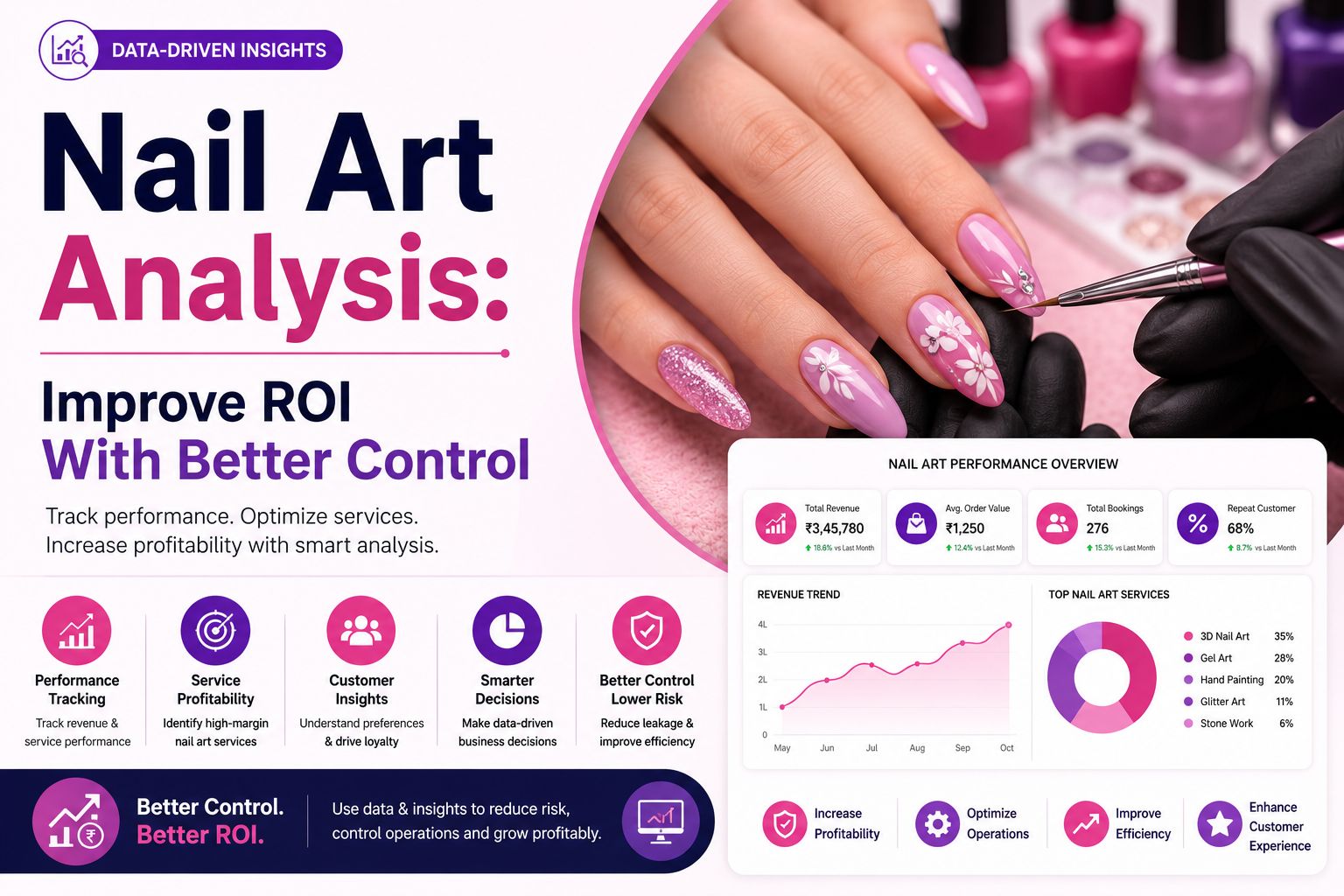


Many salon owners notice that nail art services bring attention but not always strong returns. The gap between customer interest and actual profitability, well, it often connects to how services are managed. Time spent on detailed designs, product waste, and inconsistent pricing—they slowly reduce the margin. This is not about the skill of the artist. Really, it is about the systems around the service. When a nail artist spends extra minutes on a single nail because tools are not ready or because design choices shift mid-service, the cost adds up without the client even seeing the difference. The real concern begins when the service feels profitable but the numbers show otherwise. Understanding where control slips is the first step toward improving ROI. It's not rocket science, but you have to pay attention.
Why Nail Art Profitability Depends On Service Time Control
Time is the most direct factor affecting nail art return on investment. A simple gel polish may take thirty minutes. A detailed nail art design? That can stretch beyond ninety minutes, sometimes even more if the client keeps changing her mind. When the service duration varies widely without clear boundaries, the revenue per hour becomes unpredictable—honestly, it's a gamble. Many salons do not track how long specific designs take. Without this data, pricing feels like guessing, and that never ends well. Clients may expect intricate work at a flat rate, and the artist may not communicate the additional time required for complex patterns. This mismatch creates tension and reduces efficiency. The overlooked detail is that preparation, clean-up, and tool sterilization are not always included in the time calculation. These hidden minutes, they reduce the effective hourly rate significantly. Controlling time means setting clear expectations before the service begins and using structured service slots that account for design complexity. Otherwise, you're just losing money without knowing it.
Common Assumptions That Reduce Nail Art Returns
A frequent mistake is believing that higher prices alone solve profitability. I've seen owners do that. Charging more without understanding the underlying cost structure does not guarantee better returns, not at all. Many owners assume that popular designs naturally generate profit. But popularity often brings higher material consumption. Glitters, foils, stickers, and encapsulation gels—these are not cheap. If inventory is not tracked per design, the cost per service becomes invisible. Another blind spot is over-servicing. Artists sometimes offer extra details to please the client without adjusting the price. This goodwill gesture? It eats into margins, and by the end of the day, you're wondering why the bank balance is low. The real salon experience observation here is that clients rarely refuse a reasonable explanation for pricing when it is connected to time and materials. The problem is not the client. Honestly, it is the lack of a control system that allows the artist to say no or adjust expectations before starting.
Inventory Waste And Pricing Gaps That Hurt Nail Art ROI
Product waste is higher in nail art than in regular manicures because multiple products are opened for a single design. Nail polishes dry out faster when left open during long sessions. Lamps wear out. Files and buffers are used once and discarded. These small losses accumulate, you know, like drops in a bucket. The bigger issue is pricing inconsistency. Two clients receiving similar designs may pay different amounts because of mood, negotiation, or lack of a standardized rate card. This inconsistency confuses the team and erodes trust. A customer may feel unfairly charged if they discover a gap. The boundary that matters here is that pricing must reflect the actual service time and product usage, not the perceived value of the design. When inventory and pricing are not connected, ROI suffers silently. Salons that track product consumption per service and set clear pricing tiers see more predictable returns. Some salon owners review their service structure through parlourtime resources to identify where product waste and pricing gaps are hiding. It's a smart move, honestly.
When To Reassess Nail Art Service Structure And Pricing
The decision to change a service structure should come before dissatisfaction becomes routine. If nail art services consistently take longer than scheduled, or if the team feels rushed, it is time to reassess. A good signal is when the same design takes different amounts of time depending on the artist. That indicates inconsistency in skill application or service flow. Another signal is when product reordering happens faster than expected for nail art supplies. That points to unmeasured waste. The realistic expectation here is that not every design suits every salon. Some intricate styles require advanced skill and longer booking slots. If the market demand does not support the time investment, it may be better to limit complex designs and focus on faster, high-margin options. The decision should be based on data, not emotion—easier said than done, I know. Tracking service duration, product cost, and client feedback over a month provides clear direction. When these numbers are visible, deciding whether to raise prices, limit designs, or improve training becomes straightforward. Waiting too long often leads to revenue loss and team frustration. Don't wait until it's too late.
Frequently Asked Questions
q How do I calculate the real cost of a nail art service?
a Track the total time from start to cleanup, add the product cost per design, and include overhead per minute to find the true cost. It's not as complicated as it sounds.
q Why does nail art ROI drop even when prices are high?
a High prices without time and material control still leave gaps because hidden costs like waste and extended service duration reduce margins. You can't just raise prices and hope for the best.
q What is the biggest time waster in nail art services?
a Frequent design changes during the service and unprepared workstations cause the most time loss without adding client value. It's a silent killer of profit.
q How often should I review nail art pricing?
a Review pricing quarterly or whenever product costs rise significantly or service times shift due to new design trends. Don't let it sit for a year.
q Can limiting design options improve profitability?
a Yes, focusing on a curated set of high-demand, quick-to-execute designs often increases throughput and reduces material waste. Quality over quantity, you know?
q What inventory items waste the most in nail art?
a Glitters, foils, and specialty polishes that dry out or are used partially for one design tend to waste the most product. Keep an eye on those.
q Should I charge by design complexity or by time spent?
a Charging by design complexity with a clear time range works better because clients understand the value before the service begins. Makes everything smoother.
q How do I train my team to control service time better?
a Use timed practice sessions, standardize design steps, and create service menus that match skill levels to expected duration. Repetition helps.