

What Nail Buffing Compliance Actually Means During Salon Visits
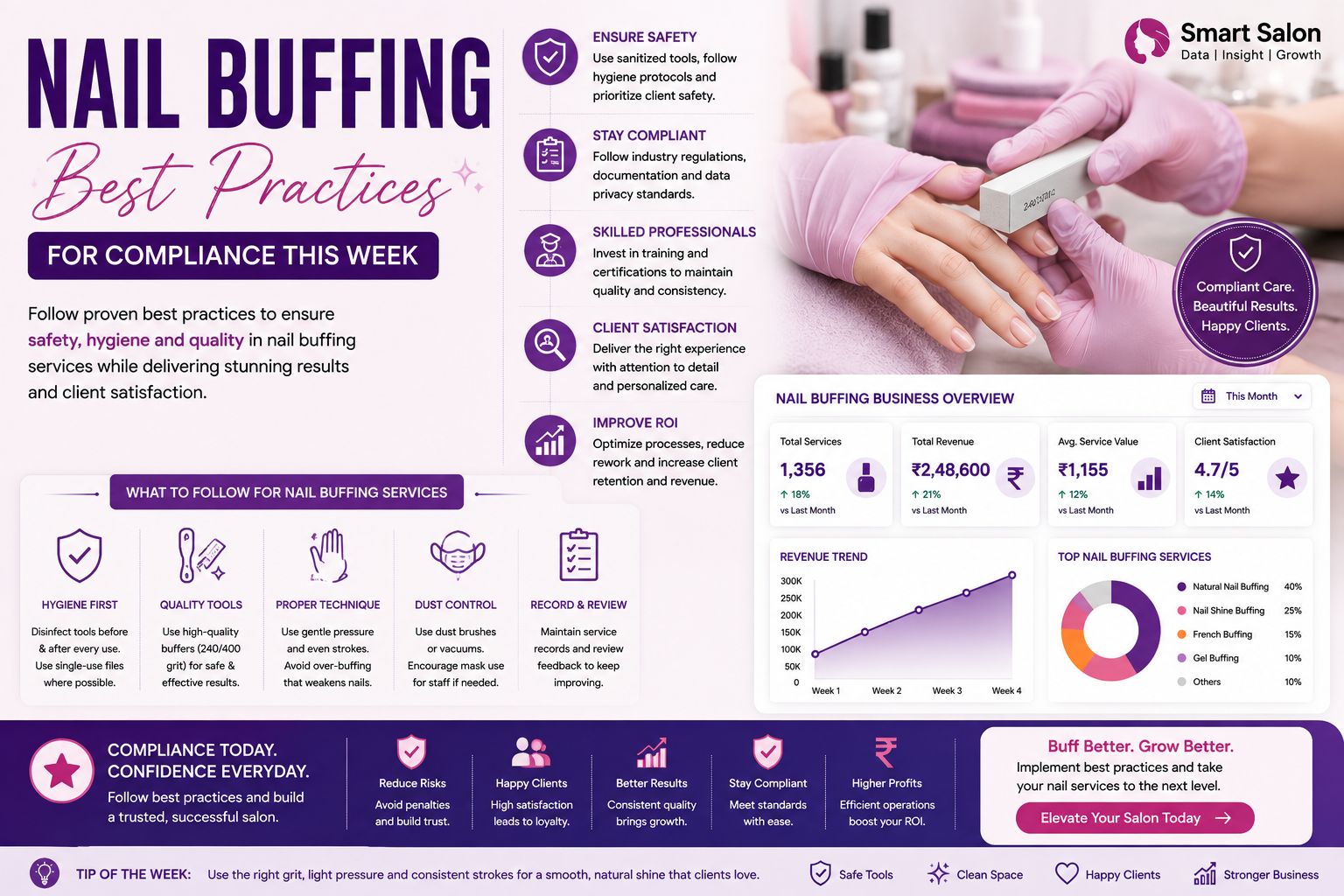
Nail buffing compliance during a salon visit is rarely discussed openly with clients. Most people assume that a buffing service is low risk because it does not involve chemicals or long drying times. That assumption is where the misunderstanding begins. In practice, buffing removes layers of the nail plate. It smooths the surface by filing down microscopic ridges and imperfections. The problem starts when the nail technician uses a coarse grit buffer or applies too much pressure over a thin nail. The client feels a sensation that is difficult to describe. It is not sharp pain. It is more like a warm sensitivity that appears later. Many people report that their nails feel hot during the service or that water becomes uncomfortable the next day. These are signs that the buffing was too aggressive for that particular nail condition. Compliance in salon settings usually refers to following manufacturer guidelines for tool usage, understanding nail anatomy, and respecting the natural thickness of the nail plate. What customers often discover is that the service did not fail because the salon ignored hygiene. It failed because the technique did not account for their specific nail type. This is why searching for best practices after the visit is common. The result feels off, and the customer wants to understand whether the salon violated an expected standard. The honest answer is that buffing outcomes depend heavily on the starting condition of the nail, not just the skill of the technician.Why Nail Buffing Results Vary Across Different Nail Types
Nail buffing results vary significantly because every natural nail has a different thickness, moisture level, and growth pattern. A nail that is naturally thin will respond to buffing very differently from one that is thick and sturdy. Thin nails often become translucent after buffing. They may bend easily or develop white spots where pressure was concentrated. Thick nails, on the other hand, tolerate more aggressive buffing and produce a high shine without discomfort. Many customers do not realize that their nail condition changes with seasons and age. Summer humidity can make nails softer and more flexible. Winter dryness makes them brittle and prone to peeling. A buffing service that felt fine in July might cause damage in January. The same applies to clients who have recently removed gel polish or acrylic extensions. Their nails are already compromised because the top layers are thinner after removal. Buffing these nails without adjusting the technique will likely cause sensitivity. Another overlooked factor is the frequency of buffing. Some clients request buffing every two weeks. Over time, this repetition removes more of the nail plate than the nail can regrow. The nail becomes progressively weaker. The salon may not recognize this pattern because the technician sees a different client each visit. This is why compliance matters. It is not a static rule. It requires the technician to assess the nail condition during the service and adjust the buffing intensity accordingly. When that assessment is missed, the client experiences results that feel unpredictable.Common Mistakes That Lead to Nail Damage After Buffing
The most common mistake in nail buffing is assuming that more shine means better service. Clients often ask for a glossy finish without understanding that achieving it requires removing nail surface. The buffer tool does not polish the existing surface. It grinds it down. When a technician buffs too long, the nail becomes thin and loses its natural protective barrier. This is why many clients feel a stinging sensation when applying nail polish enhancers or cuticle oil after the service. Another frequent error is using the same buffer block on multiple clients without proper sanitation. The buffer surface becomes contaminated, and the texture becomes uneven. This unevenness can cause micro-tears on the nail surface. The client might notice roughness days later, which contradicts the smooth result they expected. A third mistake involves buffing the nail in multiple directions. The nail plate is made of layers. Buffing back and forth can separate these layers, leading to peeling and flaking. The correct technique is to buff in one direction, following the natural growth line of the nail. Many salons rush this step because clients expect fast service. When speed overrides technique, the nail pay the price. The final common mistake is mixing aggressive grit buffers with thin nails. A coarse buffer is meant for artificial nails, not natural ones. When used on natural nails, it creates grooves that are difficult to repair. Clients often describe the result as feeling bumpy even though it looks shiny. This gap between visual result and physical sensation is the core of the dissatisfaction.How to Make Better Decisions About Nail Buffing Services
Deciding how to approach nail buffing requires understanding that the service is not a permanent solution. It is a temporary cosmetic effect with real physical consequences. The first decision is timing. If you have an event soon and you need your nails to look polished, a light buffing session before the event is reasonable. But if you have recently removed gel polish or if your nails are already peeling, buffing should be postponed. The risk of further damage outweighs the aesthetic benefit. The second decision is frequency. Repeating buffing every two weeks will eventually weaken the nail structure. If your nails feel thin or sensitive after the first session, wait longer before the next. Some clients benefit from skipping buffing entirely and using a nourishing nail oil instead. The third decision is communication. Before the service, tell the technician about any existing sensitivity, peeling, or history of gel removal. This information allows them to adjust the buffer grit and pressure. Many customers skip this step because they assume the technician will notice the condition. The reality is that technicians often work quickly and depend on client feedback. The fourth decision is knowing when to stop. If you feel heat during buffing, say something. If water becomes uncomfortable the next day, do not book another buffing session without a professional reassessment. These boundaries are important because they prevent progressive damage. Understanding that buffing does not repair nails is also crucial. A damaged nail cannot be fixed by polishing the surface. It grows out over time. Accepting this reality reduces frustration and leads to more realistic expectations about what the service can achieve.Frequently Asked Questions
q Can nail buffing cause permanent damage to the natural nail?
a In many cases, repeated aggressive buffing can permanently thin the nail plate, making it weak and prone to splitting even after the damage grows out.
q Why do my nails feel sensitive after a buffing service?
a Sensitivity often occurs when the buffer removes too many layers or when the nail was already thin before the service, exposing the nail bed underneath.
q How often can I safely get my nails buffed?
a Most nails need at least three to four weeks to recover between buffing sessions, and thinner nails may require a longer waiting period.
q Is buffing necessary for a professional manicure?
a Buffing is optional in many professional manicures, and skipping it can protect nail health while still allowing for a clean and neat finish.
q What should I tell my technician before a buffing session?
a You should mention any existing nail sensitivity, peeling, recent gel removal, or brittle texture so the technician can adjust the buffing intensity.
q Does nail buffing help with nail growth or strength?
a Buffing does not promote growth or strength because it only works on the surface, and over-buffing actually makes nails weaker over time.
q Why did my buffed nails become rough after a few days?
a Roughness after buffing can result from buffing in multiple directions or from using a contaminated buffer that creates micro-tears on the nail.
q When should I stop booking nail buffing services altogether?
a You should stop buffing services if your nails feel hot during the process, become painful, or show signs of persistent peeling and splitting.