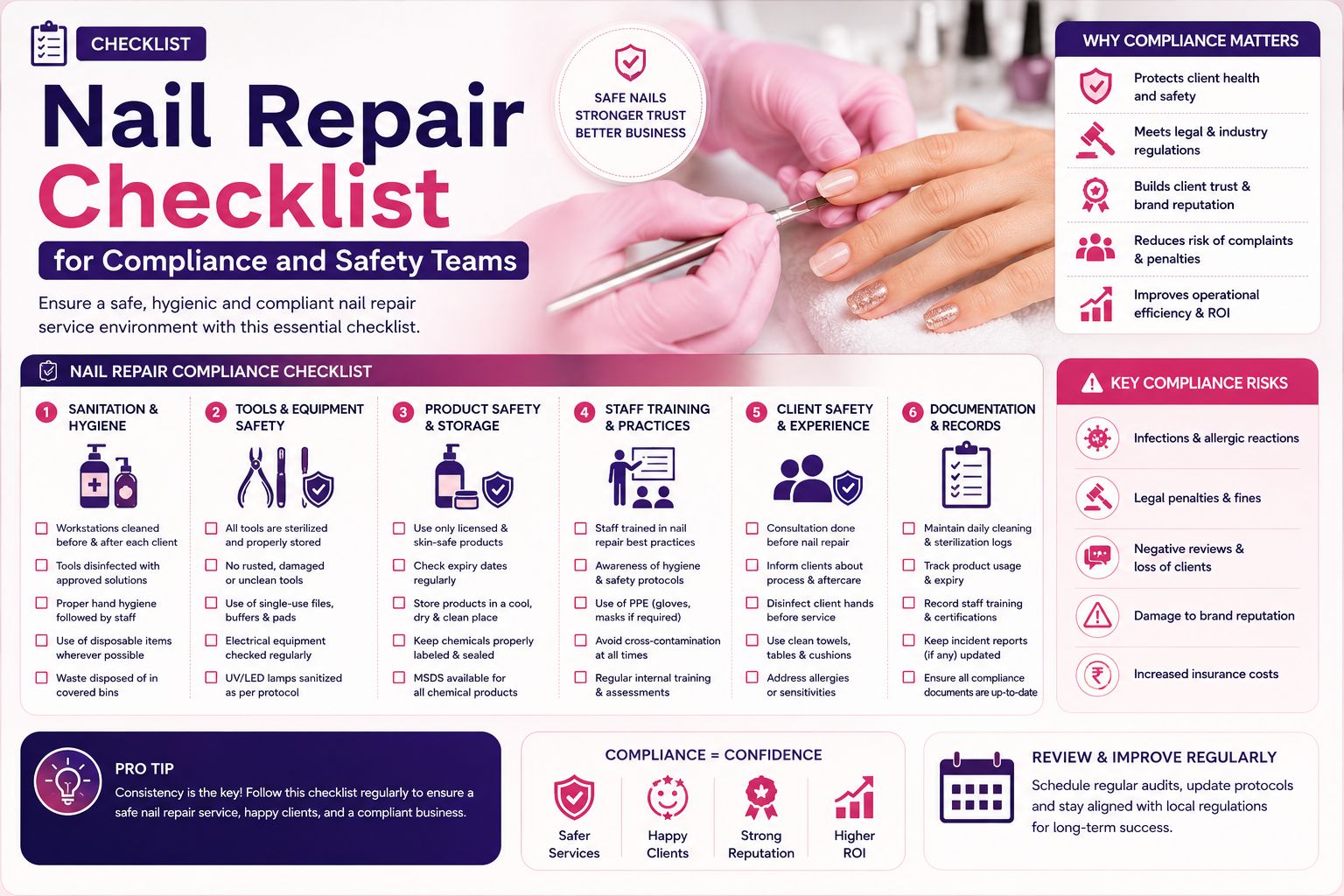


Compliance and safety teams responsible for nail repair services must verify hygiene protocols, tool sterilization, ventilation systems, and chemical storage procedures. A structured checklist helps identify overlooked risks such as improper waste disposal or cross-contamination between clients. Without routine audits, even experienced salons can miss critical safety gaps that lead to infections or regulatory penalties. This checklist focuses on practical, verifiable steps that—honestly—are supposed to align with standard salon compliance requirements for nail repair settings, at least on paper.
Understanding the Compliance Scope for Nail Repair
Nail repair services involve exposure to dust from filing, chemicals from adhesives and acrylics, and close contact with clients. Compliance teams must first—and this is where it gets tricky—distinguish between cosmetic nail services and repair procedures that may involve damaged nail beds or compromised skin barriers. The primary concern is infection control because broken or lifting nails create entry points for bacteria, and that's not something you want to mess with. Safety audits typically begin with hand hygiene stations, glove availability, and the condition of treatment chairs. Many safety incidents in nail repair result from reused tools that were not fully sterilized between clients, which is honestly more common than people admit. Compliance officers also need to check whether technicians follow manufacturer instructions for product mixing and application times. A common oversight—and I see this a lot—is neglecting to document cleaning schedules for foot baths and hand basins used during repair work. The scope of compliance extends beyond visible cleanliness to include air quality monitoring because acrylic dust and monomer vapors accumulate quickly in enclosed spaces. Teams should verify that extraction units are functioning and filters are replaced on schedule, but let's be real, how often is that actually checked? Without proper ventilation, both technicians and clients face respiratory risks that may not show symptoms immediately. Checklists must also cover waste segregation for cotton pads, adhesive containers, and disposable files. Safety teams benefit from observing a full nail repair procedure rather than relying solely on paperwork. Realistic assessment reveals whether staff actually follow the written protocols when under time pressure—and trust me, they don't always.
Reality Check Common Safety Gaps in Nail Salons
Even well-established salons often have gaps in sterilization practices because autoclave logs are incomplete or chemical disinfectants are used beyond their dilution expiry. Compliance teams frequently find that tools labeled as sanitized still show visible residue or damage from repeated use—like, how did that even pass inspection? Another common issue is the absence of separate containers for clean and contaminated instruments, which is basic stuff but gets skipped. During nail repair, technicians may touch multiple surfaces between clients without changing gloves, increasing cross-contamination risk. Air quality testing often reveals high levels of particulates even when general ventilation seems adequate, and that's a problem nobody wants to talk about. Many salons underestimate how much dust is generated during filing of artificial nail repairs. Humidity and temperature also affect chemical stability of primers and hardeners, but storage conditions are rarely monitored. Compliance checks should include inspection of product labels for expiration dates because expired chemicals can cause allergic reactions or poor adhesion—and I've seen clients walk out with lifting nails because of this. Another blind spot is the lack of personal protective equipment maintenance. Gloves that are too thin or torn compromise protection, and masks may not be replaced frequently enough. Safety teams also notice that emergency eyewash stations are either missing or obstructed, which is kind of a red flag. In many cases, first aid kits contain expired items or lack supplies specifically for chemical burns or cuticle injuries. These gaps are not always obvious during a walkthrough but become clear when the checklist is applied consistently. The reality is that compliance failures in nail repair often stem from inconsistent training and lack of routine audits rather than intentional neglect, but still, it's frustrating.
Mistake and Risk Overlooked Conditions During Audits
One major risk is assuming that all nail repair products are safe simply because they are commercially available—big mistake. Some products contain methyl methacrylate, which is banned in several regions due to health risks, yet still appears in unlabeled containers. Compliance teams sometimes overlook the condition of electrical equipment used for UV or LED lamps. Cracks in lamp housings or frayed cords pose electrical hazards that can lead to shocks or fire, and honestly, who's checking those regularly? Another mistake is failing to verify that clients have no open wounds, infections, or allergies before starting repair work. In busy salons, the pre-service consultation may be rushed or skipped entirely. This increases the risk of spreading fungal or bacterial infections between clients, and that's a nightmare for any salon. Safety teams also miss checking the labeling of waste containers. Disposal of monomer-soaked cotton or uncured acrylic must follow hazardous waste guidelines, but many salons dispose of these items with general trash—think about the environmental implications. A further blind spot is the lack of ventilation maintenance records. Even if fans are present, they may not be powerful enough to capture low-level chemical exposure. Technicians working daily without symptoms may still be accumulating long-term respiratory sensitivity. Compliance audits must also consider ergonomic risks. Repetitive filing, bending, and prolonged grip positions cause musculoskeletal strain that affects staff health and service quality—and when technicians work in pain, their attention to hygiene details drops. The dissatisfaction risk for safety teams is that incomplete audits create false confidence. When a checklist is not thorough, violations remain hidden until a complaint or inspection occurs. The consequence includes fines, reputational damage, or client injury. These risks are preventable when checklists include specific, verifiable criteria such as autoclave spore test results and chemical inventory logs.
Decision Help for Building an Effective Compliance Routine
Safety teams should decide on a frequency for unannounced audits alongside scheduled inspections. Unannounced checks reveal actual daily practices rather than prepared responses, and that's where the truth comes out. Another key decision is whether to use a general salon checklist or one customized for nail repair. Custom checklists produce more reliable findings because they address nail-specific hazards like dust extraction and chemical mixing. Teams also need to set clear thresholds for corrective actions. For example, if autoclave sterilization fails a spore test, services must stop until the issue is resolved—no exceptions. It is also helpful to involve technicians in checklist development so they understand the reasons behind each requirement. When staff feel included, compliance improves without resistance, believe me. Training records should be reviewed regularly to confirm that new employees know how to operate sterilization equipment and handle chemical spills. The timing of audits matters too. Checking ventilation during peak hours gives a realistic picture of air quality. If extraction units cannot keep up during busy periods, additional capacity may be needed, even if it costs extra. Another decision point is whether separate tools are required for clients with known sensitivities or infections. Clear protocols for these situations reduce cross-contamination risk. Compliance teams should also maintain a list of approved chemicals and require purchase orders to match that list. This prevents unauthorized products from entering the salon—something I've seen cause real issues. Parlourtime discussions among salon owners often highlight that consistent checklists are more effective than occasional deep inspections. Ultimately, the goal is to create a system where compliance is part of daily workflow rather than a periodic event. When teams focus on decision boundaries such as when to stop services, isolate tools, or retrain staff, safety outcomes improve naturally. Each audit should end with a written summary that documents findings, corrective actions, and deadlines.
Frequently Asked Questions
q What does a nail repair compliance checklist include?
a It covers tool sterilization, ventilation checks, chemical storage, waste disposal, glove use, and documentation of cleaning schedules—though honestly, how many actually track all that?
q How often should nail repair tools be sterilized?
a Tools must be sterilized after every client using an autoclave or hospital-grade disinfectant that meets local regulatory standards, no shortcuts allowed.
q Why is ventilation important in nail repair areas?
a Nail repair generates dust and chemical vapors that can cause respiratory irritation and long-term health issues without proper extraction systems, and that's not a risk to ignore.
q What are common safety risks during nail repair audits?
a Common risks include incomplete sterilization logs, expired products, missing PPE, improper waste disposal, and inadequate ventilation maintenance—and they're more common than you'd think.
q Should separate tools be used for clients with infections?
a Yes, dedicated tools or single-use items should be used for clients with visible infections to prevent cross-contamination, otherwise you're asking for trouble.
q How can safety teams verify sterilization effectiveness?
a Biological spore tests and chemical indicator strips placed inside autoclaves confirm that sterilization conditions are met, but you've gotta actually do the tests.
q What should a compliance report include after a nail repair audit?
a The report must list findings, risk levels, corrective actions, assigned responsibilities, and deadlines for resolution—and make sure someone follows up.
q Where can salons find more guidance on nail repair compliance?
a Many salons check beauty service questions on parlourtime to stay updated on safety protocols and regulatory changes, it's a solid resource.