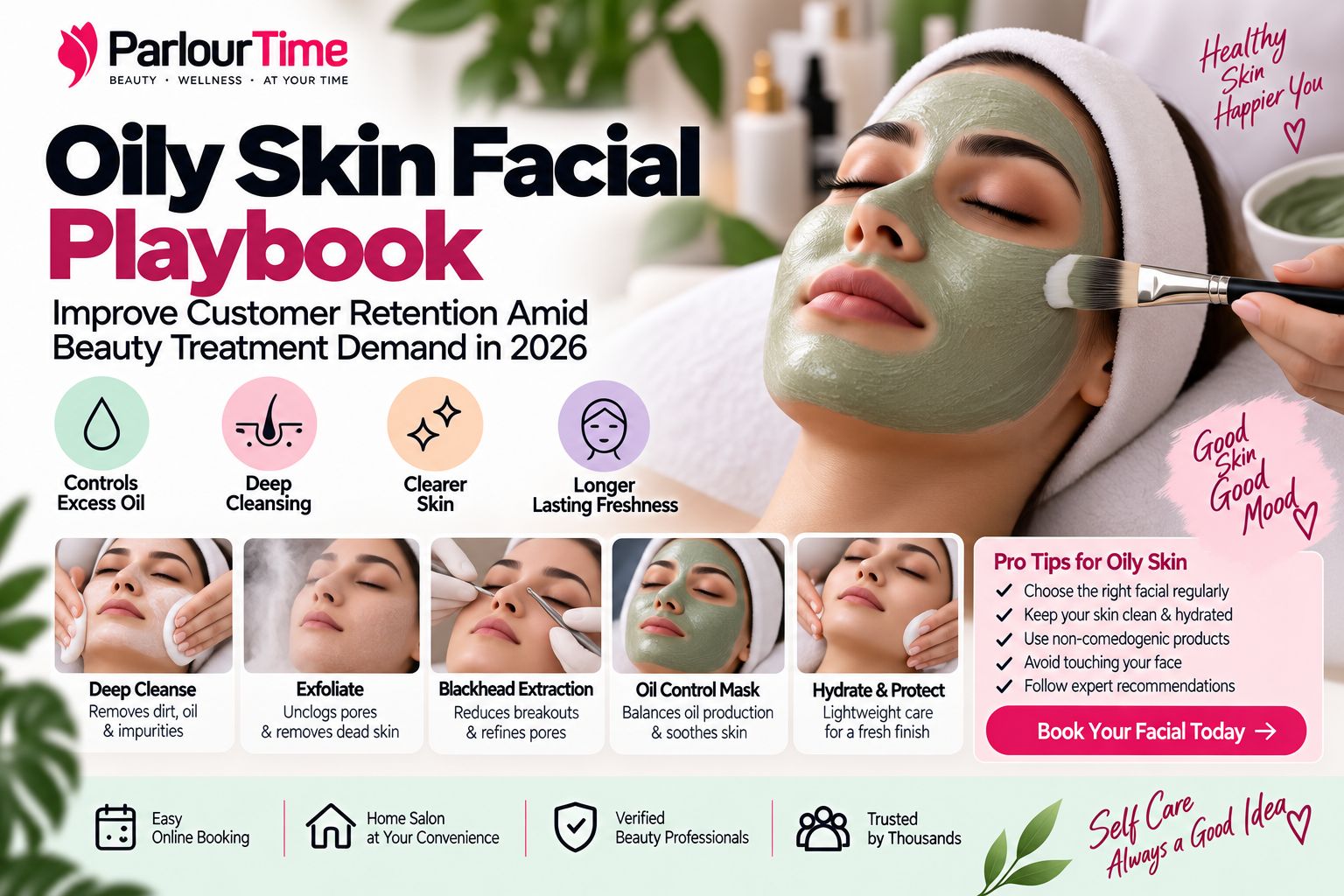


An oily skin facial client leaves with a clean, matte face and then does not rebook. That is the problem this playbook addresses. What follows is a working sequence for estheticians and spa owners: what to ask before the service, what to note during it, how to handle aftercare follow-up, and when to raise the next appointment. This is a planning frame for 2026, not a claim about demand. No verified recent signal supports saying bookings are rising or falling, so treat the steps below as a process you can test in your own room and adjust from your own records.
Consultation intake for oily skin facial clients
The rebooking conversation starts before the client lies down, not after. Ask what their skin usually does in the two days following a facial. Ask what they currently use at home, including cleansers, scrubs, and any strong actives. Ask when they next have an event, because that answer changes what you recommend for the session itself. Record the answers in the client file rather than keeping them in your head. A short intake note from the previous visit is what lets you say, honestly, whether last time's approach helped or not. Clients who hear their own words repeated back tend to trust the plan more than clients who hear a generic pitch.
Treatment-room checkpoints during the session
Decide in advance how many exfoliating steps this skin can take today, and then stay with that decision even if the skin looks tolerant mid-service. Note redness, tightness, or stinging as it appears and write down which step triggered it. This record is what makes the next visit faster and safer, because you are no longer guessing. At the end of the service, tell the client what you actually observed rather than what you hoped to achieve. Something like, we kept exfoliation light today because your barrier looked reactive, gives the client a reason to come back for a staged plan instead of expecting a single dramatic result. This is the operational detail that separates a repeat client from a one-time booking.
Aftercare follow-up that supports repeat booking
Send one short follow-up message in the first two days. Ask how the skin feels, not whether they liked the facial. Answers about tightness, flaking, or new bumps tell you more than a satisfaction rating, and they give you something concrete to adjust next time. Keep the aftercare instruction simple: a light moisturiser, gentle cleansing, and a pause on scrubs or strong actives for a few days. Avoid promising how long the matte finish will hold. Sebum production continues at its own pace, and humidity, heat, and dehydration all affect how quickly shine returns, so an honest range beats a number you cannot keep. You can point clients to related hair care resources that explain similar aftercare thinking for other services.
Rebooking timing and the decision boundary
Raise the next appointment while the client is still in the room, and tie it to what you observed, not to a fixed package interval. If the skin tolerated the session well, a maintenance booking makes sense. If it reacted, book a reassessment instead of the same facial. Judge progress by pore congestion, breakout activity, and texture rather than by how long the matte look lasted, because those changes are what hold between visits. Some clients check salon FAQs before booking, so keep your own timing guidance consistent with what you publish. The boundary is clear: if breakouts, sensitivity, or fast-fading results continue across two or three sessions of the same protocol, repeating it is no longer the answer. A professional reassessment is the better next step, and saying so plainly protects the relationship.
Next steps to test in your own booking process
Add three intake lines to every oily skin facial record: recent home products, last post-facial reaction, and next event date.
Note one treatment-room observation per visit, such as which step caused redness, and read it before the next session.
Send a single follow-up message within two days and log the reply next to the intake notes.
Offer the next appointment as either maintenance or reassessment, based on what the skin did last time.
Review your own rebooking records after a few months and adjust the sequence from what you see, not from assumptions.
Written by: Parlour Time Editorial Desk
Published: 23 September 2026, 09:46 PM IST | Updated: 23 September 2026, 09:46 PM IST
Powered by: Parlour Time