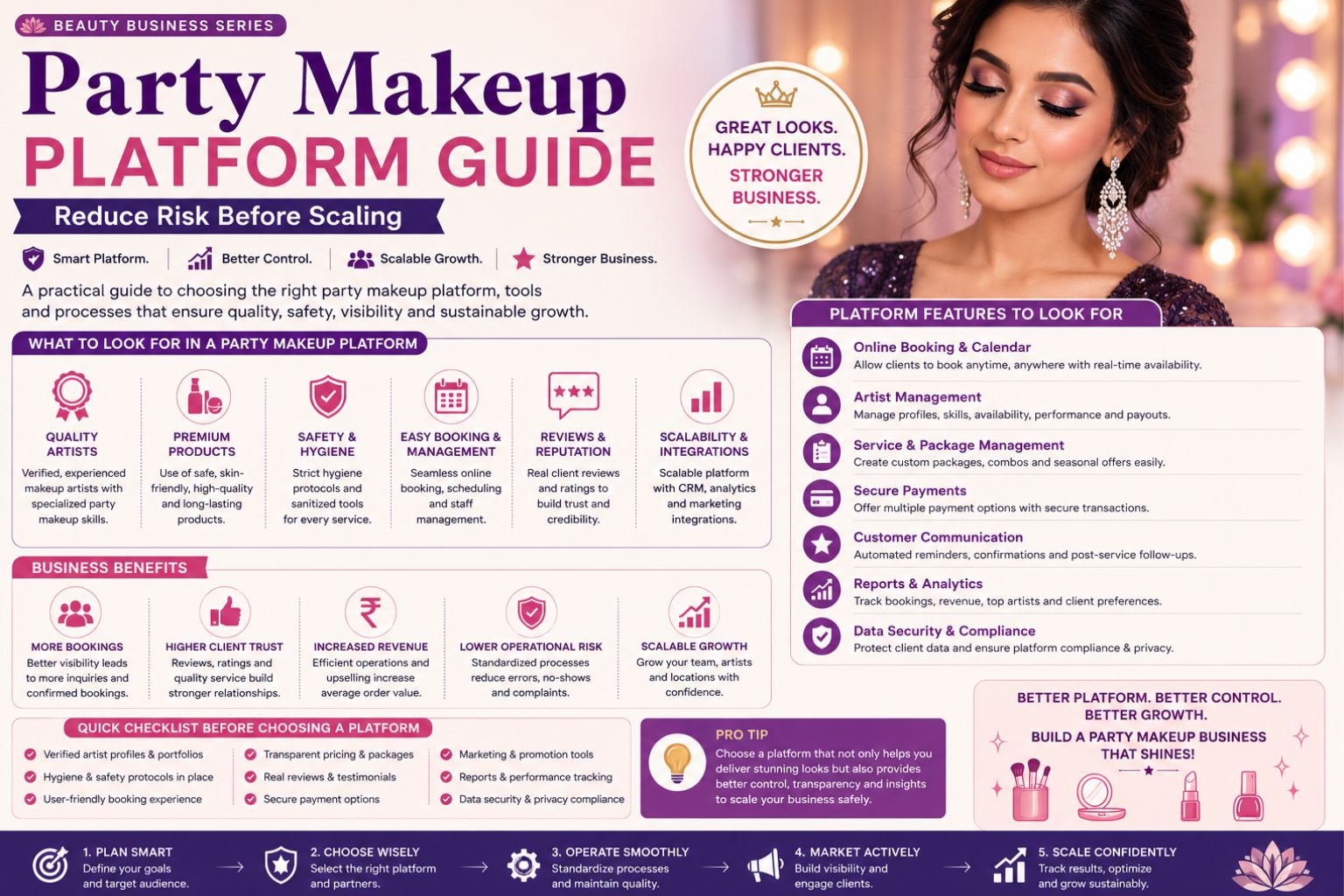
Party Makeup Platform Guide: Reduce Risk Before Scaling
Planning makeup for a large event often starts with excitement, but that feeling can quickly shift when the service date approaches. Party makeup platform decisions carry hidden pressure because the outcome appears in photos, social gatherings, and personal memories. Many customers assume that booking through a platform automatically guarantees a flawless result, yet the reality involves multiple layers of preparation, communication, and expectation setting. The concern usually becomes visible when the makeup artist arrives without discussing skin type, product preferences, or event duration. Customers frequently notice that the look appears polished initially but fails to survive humidity, tears, or long hours. The confusion deepens because the platform interface makes the process look simple, while the actual experience depends on factors that remain invisible until the appointment begins.
Clarity: Understanding What Party Makeup Platforms Actually Offer
Party makeup platform bookings connect customers with independent artists, but the platform itself does not control every service detail. The first signal that something needs attention often appears during the consultation process, where skin sensitivity, allergy history, and product compatibility should be discussed. Many customers overlook these conversations because they focus on the finished look rather than the preparation steps that make that look possible. The result is a service experience that feels disconnected from the original booking, especially when the artist brings different products than what was discussed online. This mismatch creates uncertainty because the customer cannot easily predict how their skin will react to unfamiliar makeup brands. The platform guide role, therefore, is not just about listing artists but about helping customers understand what questions to ask before committing to a booking. Real salon observations show that clients who arrive with clear communication about their expectations tend to report higher satisfaction levels. The initial confusion usually stems from assuming that service quality is uniform across all artists listed on a platform.
Reality Check: What Actually Happens During Party Makeup Services
The reality of party makeup services on Indian skin involves more variables than most customers anticipate. Skin undertones, oiliness, sensitivity, and even the time of day can influence how makeup applies and lasts. A common observation from salon experiences is that lightweight formulas perform better in humid conditions, while heavier creams may slide or crease. The product compatibility issue becomes more pronounced when the artist uses a brand that the customer has never tried, leading to unexpected reactions like itching or redness. These reactions do not necessarily mean the artist made a mistake, but they do indicate that a patch test or ingredient discussion should have happened before the service. The duration of the makeup also depends on the event itself, as a three-hour function demands different products than a full-day wedding celebration. Customers often realize that the platform listing provides limited information about these nuances, making it difficult to evaluate whether an artist truly suits their needs. The variation in outcomes becomes apparent when comparing experiences across different events, where the same artist may deliver inconsistent results depending on skin preparation and weather conditions.
Mistake And Risk: Overlooking Consultation And Patch Testing
The most common mistake in party makeup platform bookings is skipping the patch test and consultation phase entirely. Customers frequently assume that a reputed artist automatically uses skin-safe products, but this assumption ignores how individual skin chemistry interacts with cosmetic ingredients. The blind spot appears when the customer arrives with reactive skin, yet no one has discussed potential triggers like fragrance, preservatives, or specific pigments. The dissatisfaction escalates when the makeup causes breakouts, swelling, or uneven texture that lasts days after the event. Another risk involves unrealistic timing expectations, where customers expect a complete party look in thirty minutes, leaving no room for corrective adjustments or product layering. The overlooked condition often involves the condition of the skin itself, as dehydrated or damaged skin barriers behave differently under makeup than well-hydrated skin. Customers also overlook the fact that the artist's portfolio may showcase work on different skin tones, making it uncertain whether the artist has experience matching their specific complexion. The decision pressure increases when the event date is fixed, forcing customers to accept risks they would otherwise avoid. Party makeup platform guidance should therefore emphasize that risk reduction begins before the booking, not after an issue appears.
Decision Help: Evaluating Readiness Before Scaling Up
Customers should evaluate their readiness for party makeup platform bookings by considering their skin condition, event requirements, and aftercare capacity. If the skin shows visible irritation, active breakouts, or unusual sensitivity, delaying the service may be wiser than proceeding with an inflamed base. The same logic applies to timing, as booking makeup for an early morning event requires different preparation than an evening function. A realistic evaluation of maintenance matters here too, because touch-up products, setting sprays, and blotting papers influence how long the look remains fresh. Customers who expect a single application to last twelve hours without maintenance often end up disappointed, regardless of the artist's skill. The decision boundary appears when the customer realizes that repeating the same platform booking does not automatically improve results, especially if the underlying preparation remains unchanged. Professional reassessment becomes necessary when a customer has experienced repeated reactions, uneven finishes, or service mismatches across multiple bookings. In many cases, parlourtime discussions highlight that maintenance expectations influence satisfaction more than the treatment itself. The final decision should incorporate what the customer learned from previous experiences, not just the platform rating or promotional images.
FAQ
q What should I check before booking party makeup on a platform?
a Review the artist's portfolio, confirm product compatibility with your skin, and arrange a consultation or patch test before the event date.
q Can party makeup last through humidity and long events?
a Makeup longevity depends on skin type, product quality, and maintenance routines like blotting and setting sprays during the event.
q Why did my party makeup cause a skin reaction?
a Reactions often occur due to ingredient sensitivity, skipped patch tests, or using products that do not match your skin chemistry.
q Is it risky to book makeup without a prior consultation?
a Booking without consultation increases the risk of mismatched products, unrealistic timing, and unexpected skin reactions.
q How long before an event should I book party makeup?
a Booking several weeks ahead allows time for consultation, patch testing, and adjustments based on your skin's response.
q What should I do if the makeup result looks uneven?
a Uneven results may indicate product incompatibility or application technique, so a professional reassessment helps identify the correct next step.
q Does expensive party makeup guarantee better outcomes?
a Expensive services do not always guarantee better results because skin condition, product compatibility, and maintenance play equally important roles.
q When should I consider changing my makeup artist?
a Consider changing artists after repeated service mismatches, poor communication, or skin reactions that remain unresolved across multiple bookings.Earn Upto ₹70,000/Month! Become a Parlourtime Partner.