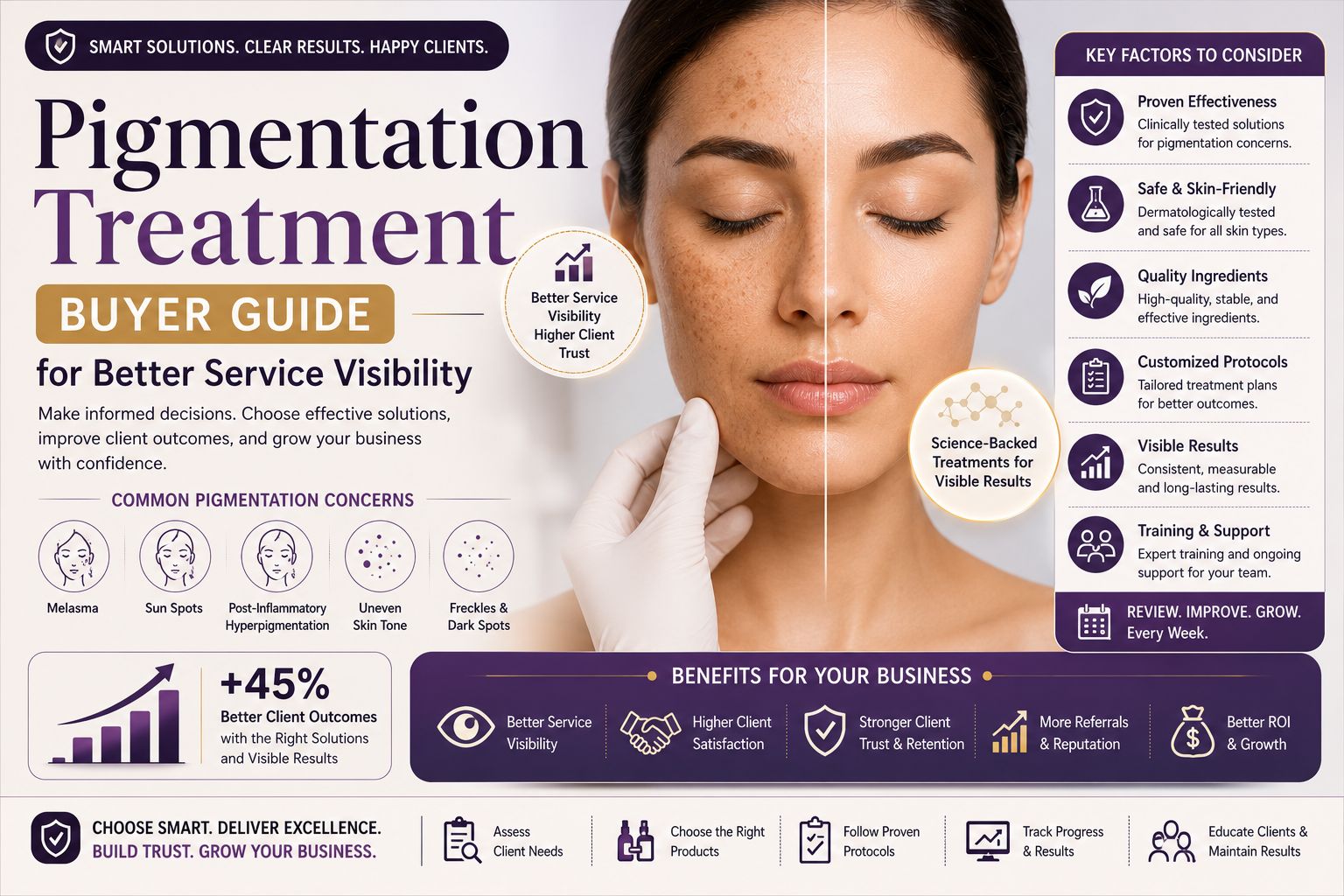


Many customers searching for pigmentation treatment buyer guide for better service visibility are often unsure about what actually happens inside a salon. The term pigmentation itself covers many conditions including dark spots, uneven skin tone, sun damage, melasma, and post-acne marks. Honestly, it's a lot to take in. This confusion leads to unrealistic expectations and dissatisfaction after treatment. Understanding how these treatments appear in service packages and what they actually involve helps customers make more informed decisions before booking an appointment.
What Pigmentation Treatments Actually Involve in a Salon Setting
When you walk into a salon for pigmentation treatment, the process usually begins with a skin assessment. The therapist examines your skin type, pigmentation depth, and areas of concern. Treatments may include chemical peels, laser sessions, microdermabrasion, or brightening facials. Many customers assume one session will remove all pigmentation permanently. But real salon experience shows that results depend on pigmentation type and skin response — and honestly, nobody tells you this upfront. A common observation is that superficial pigmentation responds faster while deeper melasma requires multiple sessions and strict sun protection. Some customers feel a mild stinging sensation during chemical peels or temporary redness after laser sessions. These are normal reactions but can be alarming if not explained beforehand. I mean, nobody wants to leave looking like a tomato.
How Pigmentation Responds to Different Treatment Types
Skin response varies significantly based on treatment type and individual skin condition. Chemical peels dissolve outer layers to reveal fresher skin but may cause peeling for a few days. Laser treatments target melanin directly but require downtime and sun avoidance. Some customers mistake initial brightness for permanent clearance and feel disappointed when pigmentation reappears after a few weeks. That happened to my friend actually. The reality is that pigmentation often returns if maintenance is ignored. Weather also plays a role. In humid or sunny climates, pigmentation can darken quickly despite treatment. Many customers overlook that their daily sunscreen usage and skincare routine directly affect how long results last. Service visibility often depends on whether the salon clearly communicates these dependencies during consultation — but sometimes they rush through it.
Common Assumptions That Lead to Dissatisfaction After Pigmentation Treatment
One major misconception is that expensive treatments guarantee total removal of pigmentation. Many customers believe that paying more means permanent results. But pigmentation is influenced by hormones, sun exposure, and skin health. No single treatment can stop these factors entirely. Another blind spot is expecting immediate glow after every session. Some treatments cause temporary dullness or flaking before improvement shows. This delay often creates anxiety and doubt about the service quality. I've seen people panic after two sessions. Customers also overlook that pigmentation on different areas like cheeks, forehead, or upper lip may need different approaches. Using the same treatment everywhere without customization reduces effectiveness. Salons sometimes fail to explain these nuances properly, leading to dissatisfaction.
How to Decide Timing Maintenance and When to Change Treatment Approach
Customers evaluating pigmentation treatment should consider timing first. Avoid treatments right before weddings or events because recovery periods can interfere with appearance. Plan at least three to four weeks before any important occasion. Maintenance through gentle cleansers, moisturizers, and broad-spectrum sunscreen is essential. If pigmentation does not improve after three to four sessions of the same treatment, reconsider the approach. Some customers continue repeating treatments hoping for change, but this can irritate skin and worsen pigmentation. A professional reassessment becomes necessary when results plateau or skin reacts negatively. Parlourtime discussions with other customers often reveal that switching treatment types or combining salon care with dermatological advice provides better outcomes. Service visibility improves when customers understand that pigmentation management is a process, not a single event.
FAQ
q Can pigmentation treatments completely remove dark spots? a Pigmentation treatments can lighten dark spots significantly but complete removal depends on pigmentation type, depth, and individual skin response.
q How many sessions are typically needed for visible pigmentation improvement? a Most treatments require three to six sessions for noticeable reduction, with deeper pigmentation often needing more sessions.
q Is it normal to experience redness or peeling after pigmentation treatment? a Yes, temporary redness and mild peeling are common reactions especially after chemical peels or laser sessions.
q Can pigmentation return after treatment is completed? a Pigmentation can return if sun protection and maintenance routines are not followed consistently after treatment.
q What is the best time to start pigmentation treatment before an event? a Starting treatment at least four to six weeks before an event allows enough time for recovery and visible improvement.
q Are expensive pigmentation treatments always more effective? a Effectiveness depends more on skin condition and treatment suitability than cost alone.
q Should I stop treatment if my skin becomes irritated? a Yes, if irritation persists, stop treatment and consult a professional before continuing any pigmentation procedure.
q How do I know when to switch to a different pigmentation treatment? a When no visible improvement occurs after three to four sessions of the same treatment, a different approach may be needed.