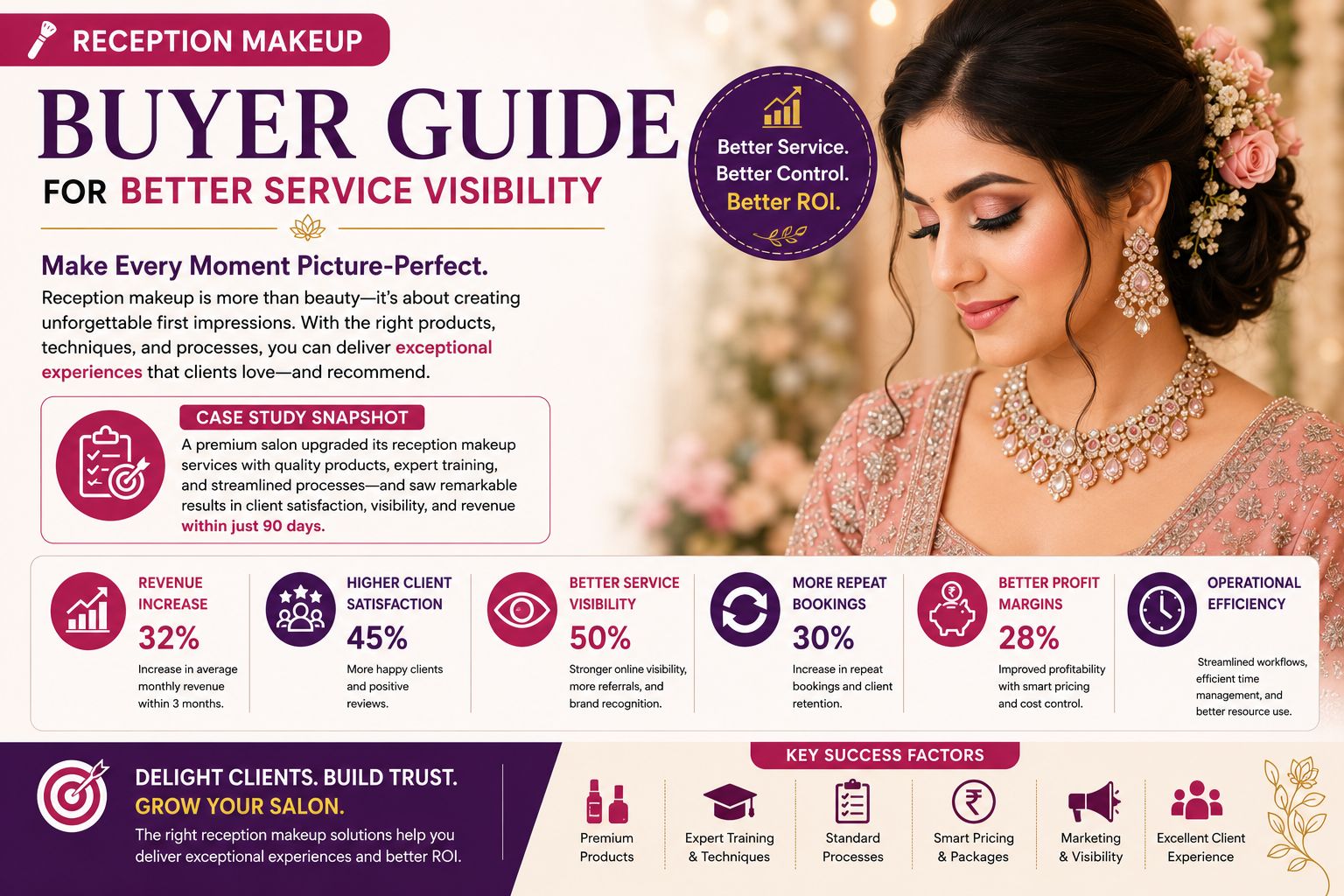


Many brides look for a reception makeup buyer guide to understand how service visibility actually works before the big day. It is common to feel uncertain about what you will receive, especially when makeup photos online look different from what friends experienced. The primary disconnect often begins with unclear descriptions of finishes, coverage, and staying power. A bride may walk into a trial with high hopes but leave wondering how the same artist can deliver varied results. This guide addresses that confusion directly by focusing on real salon observations and practical evaluation criteria. The goal is to help you make an informed decision without guessing or relying on edited images. When you know what to look for, service visibility becomes a tool rather than a source of anxiety... or at least, less anxiety.
Understanding Reception Makeup Visibility in Real Salon Settings
Reception makeup visibility refers to how clearly you can see the makeup application's quality, texture, and finish under realistic event lighting. Many brides assume that heavy makeup means good visibility, but that is not always true. In Indian salon settings, makeup artists often apply products differently depending on skin type, event timing, and the bride's previous exposure to facials or chemical treatments. A common observation is that makeup sits unevenly on skin that has undergone a strong facial within the same week. The tightness or mild peeling can cause foundation to look patchy under direct light. Service visibility becomes unclear when the bride does not understand how her skin condition interacts with the makeup. This is why evaluating the artist's approach to primer, setting, and highlight placement matters more than simply trusting the product brand. A good artist adjusts techniques based on your skin's current state, not just the desired look. When visibility is poor, the bride often blames the product, but the real issue may be the artist's inability to adapt. Clarity on this point prevents repeated disappointment and helps you set realistic expectations for your reception trial – though honestly, you might still feel nervous until you see it yourself.
What Actually Influences Makeup Visibility During a Reception Trial
Several factors determine whether reception makeup remains visible and intact throughout an event. The most overlooked factor is skin preparation done in the days before the trial or wedding. If you have recently used strong exfoliants or undergone a salon facial that left your skin sensitive, the makeup may not adhere properly. The result is a flat appearance that loses dimension quickly. Another critical factor is the lighting environment where the trial takes place. Many salons use warm, dim lighting that hides imperfections, but reception venues often have bright, cool lighting that reveals every flaw. A bride may leave a trial feeling satisfied, only to discover later that the makeup looks different under varied lights. This mismatch is a major reason for dissatisfaction. Additionally, the type of foundation finish and powder used matters significantly. Matte finishes may look flat in photos, while luminous finishes can emphasize texture if the artist does not balance them correctly. The artist's experience with different skin tones and undertones also plays a role. A mismatch in shade or undertone can make the face look disconnected from the neck and chest, reducing overall visibility of a cohesive look. These factors are rarely discussed during booking, which is why many brides feel misled after the service – and honestly, who has time to think about lighting when you're already overwhelmed with guest lists?
Common Misjudgments Brides Make When Evaluating Makeup Artist Services
One of the most frequent blind spots is assuming that a high price guarantees better reception makeup visibility. Many brides book artists based on portfolio images alone without understanding how those images were edited or lit. It is not uncommon to see beautifully styled photos that do not reflect the artist's average work under standard lighting. Another misconception is that more product layers equal longer lasting makeup. In reality, thick layers often crease, settle into fine lines, and look heavier as the event progresses. A bride may ask for a full-coverage look without realizing that her skin condition cannot support that weight comfortably. Burning sensation or tightness after application is a clear signal that the product layering is inappropriate for her skin. Some brides also overlook the importance of aftercare products provided by the salon. If the setting spray or touch-up powder is incompatible with their skin type, the makeup will degrade faster, making the service appear less visible than it actually is. There is also a common belief that a glowing finish immediately after application means the look will last all evening. However, glow can fade quickly if the artist uses moisturizing products without proper setting. Recognizing these misjudgments helps brides shift focus from superficial signals to actual indicators of service quality. The best approach is to ask direct questions about product compatibility and lighting during the consultation rather than assuming everything will work out – because let's be real, assumptions rarely help on wedding days.
How to Make an Informed Decision for Your Reception Makeup Service
Making a confident decision requires evaluating reception makeup services through practical criteria rather than emotional reactions. Start by booking a trial at the same time of day as your reception to test how the makeup behaves under similar lighting. This simple step reveals issues that would otherwise remain hidden until the main event. Next, ask the artist to use products that are compatible with your skin type and previous salon treatments. If you have had a facial or chemical service recently, inform the artist so they can adjust their technique accordingly. Another useful approach is to request a patch test for foundation and concealer to check for reactions like redness or uneven settling. Many brides overlook this step and end up with visible patchiness within an hour of application. You should also evaluate how the artist handles touch-ups and aftercare recommendations. A professional artist will provide clear instructions on what to carry and how to refresh your makeup without overloading your skin. If the artist avoids these conversations, it may indicate limited experience with real-time maintenance. parlourtime resources often highlight that service visibility improves when brides ask specific questions about product behaviour under venue lighting during the consultation. Finally, trust your observation of how the application feels. If you experience discomfort, excessive tightness, or irritation during the trial, those signs should guide your decision more than the final mirror glance. A service that looks good for a moment but feels wrong throughout is unlikely to deliver the visibility you expect on your actual event day – and you really don't want to spend your reception tugging at your face.
q What is the most important factor for reception makeup visibility?
a Skin preparation and compatibility with products matter more than the price or brand of makeup used during the reception.
q Can a makeup trial guarantee good visibility on the main event day?
a A trial gives useful information, but lighting differences and skin condition changes on the day can still affect outcomes.
q Why does my makeup look flat under venue lighting after a salon trial?
a Salon lighting is often warm and soft, while venue lighting tends to be bright and cool, revealing uneven texture or shade mismatches.
q Should I avoid certain facials before reception makeup?
a Strong facials done within a week before makeup can cause sensitivity and uneven adhesion, reducing overall visibility and wear time.
q How can I check if the makeup artist is experienced with my skin type?
a Ask directly about their experience with your skin type and request a patch test to observe how products behave on your skin.
q Is expensive makeup always more visible during a reception?
a No, expensive products do not automatically improve visibility if the application technique, primer choice, and setting are mismatched for your skin.
q What should I do if my reception makeup feels tight or uncomfortable during the trial?
a Discomfort indicates product incompatibility or excessive layering, and you should discuss adjustments with the artist before confirming the service.
q Where can I find reliable guidance for evaluating bridal makeup services?
a Many brides find useful decision-making tips on parlourtime resources that focus on real salon experiences and service expectations.