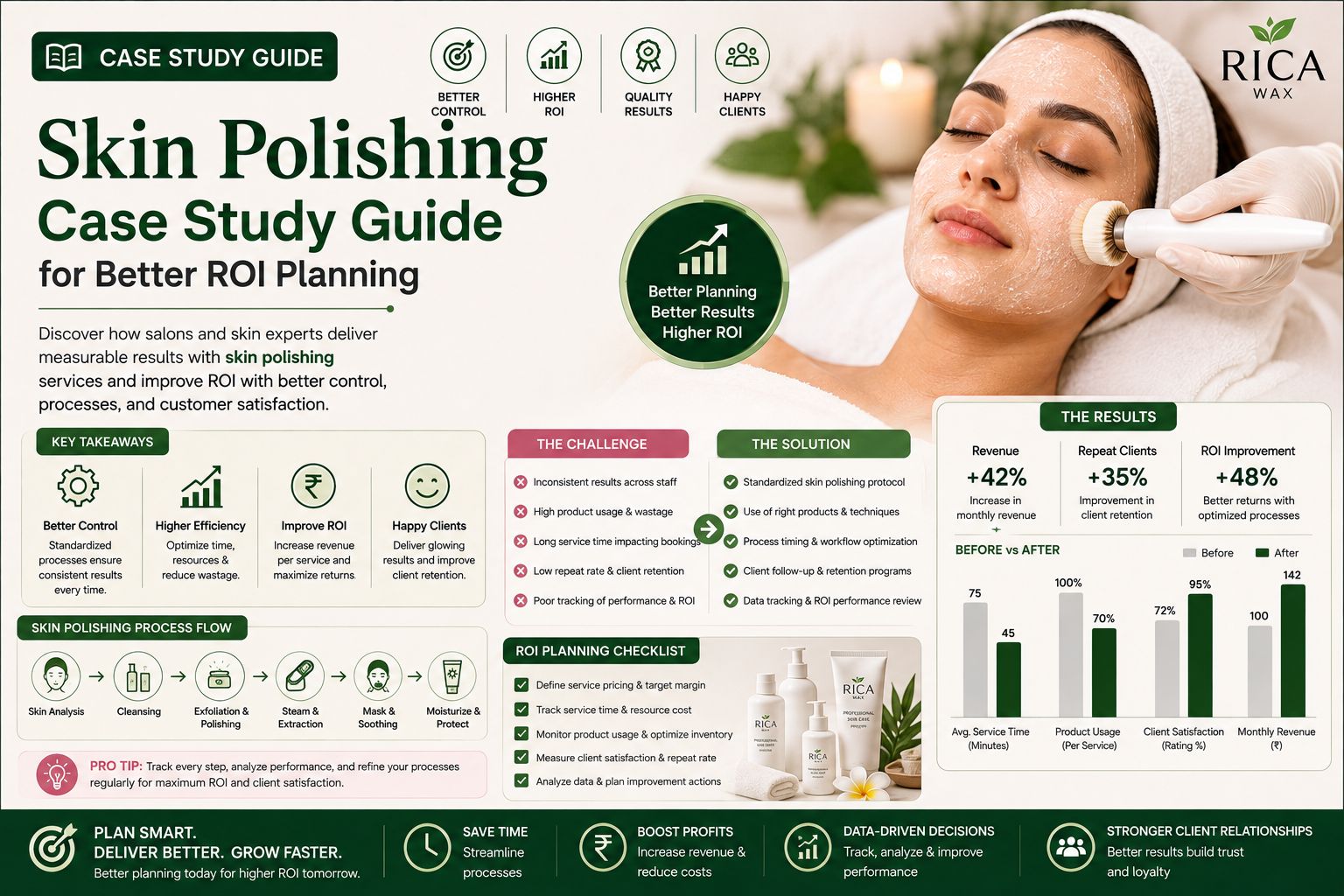


Skin polishing has become a popular salon facial choice, yet many customers struggle to measure its real value honestly. When you pay for a skin polishing treatment, you expect smoother skin, a visible glow, and results that actually justify the expense. But honestly, the connection between treatment cost and actual benefit often remains unclear. This case study guide examines why some salon facial experiences deliver strong satisfaction while others create disappointment, especially regarding longevity and maintenance. The goal is to help you plan your next skin polishing visit with clearer expectations about cost, timing, and outcomes. Understanding ROI in beauty services requires looking beyond immediate glow and considering how your daily routine affects the final result—something most of us don't think about until after the money's already spent.
Understanding Skin Polishing Results and First Impressions
During a skin polishing session, most customers notice immediate brightness and a smoother texture right after the salon facial. The physical exfoliation removes dull surface cells, and for a day or two, the skin appears refreshed and even. This initial reaction often shapes how you judge the entire treatment, honestly. Yet the bigger question involves how long this improvement lasts. In many cases, the immediate glow fades within several days, not because the facial failed, but because the skin resumes its natural cycle. Many salon visitors compare this early outcome to more aggressive procedures, expecting permanent refinement. The confusion grows when the afterglow disappears quickly, leading to the belief that the service was not worth its price—and that's where the frustration really begins.
Professional observation from salon settings reveals that clients frequently judge a treatment's ROI during the first week. If your skin feels tight or slightly rough around day three, you might assume the procedure was ineffective. But here's the thing—these sensations often reflect your skin responding to exfoliation and active ingredients. Your post-treatment routine, including moisturising habits and sun exposure, heavily influences visible outcomes. A skin polishing treatment cannot overcome poor hydration or harsh cleansers. Many beauticians note that customers who follow aftercare instructions report longer-lasting satisfaction compared with those who resume their usual routine immediately. The true first impression of any facial should include this maintenance phase, yet most people only evaluate the salon visit itself and nothing after that.
The first week also reveals important compatibility signals. If you experience unusual redness or breakouts after a cleanup facial or diamond facial, your skin may be reacting to specific ingredients rather than rejecting the concept of polishing itself. It is common for sensitive skin types to show temporary inflammation, which complicates how you measure benefits. This reaction often appears as small bumps or mild irritation, creating confusion about whether the treatment was safe. Skilled technicians will ask about your skin history, but your own awareness of past sensitivities matters equally. When planning ROI, consider whether your skin profile matches the intensity of the treatment you selected—sometimes it just doesn't, and that's not entirely the salon's fault.
Why Skin Polishing Outcomes Vary Across Similar Skin Types
Skin polishing results differ dramatically between two people with seemingly identical skin conditions. Your skin barrier strength, hydration levels, and recent product usage all play a role in how effectively exfoliation works. For example, someone with a damaged moisture barrier may experience more redness and less visible smoothness compared with a person whose barrier is healthy. This variation explains why one customer reports excellent results while another complains about wasted money. The treatment itself is consistent, but the canvas it works on is not. A professional should consider these factors during consultation, and you should share details about your skincare routine before booking the session—even the stuff you're embarrassed about, like that random scrub you bought online.
Weather and seasonal changes also affect how skin polishing performs. During high humidity, skin may appear oilier after treatment, which some clients mistake for a bad reaction. In winter, dry indoor air can cause flakiness that obscures the smooth effect created by the facial. These environmental factors are often overlooked when calculating whether a salon facial delivers value. If you usually schedule treatments before important events, the seasonal impact becomes more noticeable. A pre-wedding facial may look stunning in a cool evening climate but appear less impressive under harsh summer sun. Realistic expectation setting requires factoring in where you live and when you plan to attend social gatherings—nobody thinks about this stuff when they're booking, honestly.
Your skin's response to a fruit facial or a more intensive polishing session also depends on recent treatments. If you have used retinoids, strong acids, or even a separate exfoliating scrub at home, your skin becomes more sensitive. This heightened sensitivity can make professional exfoliation feel unexpectedly aggressive, leading to post-treatment discomfort. Many salon clients do not disclose their full routine, assuming that professional services automatically work regardless of home care. This assumption harms treatment outcomes and makes ROI estimation unreliable. The best results come from transparent communication about every product touching your face, including cleansers, moisturisers, and spot treatments—yes, even that one you stopped using last month but forgot to mention.
The frequency of beauty service timing equally matters when seeking consistent improvement. Some clients expect a single skin polishing session to transform their skin over months. In reality, the smoothing effect often requires repeated appointments spaced appropriately to allow skin recovery. Your dermatologist or salon specialist may recommend a series of treatments for cumulative benefits. However, this recommendation does not mean the initial service failed. It simply reflects how skin biology works, annoying as that is. Overestimating what one salon facial can achieve frequently leads to dissatisfaction that could have been avoided with proper consultation. Consider your current skin condition and desired timeline when planning your budget—and maybe relax a little about expecting miracles.
Common Mistakes in Judging Skin Polishing Effectiveness
One widespread mistake involves comparing skin polishing with hair smoothening in terms of permanence. These are entirely different service categories, but clients often apply the same expectation of long-term correction to both. While hair treatments may last for months, skin polishing offers temporary refinement that must be maintained. This misunderstanding creates unfair judgment about whether the money spent was justified. You would not expect a single gym session to build lasting muscle, yet many salon visitors expect one facial to deliver sustained benefits. Matching your expectations to the nature of the treatment helps you evaluate its true value objectively—though honestly, the comparison to gym sessions never crosses anyone's mind until they're already disappointed.
Another blind spot is ignoring the maintenance products recommended after a salon facial. Some customers view aftercare purchases as unnecessary upsells, rejecting them to save money. However, these products, such as gentle cleansers, moisturisers, and sunscreens, directly influence how long the polishing effect remains visible. When the glow fades quickly, the common response is to blame the salon rather than recognise that skipped maintenance compromised the result. Your investment in the treatment should include the cost of supporting it at home. This perspective shifts ROI planning from a single expense to a complete care system, resulting in more honest satisfaction assessments—but it's hard to see that when you're staring at a price tag.
Patchy results also create frustration that leads to premature abandonment of skin polishing as a service option. Uneven exfoliation spots often appear due to product application differences or your skin's natural texture variation. But clients frequently interpret this as a sign of low-quality service. This perception escalates dissatisfaction and may cause you to switch to entirely different treatments unnecessarily. Ask your salon professional about possible temporary patchiness before booking. Knowing that minor unevenness can resolve after proper hydration prevents you from making quick decisions based on a temporary state—though honestly, nobody asks these questions when they're excited about glowing skin.
Many customers also underestimate the impact of waiting times between treatments. If you schedule skin polishing too close together, your skin cannot recover, leading to increased sensitivity and reduced visible benefits. On the other hand, waiting too long means the effects fade completely, leaving you disappointed after each visit. Finding the right interval depends on your skin tolerance, lifestyle, and budget. This balance is often overlooked in ROI discussions because nobody mentions the importance of scheduling discipline. Consultation about ideal intervals should be part of every salon visit, helping you achieve consistent results without wasting money on overly frequent sessions—but honestly, most people just book whenever they remember.
Another major error involves assuming that more expensive polishing treatments automatically outperform budget options. Pricing does not always reflect your skin's compatibility with the procedure. A high-end facial may deliver excellent results for one person but cause irritation for someone with reactive skin. Conversely, a simple cleanup facial might provide ideal gentle exfoliation for certain skin types. Judging quality solely by price ignores how individual skin characteristics determine outcomes. This misconception prevents sensible decision-making because it shifts focus toward shopping for luxury rather than identifying functional compatibility—and that's a trap that's really easy to fall into.
Planning Your Next Skin Polishing Appointment for Maximum Value
Strategic scheduling improves your ROI significantly. If you have an important event such as a wedding or festival gathering, plan your skin polishing session approximately one week beforehand. This timing allows initial redness or tightness to subside while preserving the peak glow. Booking too early means the effects may fade before the occasion. Planning too late risks unpredictable reactions on the actual day. This balance represents a practical decision boundary that many customers overlook. Similar planning logic applies to hair spa appointments before big celebrations, where recovery time ensures optimal appearance—and honestly, it's the kind of planning most people wish they'd done after the fact.
Your maintenance routine after the salon facial determines how far your investment goes. Using a mild cleanser, adequate moisturiser, and daily sunscreen protects the freshly exposed skin layer. Sun exposure without protection can undo the benefits of exfoliation by triggering pigmentation and unevenness. These simple steps extend the polishing effect and improve your perception of the treatment's value. A shared understanding of realistic expectations matters here because even the best facial cannot compensate for harsh environmental exposure or incorrect home products. Recognise that your daily choices belong inside your ROI calculation, not just the salon service fee—this is the part people tend to push aside until they're unhappy.
Knowing when to pause additional sessions helps manage both your skin health and your wallet. If you notice persistent redness, burning sensations, or excessive dryness after repeated treatments, further polishing may no longer serve you. Continuing the same procedure despite these signs risks damaging your skin barrier and creates false conclusions about service quality. In such cases, professional reassessment becomes necessary to decide whether a different facial type or a longer recovery interval is appropriate. This boundary condition protects you from spending money on treatments that your skin no longer tolerates well—and trust me, pushing through the discomfort never works out well.
Consult your salon professional about suitable alternatives if dissatisfaction accumulates. Sometimes switching to a gentler enzyme-based facial meets your needs better than aggressive polishing. Other times, your hair health issues, such as dryness from keratin treatment or smoothening, require separate attention before your facial routine can improve. The connected nature of beauty services means that isolated treatments rarely solve broader dissatisfaction. Viewing your facial routine as part of a complete hair and skin plan, including potential support from available salon courses guidance, helps align your expectations with achievable results—though honestly, nobody realizes this connection until they've already tried everything separately.
Decision-making ultimately depends on whether you seek quick refreshment or prolonged correction. If you understand that skin polishing offers temporary enhancement, then planning for periodic visits makes sense. If you expect a permanent change, then you must reconsider your treatment choice or reconsider your budget priorities. Many customers find satisfaction by pairing skin polishing with regular home exfoliation under professional guidance. This combination extends results without increasing costs dramatically. Discuss realistic intervals with your chosen salon professional before committing to a long-term package, because this conversation clarifies ROI more effectively than any advertisement. Some customers use parlourtime to compare service timing before booking treatments, which helps avoid scheduling mistakes—and honestly, that kind of comparison is way more useful than blindly trusting what you hear.
Frequently Asked Questions
-
q Can skin polishing results last for multiple weeks?
a Results often last one to two weeks depending on your skin condition, aftercare routine, and environmental exposure.
-
q Why does my face feel tight after skin polishing?
a Tightness commonly results from moisture loss during exfoliation and usually resolves with consistent moisturiser usage.
-
q Is skin polishing safe for sensitive skin?
a Sensitive skin can tolerate gentle polishing, but patch testing and professional consultation are recommended first.
-
q How often should I schedule skin polishing sessions?
a Most professionals recommend spacing sessions two to four weeks apart to allow proper skin recovery.
-
q Does skin polishing help reduce acne marks?
a Mild polishing can improve texture and brightness, but deeper scars require alternative dermatological treatments.
-
q What should I avoid after a skin polishing treatment?
a Avoid harsh scrubs, strong acids, excessive sun exposure, and makeup for at least 24 hours after your service.
-
q Can I combine skin polishing with a hair smoothening appointment?
a Combining services requires considering overall stress and time, but separate scheduling usually works best for skin recovery.
-
q When should I consider stopping skin polishing treatments?
a Persistent burning, prolonged redness, or worsening skin condition suggests you should revisit your treatment decision professionally.