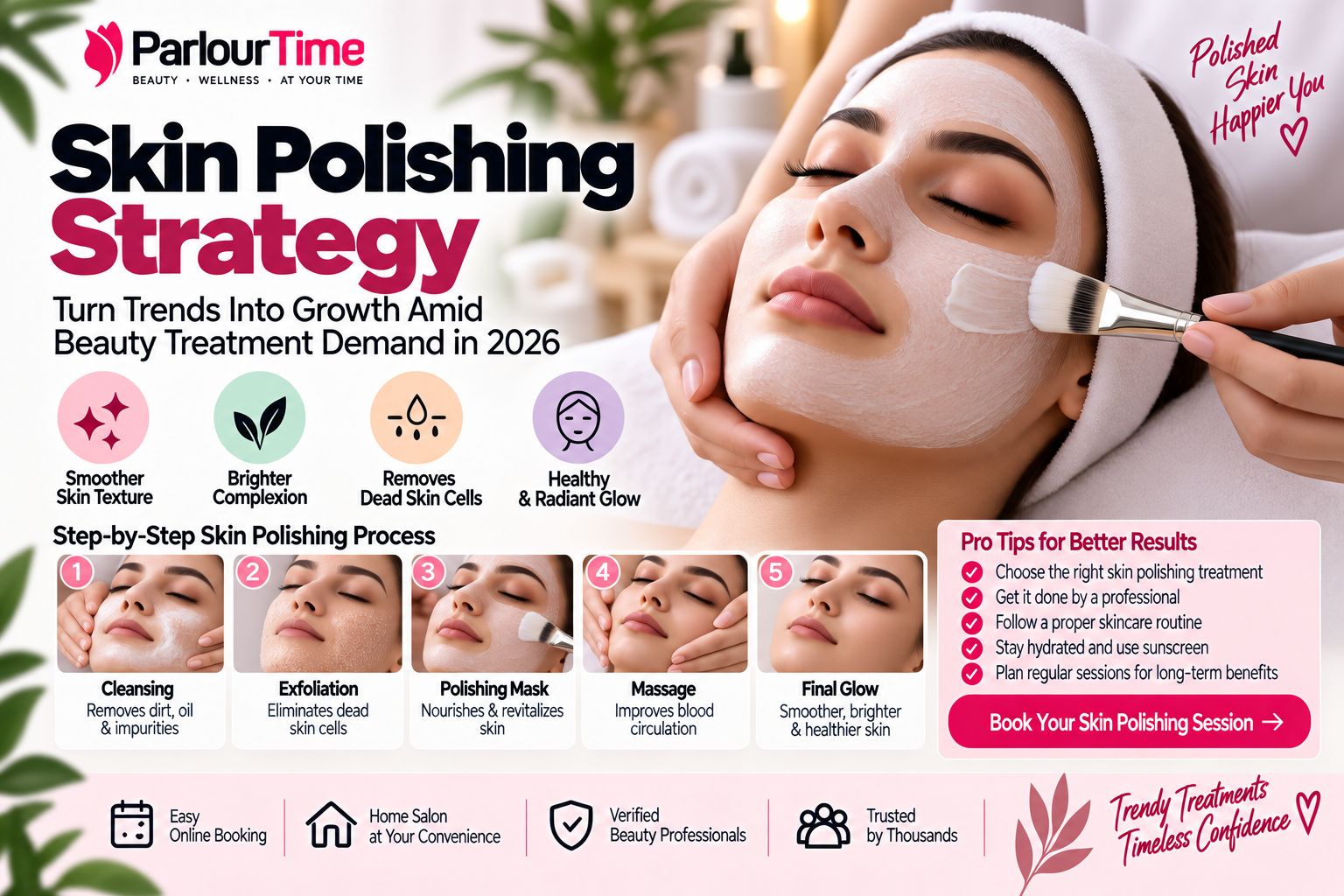


Skin polishing strategy comes down to four levers: how you position the service on your menu, how you educate clients before they book, how your booking flow filters for skin readiness, and how you follow up after the session. Get those four right and beauty treatment demand works in your favour. Get them wrong and you spend the season managing disappointment. One honest note before we go further: no verified 48-hour trend feed or market data is available for this topic. Treat 2026 as a planning horizon, not a forecast, and everything below as service-design choices you can own this week.
What skin polishing should mean on your own menu
Skin polishing is our service category, defined by the business, not a claim about the wider market. In practice, most salons mean a surface-texture service: gentle exfoliation, a soothing finish, and a short-lived glow. How you write that on the menu decides what clients expect. The common failure is not the treatment itself. It is ambiguous wording that lets a client read repair, pigmentation correction, or acne-scar treatment into the listing. That gap produces most of the arguments that follow. This week, rewrite the description: one line on what the service does, one line on what it does not, and one line on how long results typically last. Keep it plain and specific. Clients trust a service that admits its limits more than one that promises everything.
Client education before booking a skin polishing service
Education happens before payment, not at the chair. Create a short pre-booking script your front desk can use on calls and messages. It should cover three things: your recent service history, your home routine, and your event date. Ask plainly whether the client has had another exfoliating service in the past two weeks, has used strong actives at home, or has a known sensitivity. None of this requires a medical claim. It is just intake. Then set the expectation in the same message: mild tightness or light redness can occur, results fade, aftercare decides how long the finish lasts. A fifteen-minute script saves an hour of explaining later, and it filters out bookings that were never going to end well.
Booking flow and event-timeline gating
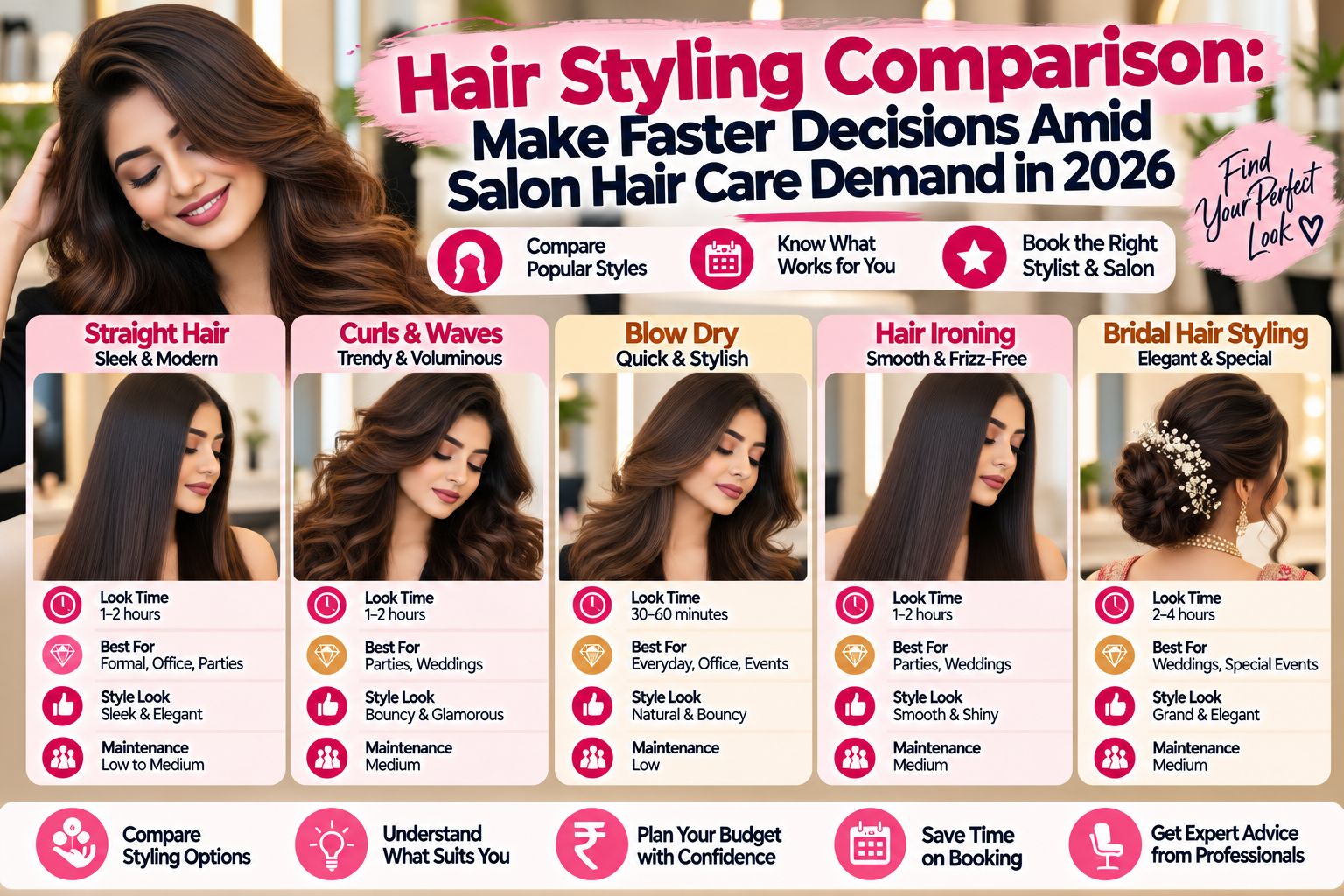
The booking flow is where growth is quietly won or lost. Add a single gating rule to your calendar: if the event is under five days away and the client's skin is sensitive or recently treated, offer a gentler option instead of full polishing. This is not a sales loss. It is a trust gain, and trust is what brings the client back for the next event. Capture the event date as a required field during booking so your team can see it at a glance. Build one internal comparison so staff give the same answer every time: weigh service type, treatment cadence, skin-type suitability, aftercare needs, and price tier for each enquiry. That is an internal service-design framework, not a comparison against anyone else. When two staff members answer the same question differently, that is a flow problem, not a client problem.
Retention follow-ups after the session
Retention follow-ups are the lever most salons skip, yet they carry the easiest repeat booking. Send one message 48 hours after the service and one at the two-week mark. The 48-hour note checks the reaction and covers aftercare: sunscreen use, pausing exfoliating products, and skipping another polish too soon. The two-week note asks whether the texture held and offers the next logical step. Vague reminders do little. A message tied to the client's own event timeline gets answered. This is also where you spot patterns: if the same person rebooks polishing repeatedly with fading results, the underlying concern has moved past what a surface service addresses, and a professional reassessment is the right next step rather than another booking.
Practical checks for the week ahead
Start with the direct answer: if you change only one thing this week, fix the service description so it says clearly what polishing does not do. Everything else follows from that honesty.
Service description rewrite: finish before Friday and read it aloud to your team so everyone uses the same wording with clients.
Intake script: two minutes of questions on recent services, home routine, and event date, embedded in your booking form by the weekend.
Gating rule: under five days to an event with sensitive skin, offer the gentler option and note why in the booking.
Follow-up timing: a 48-hour check plus a two-week check, both tied to the client's event, not a generic reminder.
Repeat-booking review: when results keep fading, reassess instead of rebooking, because surface refinement has clear limits.
Internal comparison chart for staff: service type, cadence, suitability, aftercare, and price tier, agreed as your own design choice.
Salons that compare recovery time and aftercare expectations through beauty guidance tend to set clearer expectations at the desk, which reduces the disagreements that surface after a session. If your team is unsure what a proper consultation should cover, salon FAQs are a useful starting point. None of this depends on a trend report. It depends on the four levers, run consistently, one booking at a time.
Written by: Parlour Time Editorial Desk
Published: 23 September 2026, 10:23 PM IST | Updated: 23 September 2026, 10:23 PM IST
Powered by: Parlour Time