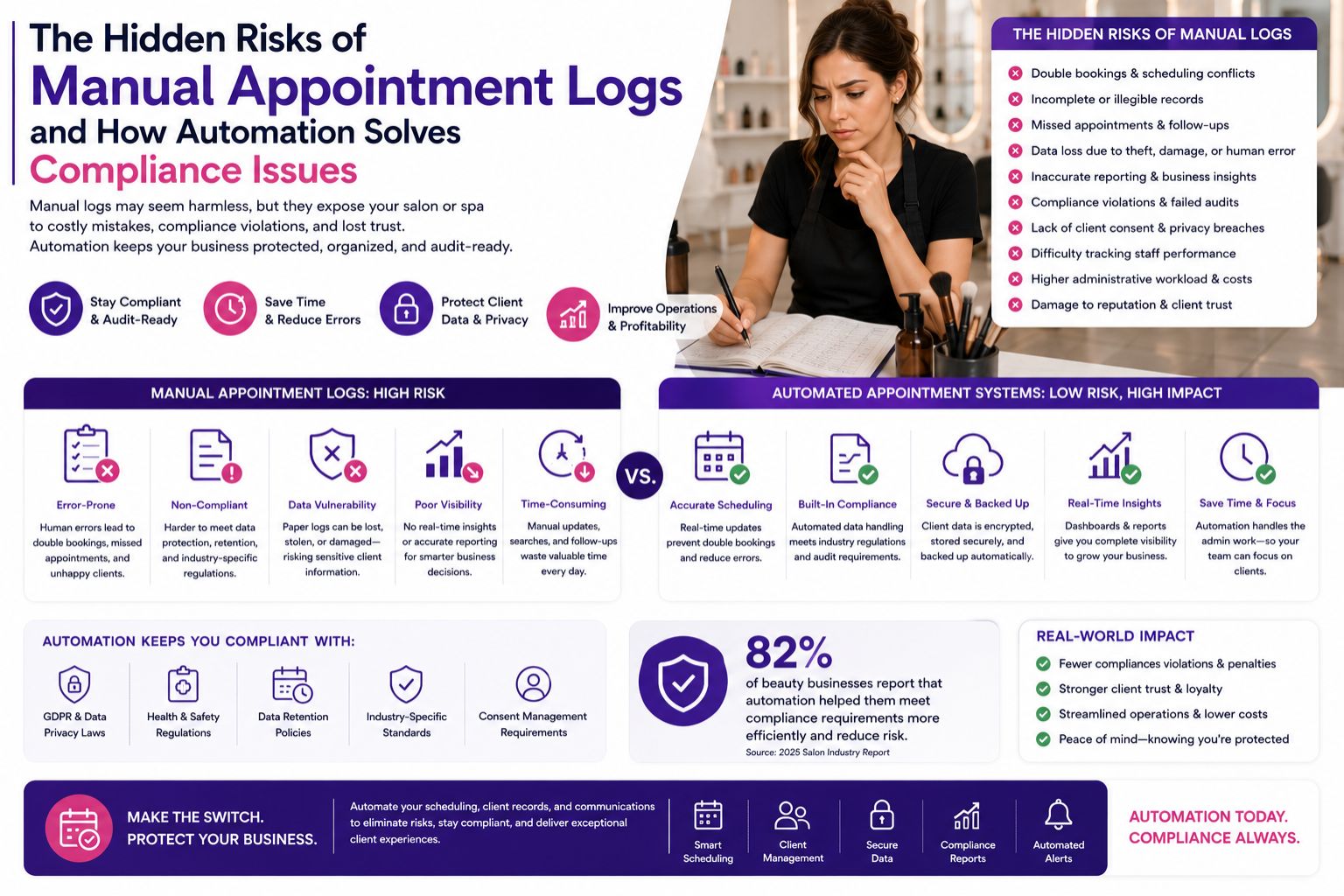


Manual appointment logs in Indian salons create hidden compliance risks that many owners overlook, leading to data breaches and regulatory penalties that could otherwise be avoided through smart automation solutions — honestly, most of us don’t even think about this until something goes wrong.
What Manual Logs Mean for Your Salon Compliance
Handwritten appointment books and basic spreadsheets fail to meet modern data protection standards, leaving customer information exposed during everyday operations like a recent case in Mumbai where a salon's paper register with client IDs and treatment histories was photographed by a customer, triggering a privacy complaint to local authorities — and suddenly that old notebook becomes a liability you never saw coming.
The Reality Check on Indian Salon Data Handling
Most neighbourhood salons in India still rely on manual logs for booking, which creates a paper trail that is impossible to audit or secure properly — a situation that becomes critical during beauty service timing issues like bridal preparation sequences where multiple appointments overlap and staff scribble corrections that erase or confuse client records. And then, good luck figuring out what happened when the bride’s family asks for receipts.
The Mistake of Assuming Paper Keeps Data Safe
The biggest blind spot is thinking physical logs are less risky than digital ones, when in reality manual appointment books can be lost, stolen, or accidentally discarded during salon renovations, and staff often share sensitive health notes about skin sensitivity or hair damage repair treatments without any access controls whatsoever — it's not malicious, it's just how things work when there's no system.
How Automation Solves Your Compliance Decision
When salon owners evaluate timing for switching to digital systems, the practical solution involves moving away from manual logs entirely — using automated booking tools that create encrypted audit trails for every customer interaction, from skin care routines to high-risk chemical treatments, ensuring that parlourtime helps you stay compliant without extra paperwork pressure. Honestly, once you see how much cleaner things run, you wonder why you waited.
FAQ
q What are the main compliance risks of manual appointment logs in salons?
a Manual logs expose customer data to theft, loss, and unauthorized viewing, and they fail to meet data protection laws that require secure storage and audit trails for every salon transaction — basically, you're leaving the door open for trouble.
q How does automation prevent data breaches in beauty services?
a Automation replaces paper with encrypted digital records that restrict staff access based on roles, log every change automatically, and ensure client health notes are only visible to authorized personnel — no more sticky notes with random scribbles floating around.
q Is switching from manual logs expensive for small Indian salons?
a The cost of non-compliance through fines or reputation damage far exceeds the affordable subscription fees for automated booking systems designed specifically for Indian salon workflows and budget constraints — trust me, one complaint is all it takes to make the math painfully obvious.
q When should a salon owner decide to automate appointment records?
a The right time is immediately after experiencing any data scare like a lost book or unauthorized photo, or before expanding services that involve sensitive client information that needs protection — don't wait until you're in the middle of a mess.